 The Independent Uganda: You get the Truth we Pay the Price


How the world’s most powerful nation has been beaten by a third rate power it has sanctioned for 47 years
THE LAST WORD | ANDREW M. MWENDA | Karl Von Clausewitz, the great 19th-century Prussian military strategist and general, said that “war is politics by other means.” What he meant is that wars are a result of unresolved political differences. When a dispute is not resolved peacefully (by persuasion or bribery), the highest form of escalation is war (coercion). Hence, at its core, war is animated by politics and therefore has political objectives. Otherwise it would be a senseless war. When the guns stop, politics must return to take centre stage. This is why the first principle of war is “selection and maintenance of the aim”. The one who prevails in war dictates the terms of the consequent political or diplomatic settlement. This is why Italian fascist leader Benito Mussolini called war “the highest form of politics”.
This brings us to the current war between America, Israel and the countries of the Gulf states (hereinafter referred to as the GCC) on the one hand and Iran on the other. The Americans went into this war with the objective of destroying Iran’s power. This aim had four main pillars which would ensure a diminution of Iran’s capacity/power to threaten or destablize her neighbors: first, to secure regime change; second, to destroy Iran’s offensive missile capability; third, to destroy its nuclear enrichment program; and fourth, to destroy Iran’s ability to support her proxies in Lebanon (Hezbollah), Gaza (Hamas) and Yemen (the Houthi rebels).
The aim of interstate wars is to subordinate the will of one country to the will of another. Thus, at the beginning of this war, Trump said he wanted unconditional surrender of Iran, i.e., as victor, he would dictate the terms, and vanquished Iran would accept them without question. Therefore, the question is: has America achieved all or any of its aims?
The fact that Washington is now involved in negotiations with Tehran is evidence that its war aims failed. America was in the middle of diplomatic negotiations with Iran, and they were close to a deal. Then Israel’s demonic Prime Minister, Benjamin Netanyahu, swayed Trump that regime change in Tehran is possible. He claimed that with a high dose of precision bombing, they would secure all their objectives. Trump walked out of the negotiations. The result? A catastrophic strategic defeat for the Americans and Israelis. Having failed to achieve their strategic objectives in war, the USA was forced back to the negotiating table.
This is why, rather than a victorious America dictating the terms, it is Iran that is doing so. This is more intriguing given that the USA and Israel had complete air supremacy over Iran. They bombed any target they wished and did so with precision. Iran had limited capacity to retaliate and shoot down their planes or missiles. According to the USA, Iran lost its entire navy, air force and a significant share of its other military infrastructure. Hence, this tactical military success has produced strategic failure. The irony is that in spite of this near one-sided military conflict, it is Iran that has emerged stronger, with America looking like a paper tiger.
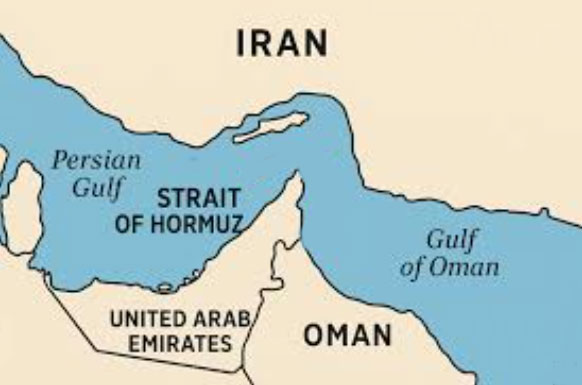
How has complete tactical military success led to catastrophic strategic failure? Iran has taken control over the Strait of Hormuz, which it didn’t have before the war. And this has enhanced her power and prestige while strangling the global economy. Second, it has demonstrated to USA allies in the Gulf that America cannot defend them. Third, public opinion in the USA, so critical for military success, has gone against America and Israel. Fourth, the government in Tehran is much more consolidated now while the incipient opposition is now muffled. Five, Israel’s much-touted military capabilities have been exposed as weak, its and America’s air defense systems being exhausted. Six, the USA had 17 military bases in the region, all of which are now totally destroyed or badly damaged. This is a disaster of unmitigated proportions.
In June last year, Trump announced that Iran’s “nuclear program has completely and totally been obliterated.” The head of the IDF, plus Israel’s AEA, said the same thing.” Yet Trump went back into the aforementioned negotiations. This was evidence that the claims of having destroyed Iran’s nuclear program were false.
What Iran has gained during this war is even more powerful than a nuclear weapon – the control of the Strait of Hormuz. It can hold the global economy at ransom; it can hold the Gulf states hostage; it can monetize this control to earn $90 billion a year. This means it has gained the power of global reach – it is emerging, in the words of Robert Pape, as a 4th major center of global power behind the USA, China and Russia.
Iran has weakened the dollar because all the oil and transit payments are being done in yuan or crypto; it has brought China into the region, weakened Gulf states, wrecked their economies and their reputations as destinations for finance, residence, tourism and luxury and exposed how unreliable the American security guarantees are. Hence, instead of the USA bases being sources of security, the war has exposed them as magnets for insecurity. Will USA want to rebuild them? If yes, will the GGC states accept those bases back now that they have proven to be a liability?
The war has strengthened Russia, which, when sanctions on its oil were lifted, is now making an extra $45 billion more revenue per month than before the war. It has diverted USA attention and resources from the war in Ukraine to the Middle East. It has driven a huge wedge between the USA and its European allies in NATO which may lead to the collapse of that organization. But the most consequential result of this war is that it has forced USA to pivot from Asia to the Middle East, the very antithesis of Trump’s declared goal. The war has depleted USA munitions stockpiles. Washington is now withdrawing defense missiles meant to protect Japan and South Korea and the Philippines to the Middle East.
The biggest beneficiary is China, of course. As a peer competitor to the USA, the best gift is to keep America out of Asia, to sow seeds of doubt on America’s security guarantees to her Asian allies and to therefore make many countries seek to bandwagon with Beijing. For Japan and South Korea, the solution could be nuclearization, the very danger of nuclear proliferation that this war is meant to stop. Trump must be the dumbest person on this planet.
***

amwenda@ugindependent.co.ug


Most humiliating defeat?
What of Black Hawk Down?
And more recently, Afghanistan?
By the way, didn’t Kony also confuse them?
What an article. This war has affected every sane person pocket on earth. The last sentence is an ace. Kudos Bwana Andrew.
Andrew must be either deluded or hallucinating. Recently, he wrote the truth, only to retract it and apologise to President Museveni, claiming he had used inappropriate language and had been biased when that was never really the issue. The issue was the substance of his argument. After all, Museveni has presided over Uganda for four decades, yet the country remains among the to poorest nations of the world by many development indicators. Barely two weeks later, he is calling Prime Minister Benjamin Netanyahu of Israel satanic and President Donald Trump of the world’s most powerful economy the dumbest person on the planet. Is this the same person who was apologising for his language and bias just days ago?
It is therefore no surprise that he spent so much time defending his sister, who has been accused of grabbing public land and wetlands. Ironically, his favourite president then appointed her Minister of Lands, Housing and Urban Development. At this rate, Kampala will continue to flood and there will be no stop. Soon there may be no public land or wetlands left to protect any eco balance. Before lecturing the world about morality, leadership and geopolitics, perhaps he should first apply the same standards of language, accountability and objectivity to himself. So, who is really the fool here?
The article suffers from a basic analytical weakness: it confuses prediction with reality. Throughout the piece, Andrew presents assumptions and possibilities as if they are established facts. His central argument is that Iran emerged victorious and America suffered a catastrophic strategic defeat. Yet much of this conclusion rests on outcomes that have not actually been demonstrated. A weakened American position becomes proof of American failure. Increased Iranian influence becomes evidence of Iranian victory. Potential long term consequences are treated as if they have already occurred. The article also reduces a complex geopolitical conflict into a simplistic winner vs loser narrative. International relations rarely work that way. Countries can achieve some objectives while failing in others. They can suffer setbacks and still retain enormous influence. Strategic outcomes are often mixed and take years to evaluate. Perhaps the biggest flaw is the absence of balance. Mwenda spends considerable time discussing the supposed gains made by Iran but pays little attention to the military and diplomatic costs Iran may have incurred. Any serious strategic assessment must weigh both benefits and losses. Strong opinions are not a substitute for evidence: Good analysis asks questions and acknowledges uncertainty; this article offers certainty where uncertainty still exists.
The US is exercising restraint. They have weapons that they’re not deploying which if Iran had it would readily use. For China and Russia emerging out of this as top beneficiaries is a side consequence that was a matter of time. Hegemonic power has been shifting direction for sometime. Lord Trump came in to give Washington a last fighting chance to remain tops but that won’t be for long given what else is transpiring along the Western frontier of influence that very much calls time on the empire, including a great reset globalist agenda 2030. Unfortunately, Africa, which, naturally, is our concern, remains a non factor while these events are rolling on. East or West, none is our friend!! If Japan and South Korea are thinking, why aren’t we doing the same?
Iran’s shocking resistence against the world’s superpower, following many years of politico-economic sanctions, has opened the door for multi-polarity against the US dominance as the global police. Iran’s influence in the Arab world has been cemented; her control over the Strait of Hormuz –a globally vital maritime chockepoint in the Middle East and energy transport aortic valve –is a reality that the world will contend with; while the advantage accorded to China and Russia may reshape global political architecture. These are consequences of blind political decisions that disregarded professional advice. While the ghosts of the US Military Generals and strategists who resigned or were fired by Trump over their disapproval of US attack of Iran will continue to haunt Trump to his grave, the war has gifted the world potential shifts in power dynamics, beyond the catastrophic economic consequences.