 The Independent Uganda: You get the Truth we Pay the Price


How a day-long visit to Dei Pharma at Matuga changed my view of what Ugandans can do
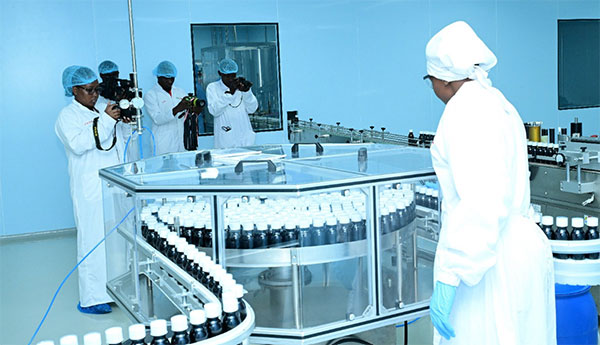
THE LAST WORD | ANDREW M. MWENDA | On Friday, June 26, I visited Matthias Magoola’s Dei Pharma plant at Matuga along Kampala-Gulu Road. It was to honour a promise I had made to President Yoweri Museveni that I would visit this plant, talk to Magoola and make a personal assessment of his work. The visit was also a professional duty because I had made judgements about Magoola and his work without talking to him. Fairness (do not judge someone without listening to their side of the story first) is a basic principle of journalism. But it is also a principle of natural justice which all of us must aspire to uphold.
In this column of April 20th, 2026, I had called Magoola a conman and rubbished the president’s allocation of taxpayers’ money to Dei Pharma as a waste of time. Upon visiting him, I was pleasantly surprised that my views were wrong. In fact, long before Museveni’s letter to me, a couple of friends, whom I highly respect, had called me and told me that I should visit Magoola and talk to him. They had said that if I visited, my views would change; that they had visited and had themselves been impressed by what they saw. These included the former minister of finance, Matia Kasaija, the minister of security, Jim Muhwezi, etc.
Built on a 50-acre piece of land, the pharmaceutical plant itself is a gigantic structure covering six acres. It takes an entire day to walk through its various departments and sections for administration, research, laboratories, storage, manufacturing, etc. The procedures of entering its various sensitive manufacturing and storage areas can be exhausting. Magoola is an affable man. I found he had prepared himself well. He made a PowerPoint presentation about his company, his research and innovations, the existing drugs he is producing and the vision of Dei Pharma.
Dei Pharma produces many generic drugs based on licenses bought from those who hold patents. But that is a small and insignificant part of its business, or at least, its vision. Magoola is building a business that will be largely built on his innovations and inventions in medicine. He told me that he has invented a cure for cancer, for sickle cell disease, for HIV/AIDS and for Alzheimer’s. He showed me academic papers he had written and that had been published in peer review journals. He took me to his office and showed me piles and piles of research work he has done over the years on these medications. He also showed me patents on these drugs he had registered in the USA. He also showed me some approvals [for clinical trials] of some of his drugs from the US Food and Drug Administration.
Magoola told me that he envisioned Dei Pharma becoming a business with a market capitalisation of $500 billion. Now that is seven times the size of Uganda’s GDP. He said that what makes pharmaceutical companies innovative is drugs. A company can produce six hundred different types of drugs. However, one or two critical innovative drugs can contribute 90% of its revenues and explain its market cap. He said his inventions and innovations for cancer, HIV/AIDS, Alzheimer’s and sickle cell disease will push Dei Pharma to become a global giant in the pharmaceutical industry.
During this presentation, I was oppressed by two factors. First was the overwhelming doubt in my mind about what Magoola was saying. I wondered how it could be possible that for many decades of research by the best scientists in the best universities and pharmaceutical companies, cures for these diseases had not been found, and then a guy from Busoga, Uganda, was the one who discovered them. The doubt and even heightened suspicion of Magoola were so intense in me; I found myself confirming my initial bias that the man is indeed a con man. How can he build a $500 billion company? How can his research be the one to discover these cures?
The more this feeling oppressed me, the more the other part of my mind questioned my thinking. So, the second factor that oppressed me was the question: am I not exhibiting the typical colonised mind of many, if not most, Africans? Assuming there was a white man standing in front of me and telling me these stories, would I doubt him when he has even shown me his research work published in peer-reviewed journals? Would I doubt such a white man if he said his vision is to build a $500 billion company? Was I not using colonised mental lenses to look at Magoola? If this is the case, wasn’t Museveni right to call me an agent of neocolonialism in his letter to me?
Indeed, I was about to ask Magoola this very question: how can it be you in the world to discover these cures when the best universities and the richest pharmaceutical companies in the world have failed? I told him I would not ask my vital question because it was increasingly feeling not only racist but also stupid. Magoola insisted I nonetheless ask the question. I told him I will tell him what the question is and why I don’t want an answer. I told him my biases and the fact that I was just a Black man lacking faith in Black people, and that is why I am judging him the way I was.
I have always criticised Museveni for not supporting local, national, domestic [and most especially indigenous] people who are innovative. I have argued before that he has a colonised mind, which leads him to support businesses promoted by white people at best and Indians in the second category. But here he was pouring $700m of taxpayer funds into a company owned by an indigenous Black Ugandan who had made serious discoveries in medicine, and I am criticising him for it. Isn’t that a contradiction? As I listened to Magoola, a titanic intellectual battle between two Andrew Mwendas raged in my head: the first Mwenda with a colonialized mind and the other with strong pan-African convictions.
It is very possible Magoola will fail. It is also possible he can succeed. It will always require extraordinary faith in our people and an ability to make huge bets on them and take risks for their causes for us to ever make it. And for that, I support Museveni on Magoola not because I am sure it will succeed but because I believe it is worth a try.
****

amwenda@ugindependent.co.ug



Good step, boss! Practical journalism is the better form of journalism. Activist journalism sells politically but is very dangerous as in the case of NMG. It works among a limited segment of society that’s not engaged in real production and who are full of ideas on “what could be but can’t be”. But even with NMG, when engaged seriously and taken to the ground they can see for themselves and publish balanced news and information. Magoola should roll out a sustained marketing and promotional campaign to prevent information gaps around the project . The same thing with PIBID/BIRDC (which also deserves fact finding visits). These projects ought to learn from successful brands like MTN, Airtel and Coca Cola that market and publicise themselves fulltime to create sufficient brand loyalty and mass acceptance. Uganda is notorious for failing to market the great things about it but you find clips of teargas showers from a decade ago circulating all over the world. Just thinking; couldn’t DeiPharma have sponsored a shirt of one of the teams at the ongoing World Cup or something along those lines?
Science defies biases. It’s fact-based. When did Magoola invent the cure for cancer and HIV? What are the names of the medicines for both, when and where were the clinical trials conducted, where is the treatment being accessed in Uganda and beyond? Apart from the impressive vision and physical facility, you make general statements about the innovations, inventions, and scholarly products, without offering specific facts and evidence to collaborate your narrative. In the attempt to overcome your biases, you remain entramped therein. Have you fact-checked with medical experts and patients about these cures? As your fervent readers, you owe us more.
May be he is preparing a Q and A with Magoola. If not, the Media Centre should do the needful. Failing that, the Presidential Press Unit stands in.
Just like that and you had carelessly consigned an honest man’s job to the dustbin. Can you imagine how many other persons or enterprises have fallen victim to your biases. It is good to return to basic journalism and leave deals to dealers or as I have warned before you end up like the infamous Uganda confidential boss Mr Cheeye.
Thank yoi
Thank you, Mr Mwenda, for accepting what many would hide: the fact that you had criticised someone’s project without getting first-hand information from the ground. It’s in your conclusion that I find patriotism and a solution for our African economic dependency.
“And for that, I support Museveni on Magoola not because I am sure it will succeed but because I believe it is worth a try.” It is worth a try. Yes. Let’s support our people who are willing to implement what they have learnt. The struggle continues!
M9, your article raises an important and legitimate issue: Africa must invest more in indigenous scientific research, pharmaceutical innovation, and local manufacturing if it is to become self-reliant. Governments should be willing to support local scientists who have promising ideas, even when the outcomes are uncertain. However, I think you make a fundamental error by conflating support for African innovation with acceptance of extraordinary scientific claims that have not yet been validated.
Finding a cure for diseases such as HIV or cancer is among the most difficult achievements in modern medicine. It requires years, and often decades, of rigorous laboratory research, animal studies, carefully designed clinical trials, and most importantly, independent verification by other researchers, and regulatory bodies. No one wakes up one morning and simply announces, “I have discovered a cure for HIV,” or “I have cured cancer.” Science does not work that way.
If someone claims to have discovered cures for HIV, cancer, Alzheimer’s disease, or sickle cell disease, the obvious scientific questions remain unanswered. What is the name of the drug? Which patients have received it? How many patients have been cured? Where are the clinical trial results? Which hospitals or research institutions conducted the studies? Have the findings been independently verified? etc. Without clear answers supported by publicly available evidence, it is scientifically inaccurate to describe these products as cures. Every major medical breakthrough must withstand intense scrutiny.
Therefore, to me, your earlier skepticism reflects the correct scientific mindset. Major scientific progress depends on questioning extraordinary claims and demanding robust evidence before accepting them as fact. Don’t bend or discard it because the president criticised you – just refine the way you present the arguments so that you can make your points clearly and persuasively without appearing critical of the President or anyone else.
Lastly, this debate should not be framed as a choice between believing in African scientists and doubting them. The credibility of African science will not be strengthened by accepting extraordinary claims without evidence. It will be strengthened by producing robust, reproducible research that withstands international scrutiny and improves the lives of patients.
Very Poor analysis by Mwenda, not worth wasting time to critique. The reality is Museveni and ‘family’ use such schemes to launder billions of money and divert public funds. That’s why he was concerned about criticism of people like Magoola and Pinetti, and companies like ROKO not because he genuinely wants to promote the indigenisation of the economy, which he has spent 36 years deliberately undermining.
In your view, how does he benefit when the economy is undermined and why would he, then, bring PDM, Emyooga, etc, if he wants the economy in “doldrum currency”? Let’s see how the political mathematics of economic sabotage work out with that.
@Mwenda, you have done the wise thing, thank you. If Magoola has indeed invented cures for cancer, for sickle cell disease, for HIV/AIDS and for Alzheimer’s, these are no mean achivements. However, Pharma is a regulated industry. Before anyone can claim to have a medical cure for a disease, that cure and the research that created it must first undergo 3 phases of regulated clinical trial testing in several parts of the world.
If he investend new molecules that cure diseases, he he will have results of the Phase I to III clinical trials. Ask him to share the results with you.
I have established that Magoola is conducting genuine research but it is still at an early stage. He has file a patent with the US FDA. Despite the immense promise, medical experts urge caution. A patent merely protects an idea from being stolen; it does not guarantee that the medicine works safely in humans. The true promise of Magoola’s work will only be validated if his therapies successfully navigate the multi-year, rigorous gauntlet of FDA-approved human clinical trials.
Magoola and his backers need to cheered regarless of how things turnout. He is genuine.
Try not be be always late. You took long to apologise to him and his company, and you are even taking more time to dig deeper into his works.
I understand that Magoola is asking for “Nsima Bwongerwa” for the tax payer. THe tax payer gave him seed capital. He has obtained traction out of the seed capital. His business will continue to need financing. However he should expect that financing to come from the tax payer. He should look to Venture Capital.