The Independent Uganda: You get the Truth we Pay the Price


Understanding the processes behind China’s expertise in building road infrastructure at scale
COMMENT | NNANDA KIZITO SSERUWAGI | The four decades leading to 2024 were very productive for China in the scaling of its road infrastructure, being characterised by the building of over 190,700 kilometres of tarmac roads. This brought the total of its paved road network to a staggering 4.9 million kilometres. Behind this record is not simply policy instruments but an extensive system. China has organised a land tenure regime that enables the state to acquire land more efficiently. They have devised ways of financing road infrastructure by using land as a key mechanism for raising money. They have made their government bureaucracy more efficient by incentivising the successful delivery of projects as a qualifier for rewarding public and civil servants. Whereas they have a very competitive bidding process, the state always ensures it serves the public good rather than frustrate public projects under the pretext of following arcane processes. Then they have built a technology powerhouse that has increased efficiency by making hard and dangerous road engineering work automated.
The land tenure system is central to China’s ability to deliver roads efficiently. The structural advantage here is that the state owns urban land, while rural land is not owned on freehold title but rather is collectively owned by villages. Even individuals and firms cannot have freehold title – they only have long-term use rights. Freehold title usually makes land acquisition for public projects cumbersome because it entitles private owners to ownership in perpetuity.
But the more interesting insight is this. When local governments want to build a road, they turn rural land where the project is situated into state-owned land, and the compensation is based on the value of agricultural output on that piece of land instead of negotiating for market prices based on a parcel-by-parcel basis. This makes both the conversion and compensation of land affordable and efficient. There are already existing statutory formulae to support this valuation of land prices. This kind of arrangement saves the Chinese government from the challenge facing most of our governments, which have to spend sometimes years in frustrating court processes trying to settle land disputes against dispersed private owners who turn what would have been an affordable road into an extremely expensive one through protracted delays of the project in land compensation wrangles. This is not to say that everything is smooth for the Chinese government to access land. However, there are systems that break through the friction that sometimes shows up as local corruption and compensation disputes. They simply never allow these challenges to turn into sabotaging dysfunction.
China has a creative concept of land finance through which local governments can convert rural land into state-owned land for urban construction. Through this strategy, they lease out land to property developers at costs that capitalise the value of roads constructed. Another indirect way this works is that when a new expressway is built, it raises the land prices along the road. The government captures that increase in urban land prices, leases the land, and retrieves the money to repay debts incurred on building the road. This creates a self-financing loop whereby road construction raises the value of land, the increased land value creates more revenue for the government, which repays loans for road construction and also builds more roads in the end. This explains how China is able to build roads ahead of demand without waiting for demonstrated congestion to justify the project.
Added to the above, there are also the central budget allocations and earmarked transport funds that come in handy to finance road construction. There are also government bonds at the provincial and municipal levels that do the same thing. Then add the support from institutions like the China Development Bank, which is a policy bank that loans favourably for the construction of roads and other large infrastructure projects. These various avenues create diverse channels for financing roads in China, which leads to the excellent success with which the country is able to build transport infrastructure at scale and on time.
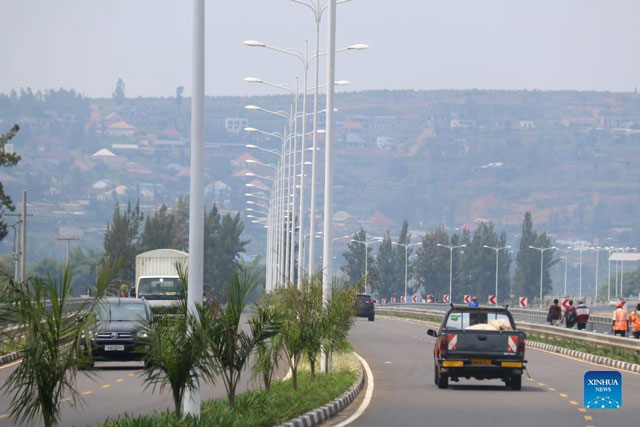
When the roads are completed, some expressways also implement road tolls, such as the one we have at the Entebbe Expressway, which provide partial streams of revenue that recycle toll income into maintaining and constructing new roads. The toll financing system allows provinces to build roads ahead of their traffic demand by making it possible to recover costs in future.
The bidding process for public works in China is overwhelmingly taken up by state-owned conglomerates. These include companies like the China Communications Construction Company, China Railway Construction Corporation, and China State Construction Engineering Corporation. Sometimes, the competition for regional work also includes provincially owned contractors. Such government companies have large market share and are accountable to state asset regulators, saving them from capitalistic competition by private companies chasing profit.
China has rigorous systems for ensuring road quality. There is a digital system managing national highway projects where companies must submit documentation in the Building Information Modelling (BIM) portal. This enables regulators to audit the digital record of the road quality in case any defects emerge later. There are licensed supervising engineers who are legally liable for sign-off and could face criminal liability when serious failures in road quality emerge.
China has also mastered the technology requisite for pulling off excellent road construction projects. Domestic manufacturers of earth-moving equipment such as Sany and XCMG have long ended decades of relying on imported labour-intensive building equipment. Automation in road construction has also been revolutionised by the BeiDou navigation system, which efficiently guides autonomous paving equipment to a fault of just centimetres in positioning accuracy. Robots are becoming more common at construction sites, with projects like the 157-kilometre section of the Beijing-Hong Kong-Macao Expressway in Guangdong paved by unmanned pavers and rollers in 2024. This has cut labour costs while increasing quality assurance.
China remains a country to benchmark with if we want to learn how to translate political will into scaled investment in physical infrastructure expansion. Its success teaches that there are multiple factors that must come into play if we are to transform our road construction competencies.
***
 The writer is a Ugandan thinking about Uganda.