The Independent Uganda: You get the Truth we Pay the Price


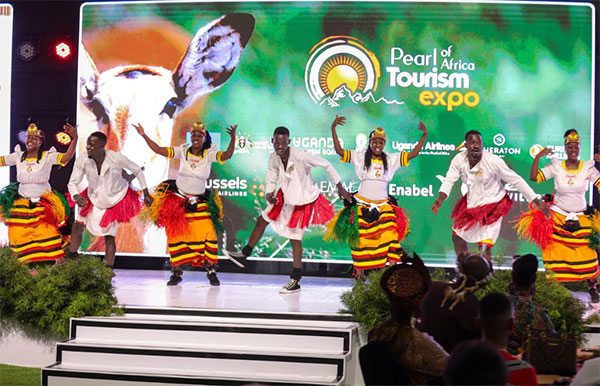
President Yoweri Museveni frames the East African nation as Africa’s next big tourism destination
Kampala, Uganda | JULIUS BUSINGE | President Yoweri Kaguta Museveni has stepped up efforts to position Uganda as one of Africa’s leading tourism destinations, using the launch of the 10th Pearl of Africa Tourism Expo to market the country’s climate, stability, culture and economic progress to international investors and visitors.
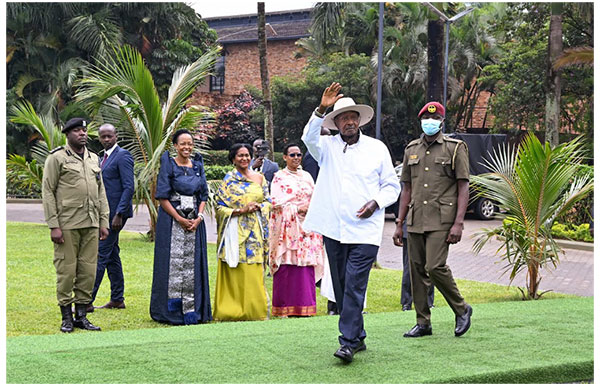
President Museveni, who spoke at the official opening of the expo at Speke Resort Munyonyo on May 21, portrayed Uganda as a uniquely positioned destination whose geography and stability provide a natural advantage in the increasingly competitive global tourism market.
The Pearl of Africa Tourism Expo, organised annually by the Uganda Tourism Board and the Ministry of Tourism, Wildlife and Antiquities, is one of Uganda’s flagship tourism marketing events.
The expo brings together international buyers, tour operators, hospitality investors, airlines, travel media and tourism stakeholders as the country seeks to expand tourism earnings and attract higher-value visitors.
The launch comes at a time when Uganda’s tourism industry is showing strong recovery following the disruption caused by the Covid-19 pandemic.
According to figures from the Ministry of Tourism and Uganda Tourism Board, the sector generated $1.7 billion (about Shs6.1 trillion) in 2025, supported by 1.65 million international arrivals. This represented a significant increase from $1.28 billion recorded in 2024 when visitor numbers stood at 1.3 million.
The recovery has reinforced government ambitions to position tourism as a major pillar of economic transformation, with projections targeting $50 billion in tourism earnings by 2040.
Museveni used the occasion to explain why he believes Uganda remains one of the most naturally gifted tourism destinations globally.
“In Uganda, you do not have extreme temperatures. The climate remains comfortable throughout the year and that is part of Uganda’s uniqueness,” Museveni said.
The President linked Uganda’s moderate weather conditions to its geographical location along the Equator combined with high altitude averaging about 1,200 metres above sea level.
For Museveni, Uganda’s tourism appeal goes beyond wildlife and scenery. He framed the country as a destination built around comfort, culture, peace and hospitality.
“When you are talking of Uganda as a tourism destination, you are talking about comfort, culture, food and peace. It is very comfortable to live here,” he said.
The remarks echoed the famous description by former British Prime Minister Winston Churchill, who referred to Uganda as the “Pearl of Africa” because of its natural beauty and ecological diversity.
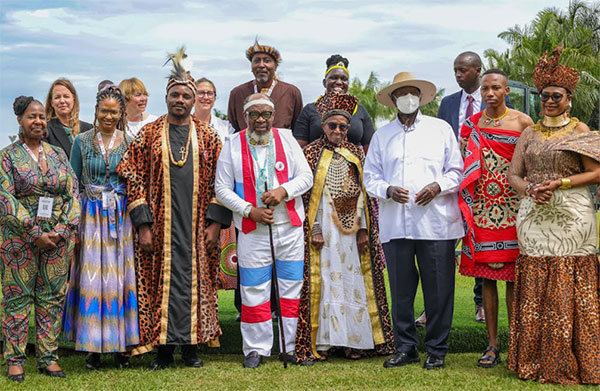
Museveni also used the platform to promote Africa’s indigenous foods, arguing that traditional diets and natural agricultural systems could become part of the continent’s wider tourism and wellness appeal.
“Africa can save the world from bad foods because our foods are rich and original. I am soon turning 82 years old and I have been eating our indigenous foods,” he said.
His comments reflected an increasingly broader tourism narrative being advanced by Uganda — one that combines nature, culture, cuisine and lifestyle experiences rather than relying exclusively on wildlife tourism.
Security, infrastructure and regional integration
Tourism officials said Uganda’s improved performance is closely tied to years of investment in security, infrastructure and regional integration.
Doreen Katusiime, permanent secretary in the Ministry of Tourism, Wildlife and Antiquities, credited the sector’s recovery to the peace and stability established under Museveni’s leadership.
“The peace and stability that Uganda enjoys today are the greatest assets upon which tourism thrives,” she said.
“The pacification of previously insecure areas, the protection of our borders, and the continued investment in national security have enabled tourism to flourish across all regions of the country,” she added.
Katusiime noted that infrastructure investments have also transformed accessibility to tourism destinations across Uganda.
“Today, tourism destinations across the country are more accessible than ever before,” she said.
She highlighted government investments in roads, bridges, airports and digital connectivity as key enablers for tourism growth. She also pointed to the expansion of Uganda Airlines as an important strategy for improving direct international connectivity.
“The opening of new direct routes is not only facilitating travel, but also positioning Uganda as a strategic hub for tourism, trade, and investment,” Katusiime said.
Uganda’s tourism authorities are also increasingly relying on international events to strengthen destination visibility and conference tourism.
Recent high-profile events hosted by Uganda include the Non-Aligned Movement Summit and G77+China engagements, while preparations for the 2027 Africa Cup of Nations tournament are expected to further boost visitor arrivals and infrastructure investment.
Museveni elevates the country’s profile
Juliana Kagwa, chief executive officer of the Uganda Tourism Board, said Museveni’s support had elevated the profile of the tourism expo.
“The day you accepted to grace our tourism expo was the day we achieved critical mass,” Kagwa said.
She added that Uganda’s tourism strategy now focuses on differentiating the country from competitors through unique experiences and authentic cultural offerings.
The President also sought to reassure tourists and investors following recent concerns surrounding Ebola outbreaks in the region.
“I want to start by giving you a few hints of science because I really saw that many people were panicking,” Museveni said.
He explained that Ebola spreads through physical contact rather than airborne transmission and can be effectively managed if detected early.
“If it is reported early, it is treatable because what kills many patients is the high fever and dehydration, and these can be controlled by doctors,” he said.
Museveni said Uganda had chosen targeted containment measures instead of blanket border closures.
“When we met with the task force, we did not agree with closing borders completely,” he said.
The President noted that only high-risk border markets would face restrictions while trade and movement elsewhere would continue.
Tourism industry leaders viewed the remarks as critical in maintaining confidence among international visitors.
Yogi Biriggwa, president of the Uganda Tourism Association, said tourism growth depends heavily on peace and public confidence.
“It is peace that creates the right conditions for tourism to thrive,” she said.
Biriggwa added that tourism continues to contribute significantly to employment creation, foreign exchange earnings and private sector development.
Museveni also linked tourism growth to Uganda’s broader economic progress, arguing that the country has already moved into lower-middle-income status.
“We are already a lower-middle-income country. We are no longer struggling to become one; now we are aiming at becoming an upper-middle-income country,” he said.
The President revealed that government is also reviewing visa policies to improve Uganda’s attractiveness to international visitors.
“In the new government, we are going to extend visas for tourists and remove the short-term visa restrictions,” Museveni said.
“Some countries give Ugandans three-year visas, so why should Uganda give very short stay visas?”
As African countries increasingly compete for tourism investment and global travellers, Uganda is betting that its combination of climate, biodiversity, culture, stability and infrastructure investments can help it secure a larger share of the continent’s growing tourism economy.