The Independent Uganda: You get the Truth we Pay the Price


Dubai, UAE | THE INDEPENDENT | One of Africa’s leading electric mobility company, Spiro, has published its inaugural Sustainability Report, unveiling ambitious environmental targets, including achieving net-zero Scope 1 and Scope 2 emissions by 2040, while positioning electric mobility as a key driver of economic growth and climate action across the continent.
Released on July 21, the report provides the company’s first comprehensive assessment of its environmental, social and economic impact, establishing a baseline against which it will measure future progress as it expands its clean transport infrastructure and affordable mobility solutions across Africa.
The report projects that Spiro’s growing electric mobility ecosystem could help avoid approximately 700,000 tonnes of carbon dioxide emissions annually by 2030 through the replacement of petrol-powered motorcycles with electric alternatives. The company is also exploring the installation of 80–125 KVA on-site solar systems at selected battery-swapping stations to strengthen energy resilience while reducing reliance on conventional electricity grids.
Gagan Gupta, Founder of Spiro and Chairman of Equitane, said the company’s sustainability ambitions are rooted in a long-term vision of balancing innovation with environmental and social responsibility.
“At SPIRO, our responsibility as founders is not only to scale innovation, but to ensure that the systems we build endure economically, socially, and environmentally for generations to come,” Gupta said.
Group Chief Executive Officer Anant Badjatya said sustainability has become central to the company’s business strategy as it expands across Africa.
“This report reflects how far SPIRO has come—not only in terms of growth, but in our ability to measure and improve our impact. As we expand across Africa, sustainability will remain a core business driver, shaping how we invest, manufacture, innovate and partner for the long term,” he said.
The report also marks Spiro’s first comprehensive greenhouse gas inventory, covering Scope 1, Scope 2 and Scope 3 emissions across its operations and value chain. Company officials say this creates the foundation for measurable climate targets and improved transparency as the business scales.
According to the report, operational efficiency initiatives implemented during the past year have already reduced energy consumption at the company’s assembly facilities by an estimated 15–25%, reflecting ongoing efforts to lower the environmental footprint of its manufacturing operations.
Beyond environmental commitments, Spiro says its electric mobility model is generating tangible economic benefits for commercial motorcycle riders. The company estimates that users of its electric motorcycles cut operating costs by between 70% and 80% compared with petrol- powered bikes, while also benefiting from lower maintenance costs and reduced exposure to fuel price fluctuations.
The report also highlights investments in skills development and local industrialisation. Through the Spiro Academy, the company trained more than 4,000 people across Africa in 2025 in electric vehicle maintenance, battery management and technical operations. It also points to the establishment of Africa’s first women electric motorcycle assembly line as part of efforts to promote workforce inclusion and strengthen local manufacturing capacity.
Imtinen Hamlaoui, Head of ESG and Sustainability, said the inaugural report lays the groundwork for greater accountability and long-term value creation.
“By establishing our first comprehensive ESG baseline, including Scope 1, 2 and 3 emissions, we are creating the foundations needed to track progress, set measurable targets and strengthen transparency as SPIRO continues to scale across Africa. Sustainability is not a standalone initiative—it is integrated into how we operate, innovate and create long-term value,” Hamlaoui said.
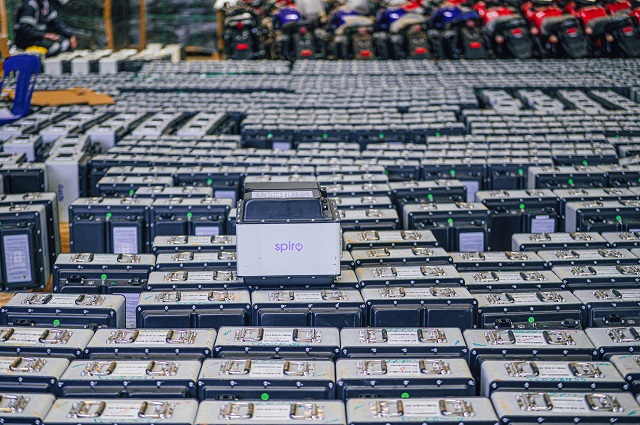
Spiro currently operates Africa’s largest battery-swapping network for electric two-wheel vehicles. According to the company, it has deployed more than 100,000 electric motorcycles, established over 2,500 battery-swapping stations and completed more than 30 million battery swaps. The company says it aims to accelerate the transition to cleaner and more affordable transport while expanding local vehicle production under its vision of building electric vehicles “made in Africa by Africans for Africa and the world.”