The Independent Uganda: You get the Truth we Pay the Price


A digital gambling revolution is swelling state revenues—but regulators fear the costs of success
NEWS ANALYSIS | JULIUS BUSINGE | Uganda’s gaming industry has become one of the country’s most striking digital-economy success stories, generating record revenues for the government as online betting, mobile money and football fandom converge to create a rapidly expanding market.
Tax collections from betting, gaming, lotteries, casinos and related activities reached Shs568 billion by March of the 2025/26 financial year, according to the National Lotteries and Gaming Regulatory Board (NLGRB), underscoring the growing economic significance of a sector that barely registered as a major contributor to public finances a decade ago.
The figure marks a dramatic increase from Shs18.5 billion collected in the 2019/20 financial year, representing growth of nearly 3,000% over six years. The surge reflects the transformation of Uganda’s gaming industry from a largely physical, venue-based business into a digitally enabled market reaching consumers across the country through smartphones and mobile payment platforms.
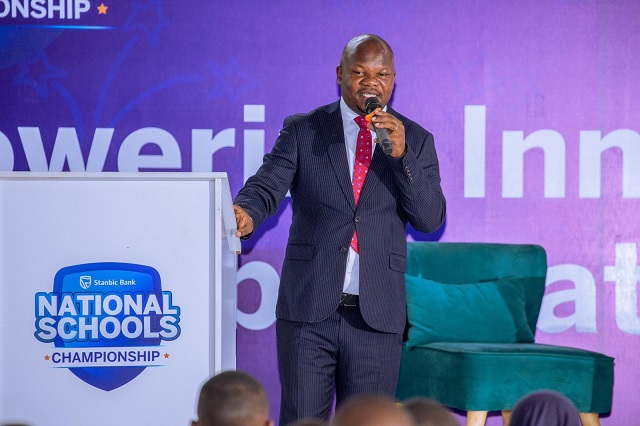
The latest figures were presented by Denis Mudene Ngabirano, chief executive officer of the NLGRB, during a media roundtable in Kampala, where he outlined the industry’s growth, the regulator’s priorities and the challenges emerging alongside the sector’s expansion.
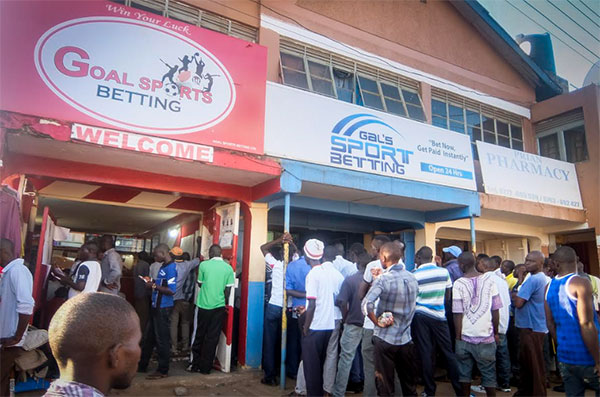
The rise of gaming has mirrored broader changes in Uganda’s economy. Increasing internet penetration, widespread smartphone adoption and the near ubiquity of mobile money have fundamentally altered how consumers access entertainment services. Betting, once largely confined to physical outlets concentrated in urban centres, is now available to millions of Ugandans through mobile applications and online platforms.
Operating dilemmas
For policymakers, the sector’s growth offers both fiscal opportunities and regulatory dilemmas. Rising tax collections have made gaming an increasingly valuable source of non-traditional revenue at a time when governments across Africa are searching for new tax bases amid slowing aid flows and growing expenditure pressures. Yet the same technological advances that have accelerated growth have also complicated oversight and raised concerns about consumer protection, addiction and illegal operators.
“The online shift has fundamentally changed the gaming landscape,” Mudene said. “Technology has expanded access to gaming services across the country, but it has also increased the complexity of oversight. Our responsibility is to ensure that growth happens within a transparent, accountable, and safe environment.”
Uganda’s gaming industry has existed for more than six decades, but its most profound transformation has occurred during the past ten years. Industry growth has been fuelled by digital connectivity and a growing appetite for sports betting, particularly around football.
Today, according to the regulator, approximately 93% of all gaming activity takes place online.
That shift reflects changing consumer behaviour among a younger, increasingly connected population. Betting can now be conducted from virtually anywhere, reducing reliance on traditional gaming premises.
“I do bet from my office desk and I find it convenient instead of those early when I used to move to a betting facility while at campus,” Joseph Bashir, a bettor told The Independent, “I am careful not to stake money that might cause pain when I lose.”
Football key driver
Football remains the industry’s dominant driver. The popularity of major European leagues has created a powerful commercial ecosystem linking sports consumption with betting activity. Weekend fixtures involving clubs in England, Spain, Germany and Italy generate substantial wagering volumes, reinforcing the industry’s growth trajectory.
The sector’s expansion has coincided with significant regulatory reforms. Since gaming oversight was integrated into the Ministry of Finance’s tax policy framework during the 2015/16 financial year and strengthened under the Lotteries and Gaming Act Cap 334, authorities have sought to formalise the industry and improve compliance.
As a result, the role of the regulator has broadened considerably. Beyond licensing operators, the Board now oversees supervision of gaming activities, support for tax collection, certification of equipment, approval of premises, dispute resolution, public education, consumer protection and compliance monitoring.
“The growth in revenue demonstrates that regulation and industry development are not mutually exclusive,” Mudene observed. “When operators work within clear rules and consumers have confidence in the system, the sector becomes more sustainable and contributes more meaningfully to national development.”
But the rapid industry growth has also exposed capacity constraints within the regulatory framework. The Board acknowledges that it remains stretched relative to the scale and sophistication of the market it oversees.
“As the sector grows, regulatory capacity must grow with it. Effective supervision requires investment in technology, personnel, enforcement, and public education,” he said.
Those challenges are particularly visible in the fight against illegal gaming operations, which continue to undermine formal operators and deprive the government of tax revenue.
Recent enforcement efforts illustrate the scale of the problem. The regulator reported confiscating 7,797 pieces of illegal gaming equipment, including slot machines, fish tables and other gaming devices, with an estimated value of Shs8.77 billion. Of these, 6,867 machines valued at approximately Shs6.21 billion have already been destroyed.
The figures suggest that despite the sector’s increasing formalisation, a substantial underground market remains active.
The regulator also reported prosecuting 24 criminal cases involving illegal gaming operations. The accused include 19 Ugandan nationals and five Chinese nationals. Twenty-one cases have resulted in convictions, while three remain before the courts.
Mudene described illegal operators as one of the industry’s most persistent challenges.
“Illegal machine operators undermine legitimate businesses, deprive government of revenue, and expose consumers to unfair and potentially exploitative gaming environments,” he said.
Digitalisation has further complicated enforcement. Cross-border advertising, international payment systems and the relative ease with which gaming equipment can move across jurisdictions have made national regulation increasingly difficult.
“We need stronger regional cooperation and targeted legislative improvements to close loopholes that illegal operators exploit. Enforcement cannot stop at our borders because the digital environment itself has no borders,” he added.
Alongside enforcement efforts, Uganda has invested in establishing technical standards designed to improve transparency and integrity within the industry. These standards cover a broad range of gaming technologies, including online monitoring systems, electronic raffle platforms, gaming kiosks, progressive jackpot devices, card shufflers, electronic table games, scratch ticket systems and change-management controls.
The objective, according to the regulator, is to ensure that gaming systems operate according to internationally recognised standards and provide consumers with confidence in outcomes.
“Our goal is not simply to remove illegal equipment,” he explained. “Our goal is to ensure that every approved gaming system operating in Uganda meets internationally recognised standards of security, transparency, and fairness.”
Beyond taxation and compliance, the social consequences of gambling are increasingly shaping regulatory priorities.
Social and economic wellbeing
A 2023 study commissioned by the Board examining the socioeconomic and health effects of gambling found that 99% of problem gamblers were male and that 58% were young people. The findings reinforced concerns that the sector’s fastest-growing demographic may also be its most vulnerable.
The results prompted a reassessment of public-awareness campaigns and consumer-protection strategies.
“Responsible gaming is not an anti-gambling campaign—it is a public health safeguard embedded in our regulatory DNA,” Mudene said. “Our duty is to ensure that people who choose to participate in gaming do so with the information, protections, and support systems necessary to avoid harm.”
In response, the Board has expanded outreach programmes through schools, community leaders, media platforms and stakeholder training initiatives. Regional offices have also been established in Gulu, Mbale and Mbarara to decentralise services and improve access to enforcement and support mechanisms, with additional offices planned.
well-being confidential counselling and rehabilitation support for individuals experiencing gambling-related challenges.
For regulators, the long-term success of the sector will increasingly be measured by more than revenue growth. Maintaining public trust, protecting vulnerable groups and ensuring market integrity are emerging as equally important objectives.
“A successful gaming industry is one that balances commercial growth with social responsibility,” he said. “Revenue matters, but public trust matters even more.”
Uganda is also seeking to strengthen its position within the broader African regulatory landscape. Through engagement with organisations such as the Gaming Regulators Africa Forum (GRAF), SiGMA World and the Association of African Regulators, authorities are seeking to exchange expertise and align with emerging international standards.
The ambition is to position Uganda as a regional model for gaming governance while supporting continued industry growth.
Whether that balance can be maintained remains uncertain. Illegal operators continue to evolve, technological innovation is accelerating faster than regulation and public concerns about gambling addiction remain persistent.
But the sector’s trajectory is unmistakable. What was once a niche entertainment industry has become a sizeable contributor to government revenue and a notable feature of Uganda’s digital economy.
“As gaming revenues reach record levels and enforcement actions intensify, we are determined to ensure that the industry’s future is defined not merely by the size of the jackpot, but by the credibility of the system behind it,” Mudene said.