The Independent Uganda: You get the Truth we Pay the Price



Kampala, Uganda | THE INDEPENDENT | Exim Bank Uganda has backed Yangtze Industry Ltd’s expansion into manufacturing with financing for a new glue production facility at the Sino-Uganda Mbale Industrial Park, as Uganda seeks to deepen local production and reduce reliance on imported products, officials said in a statement on Oct.1.
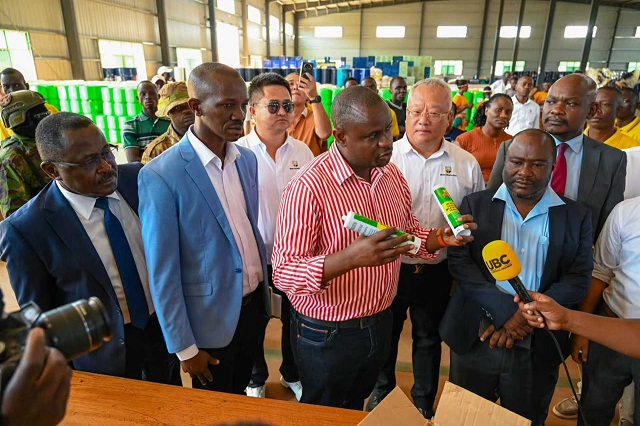
The facility was officially launched at a ceremony attended by government officials, business leaders, industrial park representatives and financial-sector stakeholders.
Minister of State for Local Government Balaam Barugahara, who inaugurated the facility, commended Yangtze Industry for investing in local manufacturing and creating employment opportunities, while recognising Exim Bank’s role in supporting the project.
The investment comes at a time when Uganda’s industrial sector is recording continued growth, although manufacturers continue to face cost and operating pressures.
According to Uganda Bureau of Statistics data, manufacturing grew by 5.5% in the financial year 2025/26, while the wider industry sector expanded by 6.4% and accounted for 24.1% of the economy’s gross domestic product.
The Uganda Manufacturers Association estimates that manufacturing contributes up to 16.5% of GDP, directly employs more than 1.3 million people and generates about US$2.9 billion in exports.
Against this backdrop, financing for productive investments such as the Yangtze Industry facility could help companies expand capacity, introduce new products and strengthen domestic supply chains.
Exim Bank said its support for businesses is aimed at providing financing and other financial solutions to facilitate capital investment, business expansion and trade.
The bank was represented at the launch by Deputy Chief Executive Officer Anthony Mariiro, Head of Business Banking Francis K. Mulero and Relationship Manager Proscovia Mwanje Nabulya.
The new glue production facility adds to industrial activity at the Sino-Uganda Mbale Industrial Park and is expected to create employment while generating opportunities for local suppliers and other businesses linked to the manufacturing value chain.
The development also comes as Uganda seeks to increase the contribution of manufacturing to economic growth by encouraging investment in production, industrial infrastructure and value addition.