The Independent Uganda: You get the Truth we Pay the Price


Why is energy critical to a country?
SPECIAL FEATURE | NNANDA KIZITO SSERUWAGI | Energy is one of the most important utilities that enable the functioning of modern life. Without it, most aspects of our day-to-day lives would grind to a halt. You can link a country’s energy consumption to all human development indicators of its population. Lack of access to energy would deleteriously affect a people’s health, nutrition, mobility/transport, access to water, education, ability to build infrastructure, and ultimately it would even affect life expectancy. The generation of sufficient, reliable and affordable energy is critical to the socio-economic transformation of society. For this reason, the government of Uganda has an ambitious national target to generate 52 GW of overall power capacity by 2040. This essay offers insights into this ambition by tracing the journey the country has taken in developing its energy infrastructure and highlighting the ongoing ventures in the energy sector.
A brief history of Uganda’s energy sector
Uganda’s energy sector has evolved from a state-monopoly system serving local consumers and constrained severely by generation deficits, transmission weaknesses and distribution inefficiencies, into a liberalised and diversified sector that’s expanding and exporting to regional markets.
Colonial and UEB era
Major developments in the energy sector began during the colonial era, especially in the 1940s. In 1948, the colonial government established the Uganda Electricity Board (UEB) as a state monopoly responsible for electricity generation, transmission, distribution and supply around the country. It was also planned that UEB would take over existing small-scale power operations in the country at the time, such as the East African Power and Lighting Company (EAP&L), diesel and wood-fuelled thermal generators in Entebbe, Kampala and Jinja, and other localised industrial ginneries and estates. UEB was also meant to plan and organise the financing and construction of the first hydro-power plant, Owen Falls Dam (later named Nalubaale power station).
In 1954, Nalubaale hydropower station was officially commissioned by Queen Elizabeth II in Jinja. Designed for a capacity of 150MW, Nalubaale laid the early foundations of Uganda’s national grid. Having opened the first power station, UEB oversaw the entire vertical supply chain from the stepping up of the voltage, to the establishment of the long-distance lines, to the construction of local substations, and up to the household billing. It built high-voltage transmission lines from Jinja to Kampala, and expanded over the years to Entebbe and Masaka, and Tororo and Soroti. Having entered the Uganda-Kenya Bulk Supply Agreement in the 1950s upon the opening of the Owen Falls Dam, Uganda also began exporting electricity to western Kenya and Nairobi through a 132KV overhead transmission line, to help in the financial sustenance of UEB in the early years of its establishment.
Decline (1970s to 1980s)
Decades of political anarchy and economic stagnation between the 1970s and 1980s were characterised by underinvestment in the energy sector, which caused a serious decline in the country’s electrification trajectory, with its power infrastructure ageing, unmaintained, and consequently leading to energy shortages.
Reform (1990s to 2000s)
The energy sector was restructured and liberalised in the 1990s-2000s by the National Resistance Movement (NRM) government as it responded to recommendations by the World Bank and International Monetary Fund (IMF) under the Structural Adjustment Programs (SAPS). The restructuring was conceived as necessary to solve the fundamental challenges of the time, which included severe power shortages, high system losses (caused by electricity loss or theft before it is billed), poor utility financial performance, i.e., UEB’s operational inefficiency and commercial failure, and low grid access.
In 1999, the Power Sector Restructuring and Privatisation Strategy (PSRPS) was implemented, outlining the official roadmap for dissolving state dominance in the energy sector and attracting private sector participation and independent regulation of the market. The Electricity Act of 1999 was then passed, and it provided for the unbundling of UEB’s monopoly into three functional entities, i.e., Uganda Electricity Generation Company Ltd (UEGCL), Uganda Electricity Transmission Company Ltd (UETCL), and Uganda Electricity Distribution Company Ltd (UEDCL).
Then in 2000, the Electricity Regulatory Authority (ERA) was set up as an independent body to regulate the market and oversee licensing, tariff setting and general oversight over the industry. The government was at this time deeply interested in attracting private investors to expand energy access since the sector had almost gone moribund. Therefore, it introduced the Energy Policy for Uganda in 2002 to liberalise the sector and introduce competitive and private sector participation to promote widespread, equitable access to energy services, and also diversify the energy sources.
That energy policy was the precursor to the coming of Umeme Ltd, a private distribution company which took over from UEDCL with a 20-year concession. Umeme would go on to achieve tremendous success in making Uganda’s electricity sector commercially viable by, among other things, lowering distribution losses dramatically.
Umeme’s 20-year electricity distribution concession was ended in 2025, and operations reverted to UEDCL, marking another major event in our country’s energy journey, with a government parastatal coming in charge of electricity distribution.
Expansion (2010s)
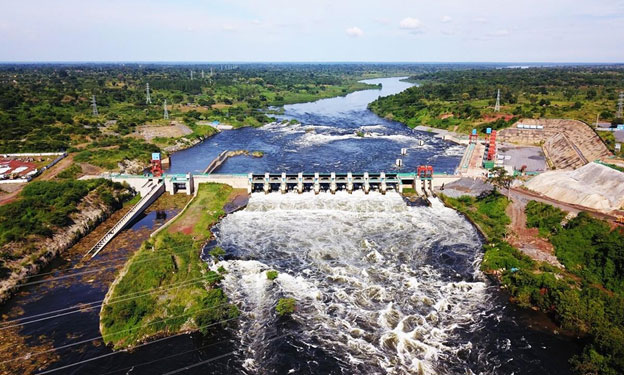
The decade beginning in 2010 was punctuated by expansions of the country’s energy capacity and major investments in the hydropower infrastructure. In 2012, the government commissioned the Bujagali Hydropower project, with an installed capacity of 250MW. The addition Bujagali made to the national grid greatly contributed to reducing load-shedding.
Uganda also began construction on the Karuma Hydroelectric power station (600 MW) in 2013, and on Isimba Dam in 2015 (183 MW). Isimba commenced operations in 2019 while Karuma became operational in 2024.
Uganda leapt in solar diversification in 2016 when it opened the Soroti Photovoltaic Plant with a capacity of 10MW, making it the largest grid-connected solar power station in East Africa at the time. This $19 million facility was designed to supply clean electricity to roughly 40,000 homes, schools, and businesses in eastern Uganda.
The 2020s
The 2020s decade is now marked mainly by key developments in oil transition and governance reforms in the energy sector.
In 2022, the parliament amended the Electricity Act, with major new developments in easing bulk power sales directly to industrial consumers and also allowing private players to participate in the transmission of electricity.
The National Energy Policy 2023 was also released to consider new and emerging needs in the sector, such as providing for universal energy access, providing guidelines for regional power exports and also integrating nuclear energy development into the energy sector.
In 2024, Uganda’s total installed electricity capacity crossed 2,000 MW when Karuma hydropower’s 600 MW station achieved full commercial operational capacity.
Current developments in energy
Inside Uganda’s Oil Sector
There are three distinct stages in which the energy sector categorises operations in oil production. Each stage is categorised based on its proximity to the final consumers. These stages are: the upstream, the midstream and the downstream. The upstream stage involves finding and extracting the raw, unrefined oil. The midstream stage undertakes the transportation and storage of the raw oil and gas via pipelines and tankers. The downstream stage is where the crude oil is refined into usable consumer products such as petroleum, diesel, paraffin, plastics, etc.
Upstream
The year 2006 was significant in Uganda’s energy journey because it was marked by the discovery of commercially viable crude oil reserves in the Albertine Graben by Hardman Resources and Tullow Oil, which had been licensed by the Government of Uganda to conduct upstream oil and gas exploration.
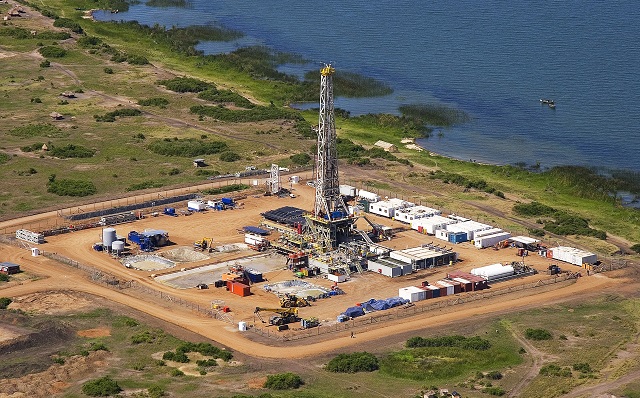
There are two main developments in progress in Uganda’s oil sector: the Tilenga and Kingfisher projects. The Tilenga project, managed by TotalEnergies, is designed to reach a maximum production rate of 190,000 barrels of oil per day, at its stable daily production capacity before the wells eventually begin declining over the project’s estimated 20-year lifespan. The Kingfisher project, operated by the China National Offshore Oil Corporation Uganda Ltd (CNOOC), is Uganda’s second major commercial oil field development, with a capacity to produce a volume of 40,000 barrels of crude oil per day at its maximum stable extraction rate. With both oil fields’ combined maximum output capacity, Uganda will be producing roughly 230,000 barrels of crude oil per day.
In 2022, TotalEnergies, CNOOC, and the governments of Uganda and Tanzania signed the Final Investment Decisions for implementing the Lake Albert Development Project (Tilenga and Kingfisher) and also the East African Crude Oil Pipeline (EACOP).
Both the Tilenga and Kingfisher projects are almost completed.
Besides the already ongoing projects in the Albertine Graben, Uganda is also currently undertaking new frontiers of petroleum exploration in the Moroto-Kadam and Lake Kyoga basins. The areas were opened up for exploration in 2024, and preliminary findings suggest potential for commercially viable crude oil and gas resources in the basin. The Lake Kyoga basin is a larger frontier of 7,831 km², as compared to the 5,672 km² of Moroto-Kadam. There are ongoing surveys to assess the basin’s hydrocarbon potential.
Midstream
The EACOP begins its journey with a feeder pipeline from the Tilenga and Kingfisher oilfields to the Kabaale Delivery Point / Export Hub inside the Kabalega Industrial Park in Hoima District, from where it carries the oil to Chongoleani Peninsula near the Port of Tanga in Tanzania.
The East African Crude Oil Pipeline (EACOP) is split into 296 km and 1,147 km between Uganda and Tanzania, respectively, and is jointly owned by four shareholders: TotalEnergies, the majority shareholder with 62% ownership, Uganda National Oil Company / UNOC (15%), Tanzania Petroleum Development Corporation / TPDC (15%), and CNOOC with 8%. The pipeline is now approaching completion.
Another major project under development is the Kampala Storage Terminal in Namwabula, Mpigi District. This over $250 million fuel storage project is a critical infrastructure in our national energy roadmap, and it will become one of East Africa’s largest petroleum storage facilities upon completion. It is built across 300 acres and will collect the refined products pumped from the 60,000 barrels-per-day oil refinery in Kabaale, Hoima District. The Kampala Storage Terminal will cushion the country against supply shocks, since it has a total static capacity to store up to 320 million litres of refined products at any given time. Note that Uganda consumes roughly 240 million litres of petroleum per month, yet its historical storage capacity was only around 159.7 million litres. Geopolitical crises like the closing of the Strait of Hormuz in the ongoing Iran War indicate the importance of having sufficient oil storage capacity to buffer the country from suffering the brunt of global energy shocks.
Downstream
The estimated earnings from oil are not permanently predetermined. There could be a significant change in how much Uganda earns depending on whether the Hoima refinery reaches a final investment decision and is built in partnership with Alpha MBM Investments of the UAE. If we refine some of the crude oil we produce locally, Uganda will retain a higher value on domestically produced petrochemical products, which value would have been lost if we exported 100% of the crude.
Another major project in Uganda’s oil sector is the Kabalega Petro-Based Industrial Park (KIP). This massive 29.57 sq km oil-and-gas industrial hub developed by UNOC is strategically designed to transform Uganda’s emerging oil and gas industry into a regional driver for industrialisation, economic diversification, and export growth. The park will host Kabalega International Airport, Uganda Greenfield Oil Refinery (Kabaale Refinery), EACOP Export Hub with Pump Station No. 1, giving the refinery the “right of first call” to take up to 60,000 barrels of oil per day directly from this hub to process it locally, and the Specialised Free Zone of 26 hectares on which enterprises dealing in petrochemicals, fertilisers, warehousing, and plastics will be based.
Uganda is also strategising on commercialising gas, with a goal of capturing 100,000 metric tons of Liquefied Petroleum Gas (LPG) annually from the Tilenga and Kingfisher oil fields. The government, through UNOC, is partnering with Vivo Energy to handle the commercial marketing and distribution of the government’s share of LPG and with Global Gases Group to build a local LPG cylinder manufacturing plant and make the gas accessible to citizens. For a country where roughly 65% of households use firewood as their main fuel, 48.6% use charcoal, and only 3.8% use clean fuel and technology, as per the 2024 National Population and Housing Census, the government’s investment in gas would transform so many people’s lives, preserve their health from pollution, offset part of the country’s carbon footprint, and mitigate deforestation, which destroys thousands of hectares of forest cover annually. Global Gases Group is contracted to produce 500,000 LPG cylinders annually for the Ugandan domestic market.
Revenue
When oil production starts, Uganda is projected to earn revenues between USD 1.5 billion and 2 billion annually (roughly UGX 5.5 trillion to UGX 7.4 trillion). This is the peak earning expected to be realised for approximately 20 years before production rates decline.
Inside Uganda’s Electricity Sector
The government’s most ambitious goal is to generate 52 GW of overall power capacity by 2040. This can only be achieved by diversifying into multiple energy sources.
Hydropower
The aforementioned oil and gas projects will significantly complement Uganda’s other investments in hydropower, including the already completed Nyagak III Small Hydropower Project (6.6 MW), ORIO Mini Hydropower Project (6.7 MW combined), Kiba Hydropower Project (400 MW), Ayago Hydropower Project (840 MW), and Oriang Hydropower Project (392 MW).
| Project | Capacity | Status |
| Nalubaale (Owen Falls) | 150 MW (upon design), 180 MW (after repairs and upgrades) | Operating |
| Bujagali | 250 MW | Operating |
| Isimba | 183.2 MW | Operating |
| Karuma | 600 MW | Operating |
| Nyagak III | 6.6 MW | Operating |
| ORIO Mini Hydropower Project | 6.7 MW (combined) | Construction phase |
| Kiba | 400 MW | Feasibility Stage |
| Ayago | 840 MW | Planned |
| Oriang | 392 MW | Pre-Feasibility / Announced |
Solar power
Uganda’s utility-scale solar power projects include the already operational Ituka West Nile Solar PV Project (24 MWp), Masdar-Uganda Partnership Projects (150 MW – 170 MW), Xsabo Group Solar Plans, and the Kiboga and Nakasongola Solar Projects. Once completed, these grid-connected plants could significantly complement the national grid.
| Project | Capacity | Status |
| Soroti Photovoltaic Plant | 10 MW | Operating |
| Ituka West Nile Solar PV Project | 24 MWp | Operating |
| Masdar-Uganda Partnership Projects | 150 MW – 170 MW | Planned |
| Xsabo Group Solar Plants | 40 MW Operating; ~110+ MW Planned | Operating & expanding |
| Kiboga and Nakasongola Solar Projects | Varies (Mini-grid/Off-grid scale) | Operating/progressing |
Geothermal
Uganda is also exploring potential prospects in geothermal energy. The prospects include, among others, the Kibiro, Panyimur, Buranga, and Katwe geothermal prospects. These projects have not yet matured to contribute to the country’s energy portfolio, but their estimated potential is 1,500 MW.
Nuclear
Another diversification is coming with nuclear energy, which is undergoing preparatory phases. The government has already signed a contract with South Korea’s Korea Hydro & Nuclear Power (KHNP) for a site evaluation at Buyende. The nuclear power plant is billed to produce 1,000 MW initially by 2031, with a capacity rising to 8,400 MW by 2040. The Directorate of Geological Survey and Mines (DGSM) is also actively conducting field drilling and sampling to evaluate uranium deposits in Buhweju and Sembabule districts. Other areas identified with potential for uranium production include Arua, Pakwach, Agago, Masindi, Kabarole, Mbarara and Hoima districts.
Transmission and distribution
Uganda’s remarkable investments in energy generation infrastructure, as highlighted above, need no emphasis. The key emphasis or concern now is on the country’s transmission and distribution frameworks. The government cannot do all this work alone. Private investors are needed to work with it in the next two decades to build new transmission lines that can evacuate the energy generated. We also have to build associated substations, switching stations, and acquire transformers, which will cost huge amounts of money, so there is a revenue concern to attend to as well.