The Independent Uganda: You get the Truth we Pay the Price


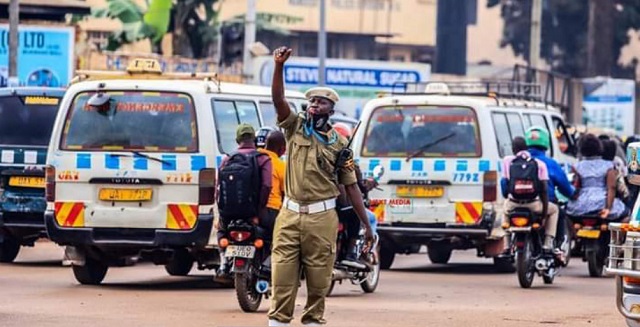
OPINION | REHEMA KAHUNDE | For decades, Greater Kampala Metropolitan Area (GKMA) has grappled with poor public transport which is mainly dominated by the 14-seater minibus taxis and two-wheeled motorcycles (boda boda). The safety of road users, especially passengers and pedestrians, is among the enormous challenges of the transport system in the city and its neighbouring districts.
The 2025 annual crime report shows that 76,069 out of the 322,441 traffic offenders (24 percent) that were arrested were apprehended for using vehicles in poor mechanical condition.
This partly informs government’s a 100-day enforcement exercise, starting August 24, 2026, dubbed “Operation Ganyegenya”, targeting commuter taxis operating in Dangerous Mechanical Condition (DMC) across the GKMA. Under this operation, all commuter taxis with damaged seats, defective doors, worn-out tyres, unsafe steering systems, etc have been stopped from operating. However, it is worth noting that there is more to road safety beyond just a DMC taxi.
“Operation Ganyegenya” is a justified road-safety intervention. But its ultimate safety impact will depend on what replaces the DMC taxis it removes from the road. The key question is:
“What transport options are available to this passenger who would have boarded the DMC taxi?”
Impounding a DMC taxi from the road does not eliminate the journey but rather changes how that journey is made. As such, passengers may opt for the next available alternatives such as other “roadworthy” taxis which are operational, a boda boda, walk longer distances, squeeze into an overloaded vehicle.
These alternatives, however, may pose a bigger safety risk to the affected road users relative to the risk from a DMC taxi. A passenger in a DMC taxi may be safer than their counterpart using alternative means of transport. For instance, a shift from a DMC taxi to a boda boda or walking is seen as substituting one safety risk for another.
The national annual crime report reveals that motorcyclists (riders and passengers) accounted for the largest share of seriously injured road users, representing 55% of all cases in 2025.
Similarly, collisions involving pedestrians were reported as the most common type of road traffic crashes, accounting for 20% of all crashes in the same year. Notably, majority of these pedestrians were either crossing the road (43%), walking along the road (32%) or standing by the roadside (9%) at the time of the crash. The operation therefore increases the number of road users who are vulnerable to these fatalities as evidenced by the stranded passengers on the first day of the operation due to the scarcity of taxis.
Additionally, taxi scarcity may encourage over speeding and overloading of the few operational taxis.
The operation has reduced the number of available taxis, yet commuter demand remains unchanged. A reduced fleet creates an economic incentive for the few remaining operators to maximise the number of trips especially during peak periods. The surviving operators may be tempted to carry more passengers, make more trips or operate for longer hours. That could create new risks through driver fatigue, speeding and rushed loading or unloading. This implies that the operation’s unintended outcome could be the shift from mechanical risk to behavioural risk, let alone the livelihood consequences.
On a positive note, the recently revived mass public transport system could leverage the 100-day operation by offering commuters a safer alternative. The operation presents an opportunity for the government to accelerate the transition to bus-based transport while retaining roadworthy taxis as feeder services in areas that buses cannot easily reach.
Removing unsafe taxis from the roads would create room for safer, higher-capacity, affordable and better-regulated public transport, while generating additional passenger demand that buses could absorb. Responsible stakeholders should therefore expand the bus fleet to ensure that the public transport system can meet this growing demand.
That withstanding, roadworthiness inspections should become routine, not abrupt.
A 100-day operation may remove visibly dangerous vehicles, but it does not by itself create asustainable road safety system. A better approach would be periodic inspection, certification, routine maintenance records and consistent enforcement so that vehicles do not deteriorate to the “Ganyegenya” stage before government intervenes.
****
 The author is a research analyst at Economic Policy Research Centre