The Independent Uganda: You get the Truth we Pay the Price


COMMENT | CAROLYNE MUYAMA | At a recent coronation event for the Omukama of Tooro, His Majesty Edward Kijanangoma Rukidi Nyabongo I, President Yoweri Kaguta Museveni urged local leadership to prioritise addressing the region’s high HIV prevalence, notably contrasting it with Karamoja, where HIV prevalence is lowest. That local call to action is backed by robust national data.
This morning at the Uganda Media Centre, Health Minister Chris Baryomunsi released the findings of the Uganda Population-based HIV Impact Assessment (UPHIA 2025). The comprehensive household survey serves as a vital health check for the nation.
Following earlier surveys in 2016/2017 and 2020/2021, UPHIA 2025 measures key indicators such as HIV prevalence, new infections, and the extent to which Ugandans are achieving viral load suppression, helping us understand how our national programmes are performing.
Uganda has lived in the shadow of the HIV epidemic for decades, transforming the widespread fear of the 1990s into a manageable reality thanks to relentless public health campaigns and antiretroviral therapy. The ABC strategy championed by President Yoweri Kaguta Museveni and the First Lady, Janet Kataaha Museveni, went a long way in the fight against HIV/AIDS in the country.
According to UPHIA 2025, the overall prevalence of HIV among adults aged 15 and older is 5.9%, with 7.3% among women and 4.1% among men, equating to 1,496,000 adults living with HIV.
Among adults aged 15 to 64, national prevalence was 6.2% in 2016/17, dropped to 5.9% in 2020/21, and stabilised at 5.9% in 2025. This indicates that government interventions and public health programs are impactful. Infection rates have stabilised, and effective treatment and viral suppression are sustaining millions of lives. However, the data also shows that HIV remains deeply embedded in our communities, signalling that we must shift from broad campaigns to targeted action.
Looking closely at the demographics, two major patterns emerge: the resilience of our teenagers and the heavy burden borne by women and middle-aged adults. HIV rates among teenagers are encouragingly low, with rates of 1.3% for girls and 0.6% for boys aged 15 to 19, indicating that youth-focused prevention messages over the past decade have had an impact.
However, vulnerability rises sharply as people move into adulthood. For women, prevalence climbs from 1.3% among teens to a peak of 15.7% among women aged 40 to 44, while for men, it scales up to 11.7% among those aged 45 to 49. As the researchers continue to look deeper into the explanation for the disparity between men and women, from a social and economic standpoint, biological factors play a role, but structural realities drive the rest. Women often face economic dependence, power imbalances in relationships, and earlier age-mixing dynamics in partnerships.
Meanwhile, middle-aged adults, who are often the economic backbone of families, traders, or mobile workers, face lifestyle pressures, migration for work, and a sense of invulnerability that can reduce condom use among those in committed relationships and regular testing.
The survey also shows marked regional differences in HIV prevalence, from 1.3% in North East-Karamoja to 8.0% in the South Western region, which includes Mbarara, Ntungamo, Kabale, and Kisoro. South and North Buganda are close behind, at 7.3% and 7.2%, respectively, and cover Wakiso, Masaka, Kalangala, Lyantonde, Luwero, Nakaseke, and Nakasongola. Prevalence is 6.8% in the Mid North, 6.1% in the Mid Western region, and 5.4% in Kampala.
These regional gaps may reflect economic hubs, major transport corridors running through Buganda and the South West, and high population mobility, which naturally create environments with higher transmission risk.
HIV directly affects our economy and families. When it affects middle-aged adults, the primary breadwinners and caregivers, household incomes fall, placing a heavy burden on orphans and elderly grandparents. Keeping communities healthy protects the workforce, sustains agricultural productivity, and secures Uganda’s future.
Data is valuable only when used as a safeguard, and we should take responsibility by implementing targeted measures. National averages aren’t the whole story; health funding, testing kits, and educational resources should be decentralised and allocated proportionally to high-burden areas such as the South West and Buganda, while maternal health systems should be strengthened to protect women.
Civil society, religious, and community leaders must break the silence and broaden our focus beyond youth, normalising open conversations about testing, counselling, and treatment retention for older, married, and established adults in safe community spaces, as prevalence peaks heavily among adults in their 40s.
Young people and adolescent networks should maintain their strong defensive play, using peer-to-peer networks to champion safe practices, reject stigma, and carry these healthy choices forward as they transition into adulthood.
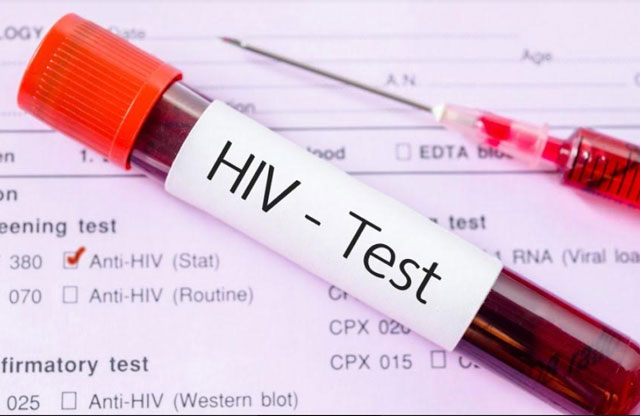
It helps that we all take HIV tests to know our status and plan better. Do not wait for a household survey to find out where you stand. Walk into your nearest health facility, get tested, stay safe if negative, and start treatment if living with HIV. HIV is no longer an automatic death sentence in Uganda but a manageable condition. By confronting these figures honestly and calmly, we can protect our families and secure a healthier future for all.
***
 Carolyne Muyama works with the Uganda Media Centre