The Independent Uganda: You get the Truth we Pay the Price


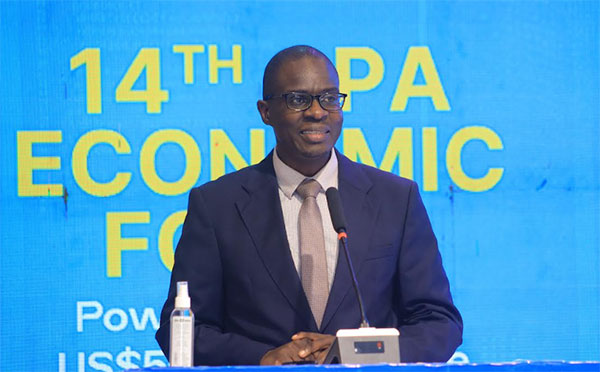
The forum also highlighted the need for stronger capital markets to support Uganda’s long-term development goals
Kampala, Uganda | JULIUS BUSINGE | Uganda’s plan to expand its economy tenfold to about $500 billion by 2040 will depend not only on investment and industrial growth but also on stronger institutions, ethical leadership and financial systems capable of sustaining expansion, according to policymakers and business leaders.
The message emerged at the 14th CPA Economic Forum organised by the Institute of Certified Public Accountants of Uganda (ICPAU) in Entebbe, where accountants, government officials, investors and development experts examined the role of the profession in supporting the country’s economic transformation agenda.
The three-day forum, held from July 15–17, brought together 785 participants to discuss how accounting professionals can contribute to Uganda’s priorities in agro-industrialisation, tourism, mineral-based industrialisation, and science, technology and innovation.
The recommendations from the forum will be submitted to the Ministry of Finance, Planning and Economic Development to inform preparations for the 2026/27 national budget.
ICPAU President CPA David Timothy Ediomu said the scale of Uganda’s economic ambition requires accountants to move beyond traditional financial reporting and become active contributors to policymaking, governance and investment decisions.
“The aspiration to build a US$500 billion economy requires deliberate action, strategic leadership and strong collaboration across all stakeholders,” Ediomu said.
Building a trust economy
Joseph Enyimu, Commissioner for Economic Development Policy and Research at the Ministry of Finance, said Uganda’s transformation challenge is not only about capital mobilisation but also about strengthening trust across public and private institutions.
“Numbers don’t grow an economy on their own, disciplined people do, and that’s the business of accountants,” Enyimu said.
He argued that accountants have a broader role in protecting investor confidence, improving accountability and ensuring institutions operate with credibility.
According to Enyimu, a lack of trust increases the cost of doing business by creating uncertainty for investors and limiting economic participation.
“When a society has a trust deficit, the cost of doing business becomes very high,” he said.
He urged accountants to champion transparency and integrity, saying confidence in systems is essential for attracting investment and sustaining economic growth.
Technology, he said, will play a critical role in improving accountability by reducing opportunities for corruption and increasing visibility in public financial management.
“We must reduce the room for human interface, automate as much as possible and digitise for visibility,” Enyimu said.
Digital platforms, he added, create stronger audit trails that can improve government efficiency and increase confidence among citizens and investors.
Managing risks to growth
The forum also examined risks that could slow Uganda’s economic expansion, including climate change, geopolitical uncertainty, technological disruption and demographic pressures.
Agriculture was identified as a critical area requiring investment, given its importance to Uganda’s economy and employment.
Enyimu said climate resilience would require investments in irrigation, water management, land reforms and technology-driven solutions such as satellite monitoring.
“Farming should no longer be viewed as a traditional occupation,” he said, noting that artificial intelligence and digital technologies are opening new opportunities to modernise agriculture.
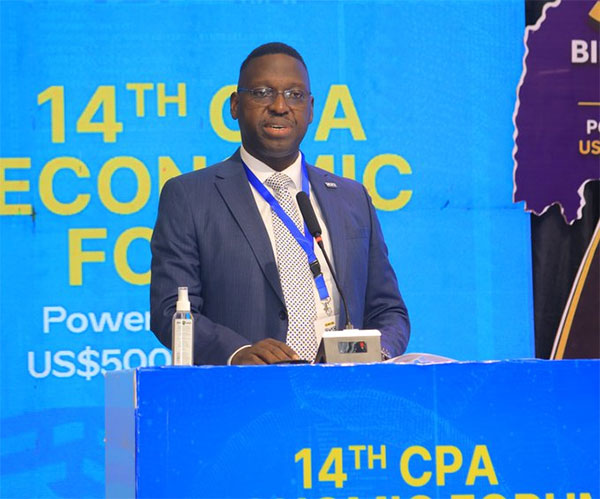
Participants also highlighted the importance of predictable institutions and sound governance in maintaining investor confidence.
As Uganda seeks to attract more domestic and foreign capital, speakers said economic growth will depend on the strength of institutions that support business activity and protect investments.
Deepening capital markets
The forum highlighted the need for stronger capital markets to support Uganda’s long-term development goals.
Despite improvements in macroeconomic stability, Uganda’s capital markets remain relatively shallow, with fewer listed companies compared with some regional economies. This limits access to long-term financing for businesses seeking to expand.
Josephine Okui Ossiya, chief executive officer of the Capital Markets Authority, said reluctance among family-owned businesses to list remains a major barrier.
“It is fundamentally a mindset issue,” she said. “Many entrepreneurs would rather own 100 percent of a small company than 20 percent of a much larger and more valuable business.”
She called for incentives to encourage companies to list, improve governance standards and strengthen financial reporting.
Participants also proposed expanding alternative financing options, including infrastructure bonds, diaspora bonds, Islamic finance products such as Sukuk, and digital financial instruments.
Agriculture’s transformation challenge
Agriculture remains one of Uganda’s biggest opportunities for economic growth, but participants said the sector must become more commercial, productive and technology-driven.
Victoria Sekitoleko, Chairperson of the Governing Board of the Uganda Agribusiness Alliance, said investment in skills, research and innovation will be central to transforming the sector.
“We cannot transform agriculture without investing in knowledge, skills and innovation,” she said.
She called for improved agricultural research, better access to inputs, modern production techniques and education systems that prepare young people for commercial agriculture.
Participants pointed to value addition as a major opportunity, highlighting products such as avocado as examples of areas where Uganda could compete more effectively in regional and global markets.
Accountants as guardians of integrity
Beyond economic policy, the forum placed strong emphasis on the ethical responsibility of accountants.
Enyimu said accountants have significant influence because organisations often rely on them to maintain financial discipline.
“I believe accountants hold enormous leverage,” he said. “It is very difficult for organisations to deviate unless they persuade their accountants to follow suit.”
He challenged professionals to protect standards and resist pressure to compromise financial integrity.
The forum also highlighted the importance of human capital development, with participants saying Uganda’s youthful population could become a major economic advantage if supported by the right skills and education.
“You cannot have a competitive economy unless you have a competitive human resource,” Enyimu said.