The Independent Uganda: You get the Truth we Pay the Price


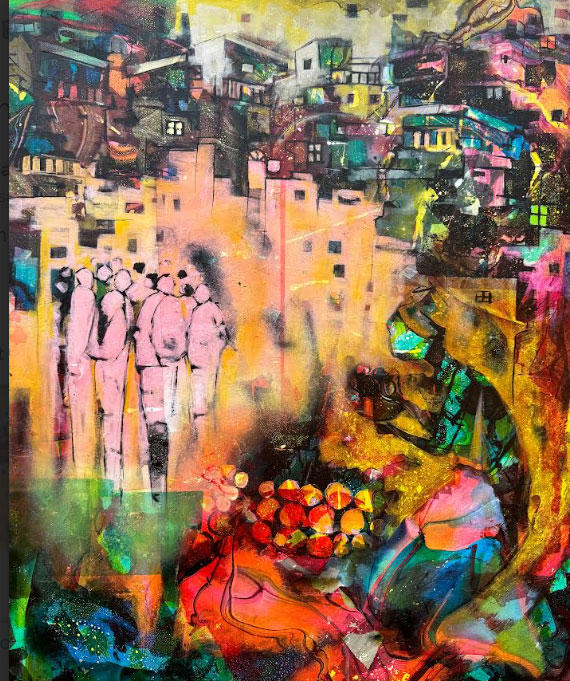
When artists break the rules of art making, they’re in better position to create art that not only captivates, but inspires deep refection on life and how to find solutions to everyday challenges.
ARTS | DOMINIC MUWANGUZI | The debate on who is a better artist between a formally trained artist and a self-taught artist has been on for many years. During the Renaissance period and before, artists learnt and refined their craft through apprenticeship. An artist would work under an established artist to gain skills in the profession, and this usually was supported by an art patron, either a member of the clergy, monarch or wealthy individual. As society grew, especially after the Industrial Revolution, there was a shift in the sociocultural landscape that affected how things were done. A new wave of liberal thinking emerged, and this gave way to the phrase “self-taught artist”, an expression of the departure in the traditional structural organization of art training where artists were “anointed” by an institution or someone close to the institution. When Henri Rousseau (1844-1910) emerged on the art scene, his art was mocked for its clumsy compositions that, according to some critics, did not fit into the mould of what artists created. However, he was later praised for his work and is revered as the godfather of modern art.
The self-taught artist has one big advantage: being able to break the rules of art. This is because he’s free from the “dos and don’ts” of art making that can limit an artist’s creative freedom. This is much unlike many formally trained artists (graduates of art schools or academies) whose creativity is influenced by the principles and elements of art. Ironically, art-making requires a free mind that can explore and experiment as much as possible without any limitations. If an artist cannot do this because he fears being judged, dismissed or misunderstood, then it is likely that he may never reach the full potential of his creativity. This is not to say that formally trained artists are entirely disadvantaged in the industry or are lesser artists, but they should have a mandate to create a delicate balance between what they learn at school and what they’re able to explore and experiment with within their immediate surroundings. Nonetheless, the formally trained artist possesses a broad knowledge of different techniques and skills which, when applied well, can guide him to seamlessly navigate the industry.
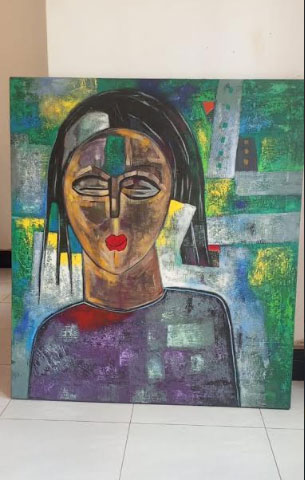
Ibra Kitimbo and Kintu Paul are both self-taught artists with many years of experience on the Ugandan contemporary art scene. Though they possess a diverse approach on canvas in terms of technique, theme and subject matter, the convergence in their work is visible through going against the norm of art-making.
Kitimbo’s singular technique of flowing water, which he has experimented with for decades, infuses an aura of ambiguity and freshness in his paintings.
Similarly, Kintu’s naïve-like female figures with mops of hair and gazelle necks washed in a green palette evoke a sense of self-reflection and rejuvenation. The undeniable effect of both artists’ work is that it’s captivating to the viewer’s gaze but also quickly reminds us of the beauty that lies in experimenting with what is available to us. Kitimbo conceived the flowing water technique when one day his painting accidentally fell in water, and from that point on, he started to experiment with how he could integrate this accidental experience in his work. On the other hand, Kintu’s confession for the love of nature, particularly flowers, inspires him to work with a green palette on his canvas and also create an environment of immersion for both himself and the audience in his paintings.
Against the Norm is an exploration of both the power and beauty that lies in breaking the rules of art. When artists do this, they’re in a better position to create art that not only captivates but also inspires the idea of deep reflection on life and how to find solutions to everyday challenges. This is primarily why artists make art, and because self-taught artists, through their manoeuvre of barriers created for them by some gatekeepers in the industry, are able to rise above this criticism and make incredible art, they need to be recognized for their resilience and passion. This exhibition resounds with this need and provides future opportunities for engagement with this type of artist.
*****
Ibra Kitimbo and Paul Kintu are showing their works in the exhibition Against the Norm at AKA gallery, located on plot 44 Bukoto Street, Kamwokya, Kampala.