The Independent Uganda: You get the Truth we Pay the Price


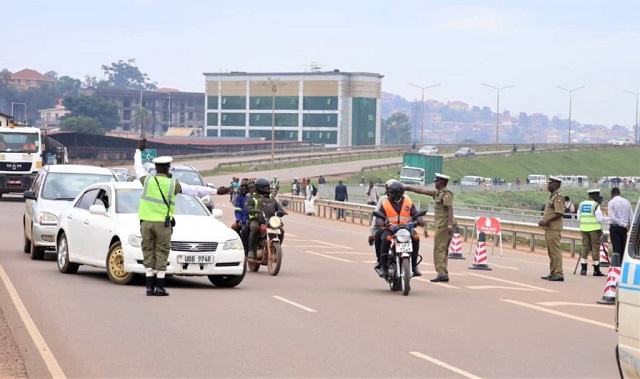
In 2024, Uganda police official figures published show that 4,434 people died compared to 83 people that died because of road accidents in Hong Kong. These figures are alarming.
COMMENT | SAM TINKA | On the night of 16th July 2026, news streamed in that a liberty bus carrying 107 pupils had gotten into an accident, and 20+ pupils lost their lives, including the proprietor of the school. This is one of the darkest days in Uganda’s education sector. Losing over 20 children is so painful, unimaginable and heartbreaking.
Not long ago, a similar accident involving school bus and train happened in Mukono. One person lost a life, and others suffered injuries. On 7th July another fatal accident involving a bus and trailer happened along the Gulu Highway. Police confirmed 14 were in a head-on collision involving a bus belonging to Opit Travellers and a trailer along the Kampala-Gulu Highway in Omoro District.
What is a road traffic accident?
A road traffic accident is defined as an incident resulting in bodily injury to any person caused by, or arising out of, the use of a motor vehicle on a road or public place. It typically involves at least one road vehicle in motion on a public road or private road accessible to the public, resulting in at least one injured or killed person
Every year the lives of approximately 1.19 million people are cut short because of a road traffic crash. Between 20 and 50 million more people suffer non-fatal injuries, with many incurring a disability.
Road traffic injuries cause considerable economic losses to individuals, their families, and nations. These losses arise from the cost of treatment as well as lost productivity for those killed or disabled by their injuries and for family members who need to take time off work or school to care for the injured. Road traffic crashes cost most countries 3% of their gross domestic product. When it comes to Uganda, the health sector spends lots of resources on accidents and related accident victims. At Arua Regional Hospital, there is a hospital ward called Senke Ward – This was named so after the famous motorcycle called ‘Senke’ that was commonly used in Arua.
Socioeconomic status
More than 90% of road traffic deaths occur in low- and middle-income countries. Road traffic death rates are highest in the WHO African Region and lowest in the European Region. Even within high-income countries, people from lower socioeconomic backgrounds are more likely to be involved in road traffic crashes. For example, in 2024, Uganda police official figures published show that 4,434 people died compared to 83 people that died because of road accidents in Hong Kong. These figures are alarming.
As a country, you can lose 1% of your population through accidents. Road traffic injuries are the leading cause of death for children and young adults aged 5–29 years. Two-thirds of road traffic fatalities occur among people of working age (18–59 years)
Risk factors
Speeding
- An increase in average speed is directly related both to the likelihood of a crash occurring and to the severity of the consequences of the crash. For example, every 1% increase in mean speed produces a 4% increase in the fatal crash risk and a 3% increase in the serious crash risk.
- The risk of death for pedestrians hit by car fronts rises rapidly (4.5 times from 50 km/h to 65 km/h).
- In car-to-car side impacts the fatality risk for car occupants is 85% at 65 km/h.
Driving under the influence of alcohol and other psychoactive substances
- Driving under the influence of alcohol and any psychoactive substance or drug increases the risk of a crash that results in death or serious injuries.
- In the case of drink-driving, the risk of a road traffic crash starts at low levels of blood alcohol concentration (BAC) and increases significantly when the driver’s BAC is ≥ 0.04 g/dl.
- In the case of drug-driving, the risk of incurring a road traffic crash is increased to differing degrees depending on the psychoactive drug used. For example, the risk of a fatal crash occurring among those who have used amphetamines is about 5 times the risk of someone who hasn’t.
Non-use of motorcycle helmets, seat-belts and child restraints
- Correct helmet use can reduce the risk of death in a crash by more than 6 times and the risk of brain injury by up to 74%.
- Wearing a seatbelt can reduce the risk of death among vehicle occupants by up to 50%.
- The use of child restraints can lead to a 71% reduction in deaths among infants.
Distracted driving
There are many types of distractions that can lead to impaired driving. The distraction caused by mobile phones is a growing concern for road safety.
- Drivers using mobile phones are approximately 4 times more likely to be involved in a crash than drivers not using a mobile phone. Using a phone while driving slows reaction times (notably braking reaction time, but also reaction to traffic signals) and makes it difficult to keep in the correct lane, and to keep the correct following distances.
- Hands-free phones are not much safer than hand-held phone sets. Texting considerably increases the risk of a crash.
Unsafe road infrastructure
The design of roads can have a considerable impact on their safety. Ideally, roads should be designed to keep in mind the safety of all road users. This would mean making sure that there are adequate facilities for pedestrians, cyclists and motorcyclists. Measures such as footpaths, cycling lanes, safe crossing points and other traffic calming measures can be critical to reducing the risk of injury among these road users.
Unsafe vehicles
Safe vehicles play a critical role in averting crashes and reducing the likelihood of serious injury. This is among the main causes of accidents in Uganda. Several DMCs are on the roads in Uganda, notwithstanding the 1000s of traffic police officers on the road. The most disturbing and yet to be comprehended is that between Kampala and Kapchorwa, where this accident happened, these fully overloaded buses in dangerous mechanical conditions passed through multiple traffic police checkpoints, but at no time were these buses flagged off, at least for overloading. As a traffic police officer, it should be easier to get hold of a bus that is overloaded. You don’t need to have a degree, master’s degree or study rocket science to know that this bus, taxi or coach is overloaded. How can traffic police justify why these overloaded buses were not detected, stopped and flagged off?
Inadequate post-crash care
Delays in detecting and providing care for those involved in a road traffic crash increase the severity of injuries. Care of injuries after a crash has occurred is extremely time-sensitive: delays of minutes can make the difference between life and death. Improving post-crash care requires ensuring access to timely prehospital care, and improving the quality of both prehospital and hospital care.
Inadequate law enforcement of traffic laws
If traffic laws on drink-driving, seatbelt wearing, speed limits, helmets and child restraints are not enforced, they cannot bring about the expected reduction in road traffic fatalities and injuries related to specific behaviors. Thus, if traffic laws are not enforced or are perceived as not being enforced, it is likely they will not be complied with and therefore will have very little chance of influencing behavior.
In Uganda, you will find a traffic police officer every 50 km in upcountry districts and every 3 km in urban centres. But these officers seem to be scarecrows. A truck carrying merchandise is flagged down 30 times from Isingiro to Kampala. And it will cost an average of 5 minutes on every traffic checkpoint. Drivers lose at least 1 and half hours just attending and paying ‘fines’ to traffic officers.
Whereas we can blame police officers for not enforcing traffic regulations, we must, in the same width and length, hold accountable Ugandan drivers who seem possessed by demons. Road discipline is the ultimate medicine for safer roads.
Governments must take action to address road safety in a holistic manner. This requires involvement from multiple sectors such as transport, police, health and education, as well as the private sector and civil society organizations. It requires actions that address the safety of roads, vehicles and all road users.
As a country we have bad road infrastructure with few signs and markings, potholed roads, etc. The remedy for all this is discipline on the road. Use seat belts, ensure speed limits are observed, check and ensure the car you are driving is in good mechanical condition and respect other road users. Government drivers and officers with big cars: remember that this small road is for us all.
The Kapchorwa accident was avoidable if two things were adhered to: First, carrying the right number of passengers and second, if the mechanical problems suffered during the day were rectified before proceeding with the journey.
If school proprietors continue to manage schools as businesses and put away safety and security concerns, I can assure you we will continue to loose both our children and other valuables. Education is a social need, not a business.
Condolences to the parents, school authorities and relatives of those that lost their loved ones. May the sweet souls rest in peace.
****
 Samson Tinka is a safety and security consultant | tindsam@yahoo