The Independent Uganda: You get the Truth we Pay the Price


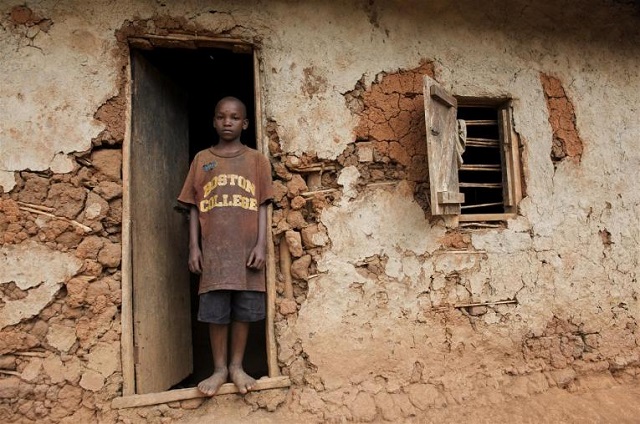
Uganda’s economic growth is real, but the poverty I have witnessed across the country demands that leaders look beyond the headline numbers.
COMMENT | JULIUS BUSINGE | “Give me Shs1,000 and I will buy salt; get me Shs500 and I will buy a drink; contribute some money for me so I can complete my house; I am going to the market to buy essentials for my children, but I do not have transport money.”
These are not theoretical statements from an economics textbook. They are the voices and realities I have encountered in recent months as I have travelled through Eastern, Western, Northern and Central Uganda, stopping in communities, talking to ordinary people, visiting schools, health facilities and government offices, and listening to local leaders and residents.
What I have seen has left me deeply uncomfortable. Something is not right.
There is a Uganda presented in official statistics, budget speeches and economic presentations, where the economy is growing, inflation is relatively contained and the country is preparing for a new era of oil production.
Then there is another Uganda that I have seen on the road: parents struggling to raise school fees, children going to school without adequate uniforms, books or shoes, teachers travelling to schools on boda bodas or walking long distances to work, health facilities where citizens expect more, families struggling to put a decent meal on the table, young people without reliable incomes, and rural households depending on neighbours, relatives and small contributions to complete houses or meet basic needs.
The two Ugandas exist at the same time, and policymakers need to pay much more attention to the second one.
The official numbers are actually more revealing than the political rhetoric sometimes suggests.
According to the Uganda Bureau of Statistics, 16.1% of Ugandans, equivalent to about seven million people, lived below the national poverty line in 2023/24. Rural poverty stood at 19.4%, compared with 10.3% in urban areas, while Eastern Uganda recorded 22.5%, Northern Uganda 27.7% and Karamoja 74.2%. Seven million people is not a small number.
But there is an even more disturbing statistic. The 2024 Uganda Multidimensional Poverty Index, based on the National Population and Housing Census, found that 53.1% of Ugandans were multidimensionally poor, with the figure rising to 61.1% in rural areas compared with 39.1% in urban areas; in Karamoja, multidimensional poverty reached 91.4%. This measure looks beyond income to deprivations in education, health, housing, sanitation, drinking water and other living conditions, and it speaks directly to what I have seen.
A person can be above an income poverty line and still live in a terrible house, lack decent sanitation, struggle to access healthcare, have inadequate educational opportunities and survive without reliable economic security. This is why policymakers should be careful about declaring victory over poverty simply because the monetary poverty rate has fallen.
The people I met do not necessarily think in terms of GDP growth. They think about tonight’s supper, tomorrow’s transport, school fees and medicine; they think about whether the harvest will fetch a good price, whether the road to the market will be passable and whether they will find casual work tomorrow. That is the real economy for millions of Ugandans.
Uganda’s labour statistics reinforce this concern. The latest labour market data put unemployment among people aged 15 years and above at 12.2%, while youth unemployment among 15–24-year-olds was 17.9%. Even more worrying, 42.6% of young people aged 15–24 were estimated to be neither in employment, education nor training, while among those aged 18–30, the NEET rate was 50.9%. UBOS also reported median monthly cash earnings of only Shs200,000 for people in paid employment in 2023/24.
This is where the national debate about “mindset change” becomes uncomfortable. I recently listened to a development programme in Kibaale District where some leaders were talking about changing the mindset of young people, laziness and the need for people to work harder, yet some of those speaking to struggling communities were arriving in government vehicles. The contradiction was difficult to miss.
It is easy to tell a poor young person to change their mindset; it is much harder to ask whether the state has created the roads, markets, electricity, skills, finance, healthcare and security that allow that young person to turn hard work into a decent livelihood.
Uganda should certainly encourage enterprise, personal responsibility and hard work, but we should also stop using “mindset” as an excuse for failures of public policy.
A farmer cannot mindset their way around an impassable feeder road; a sick mother cannot mindset her way into a health centre without essential medicines; a child cannot mindset their way into a good education where the learning environment is poor; and a young person cannot mindset their way into a productive enterprise if the market, financing, skills and infrastructure necessary for that enterprise do not exist.
A family cannot eat GDP growth. It needs income, productive jobs, functioning public services, markets, roads, affordable healthcare and quality education. Above all, it needs a government it can trust.
This brings me to corruption. The Inspectorate of Government estimates that corruption costs Uganda Shs9.144 trillion annually.
The figure comes from a study commissioned by the Inspectorate with support from GIZ, which estimated both direct and indirect costs of corruption and found that Shs4.5 trillion of the annual cost was borne by the public budget, while another Shs4.3 trillion was borne by citizens, public service users and firms.
The Shs9.144 trillion is an estimate from the Inspectorate’s 2021 study, not an audited statement that Uganda loses exactly that amount every year today, but it is sufficiently large to demonstrate the scale of the problem. The same study estimated that public-sector absenteeism alone cost about Shs2.3 trillion a year.
Think about that for a moment. While a rural parent is struggling to raise Shs1,000 for salt, billions can disappear through corruption, inefficiency and absenteeism. This is where government must become much more frugal.
Uganda’s 2026/27 national budget is Shs84.39 trillion, of which Shs9.709 trillion is allocated to wages and salaries, Shs33.276 trillion to non-wage recurrent expenditure, Shs22.054 trillion to development expenditure and Shs13.967 trillion to domestic debt refinancing.
I am not suggesting that all recurrent expenditure is wasteful because it includes essential spending such as medicines, education and health grants, infrastructure maintenance, wealth- creation programmes and interest payments.
But the size of the budget should force a difficult question: how much of every shilling collected from taxpayers ultimately changes the life of an ordinary Ugandan?
That should become one of the central questions of national policy. Why should a local government official in a deeply poor district require an expensive government vehicle when some citizens cannot afford transport to the market? Why should the public continue financing layers of administrative structures when basic services remain weak? Why should government continue expanding political and administrative structures if the resources required to maintain them could instead strengthen schools, health centres, agricultural extension, roads and water systems?
We need an honest conversation about the size and cost of government. This does not mean attacking public servants because Uganda needs competent, properly paid and motivated workers; it means eliminating waste, duplication, unnecessary allowances and politically convenient expenditure.
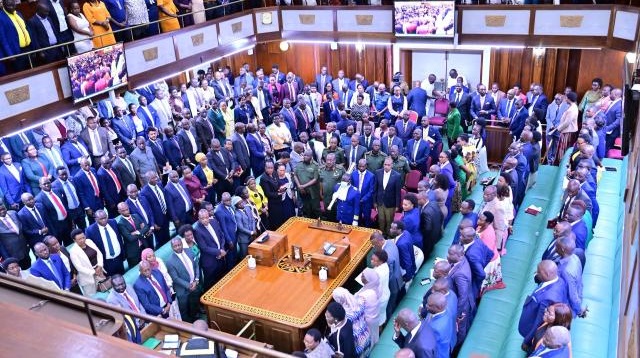
We should ask whether every district, agency, department, political position and administrative structure is delivering enough value to justify its cost, review the cost of allowances, workshops and official travel, strengthen digital government to reduce unnecessary administrative costs, and demand value for money from every public project.
Most importantly, we should make corruption financially painful for those who steal public resources. If public money is stolen, recovering it should be as important as prosecuting the offender.
Corruption is not an abstract governance issue. It is a missing medicine, a broken classroom, a road that never gets completed, a farmer who cannot get produce to market, a young person who cannot find a job, a demoralised teacher and, ultimately, a citizen who loses faith in government.
That last point worries me most. Across the country, I heard people questioning whether government services were reaching them, with some linking poor service delivery to corruption allegations involving leaders and officials.
Whether every allegation is true or not, the perception itself is dangerous because a government can survive criticism but cannot comfortably survive the widespread belief among citizens that public resources are being diverted before they reach them. Trust is an economic asset, and when citizens lose it, government programmes become harder to implement.
Take the Parish Development Model. The idea of moving public resources closer to households and supporting productive economic activity is understandable, but money alone cannot transform a household operating in an environment of weak markets, poor infrastructure, limited skills, inadequate healthcare and weak accountability. The question should therefore not only be, “How much money are we giving the household?” It should also be, “What environment have we created for that household to become productive?”
If a farmer produces maize, beans, coffee, cassava or matooke, that farmer needs a reliable road to the market, storage, information, affordable finance, extension services, electricity and processing opportunities, as well as predictable markets and confidence that the public official responsible for delivering these services will actually be accountable.
This is why Uganda’s poverty fight must move beyond distributing money. We need to invest aggressively in human capital and productive infrastructure: fix and stock the health centre, build and equip the classroom, motivate the teacher, construct feeder roads, connect farmers to markets, improve agricultural productivity, provide skills to young people, create conditions for private investment and decent employment, make public institutions work, and fight corruption as an economic policy rather than merely as a moral campaign.
The latest UBOS evidence should make us uncomfortable. The multidimensional poverty rate of 53.1% tells us that the challenge is much deeper than the 16.1% monetary poverty headline suggests, while rural multidimensional poverty at 61.1% and 91.4% in Karamoja show how uneven the country’s progress remains.
These are not numbers that allow us to become complacent. Uganda is growing, and that should be acknowledged. But growth is not the same thing as prosperity for every household. A country can have impressive GDP numbers while millions of citizens remain economically vulnerable; build impressive buildings while a rural health centre lacks essential supplies; announce ambitious national budgets while a mother wonders how she will find Shs1,000 for salt; and prepare for first oil while a young man sits at a trading centre wondering where his next income will come from.
This is not an argument against growth. It is an argument for inclusive growth.
Uganda’s leaders, from the President and Cabinet to Parliament, district councils, local government officials and village leaders, must ask a brutally simple question: are ordinary Ugandans actually feeling the transformation we keep talking about?
My recent travels have left me with an uncomfortable answer: not enough.
I saw people who were not asking for luxury. They were asking for small things: transport to the market, school materials, medicine, food, a decent house, a toilet, a road, a job and a chance.
Uganda does not need a government that simply spends more; it needs a government that spends better. It does not need more political structures simply for the sake of having them; it needs institutions that deliver.
It does not need endless speeches about mindset change; it needs an environment in which hard work produces results. And it does not need corruption disguised as administration; it needs accountability.
The political leadership should therefore resist the temptation to measure success primarily through the size of the budget, the number of projects launched or the rate of GDP growth.
Measure success by whether children can study properly, whether a woman can reach a functioning health centre, whether a farmer can take produce from the village to the market at a reasonable cost, whether a young person can find productive work, whether families can eat three decent meals and whether citizens believe the taxes they pay are being used honestly.
Most importantly, measure success by whether the Ugandan who asks for Shs1, 000 today still needs to ask for it tomorrow.
That is where the real fight against poverty begins — not in the conference room, the budget speech or the statistics alone, but in the village, the classroom, the health centre, the farm, the trading centre and the household. That is where Uganda’s transformation must ultimately be judged.
****
 The writer is a journalist with The Independent Magazine. He has also practiced Public Relations with several organizations.