The Independent Uganda: You get the Truth we Pay the Price


Divisions Deepen as Parliament Braces for Sovereignty Bill Showdown
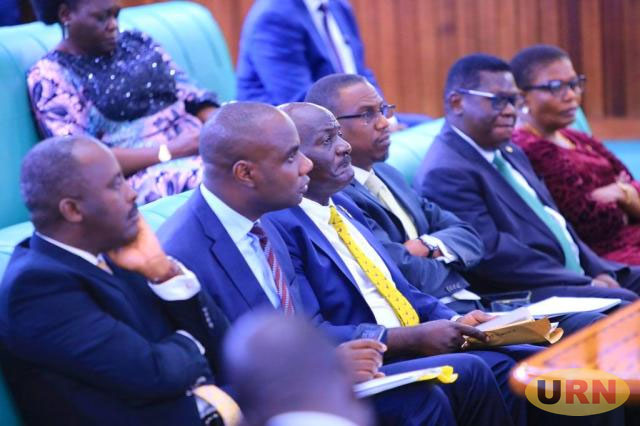
Kampala, Uganda | URN | Parliament faces a defining and potentially divisive moment as lawmakers prepare to debate and vote on the controversial Protection of Sovereignty Bill, 2026, amid deepening political fractures, procedural disputes, and unexpected signals of caution from President Yoweri Museveni. The Bill, scheduled for Second and Third Readings on Tuesday, May 5, arrives on the floor under a cloud of uncertainty following a dramatic standoff at a joint committee retreat in Munyonyo and growing indications that even within government ranks, consensus remains elusive.
Originally tabled on April 15, 2026, by the State Minister for Internal Affairs, David Muhoozi, the proposed law seeks to regulate “agents of foreign influence” through stringent registration requirements, funding thresholds, and penalties of up to 20 years’ imprisonment. Government officials argue that the legislation is necessary to safeguard national sovereignty from external interference.
However, critics, including opposition lawmakers, civil society actors, and sections of the ruling party, warn that its broad provisions risk undermining constitutional freedoms and shrinking civic space. At the centre of the dispute is the Bill’s expansive definition of “foreign agents,” which analysts say could extend to non-governmental organisations, media houses, academic institutions, and even diaspora networks, raising fears of overreach.
Tensions peaked during a three-day joint retreat of the Defence and Internal Affairs Committee and the Legal and Parliamentary Affairs Committee, chaired by Wilson Kajwengye and Stephen Baka Mugabi, respectively. Eleven of the 24 committee members demanded a clause-by-clause review of public submissions and amended drafts, arguing that lawmakers had not been given adequate access to critical documents before adopting the report.
“We do not want summaries. We must read the submissions ourselves to make an informed decision,” said Erute South MP Jonathan Odur. Kilak South MP Gilbert Olanya went further, warning that adopting a report without proper scrutiny would “undermine the integrity of Parliament.” Despite the objections, the majority adopted the report in a contested vote, paving the way for both majority and minority reports to be tabled in plenary, a development that has exposed deep divisions within the legislative process itself.
The reported deployment of security personnel during the retreat underscored the intensity of the standoff, an unusual development for committee proceedings and one that has amplified concerns about procedural fairness and transparency. Adding a new layer of complexity, President Museveni has reportedly distanced himself from aspects of the draft Bill, suggesting that it may not fully reflect the Cabinet’s original position.
Political analysts interpret the President’s posture as a possible attempt to shield himself from growing public backlash while retaining room to influence the final outcome of the legislation. Timothy Chemonges, Executive Director of the Centre for Policy Analysis, argues that the President may be responding to overwhelming public opposition, with reports indicating that a significant majority of submissions called for withdrawal or substantial revision of the Bill.
“Distancing himself creates room for recalibration without outright rejection,” Chemonges noted. He added that the move could also be aimed at pre-empting constitutional challenges, particularly in relation to Article 1 of the Constitution of Uganda, which vests sovereignty in the people, and Article 29, which guarantees freedoms of expression, association, and assembly.
Economic concerns have also emerged as a major point of debate. With Uganda receiving an estimated 2.5 billion US dollars annually in remittances, alongside heavy reliance on foreign direct investment and donor financing, critics warn that overly restrictive provisions could trigger unintended economic consequences. Legal experts have questioned whether the Bill merely duplicates existing laws already capable of addressing illicit financial flows and national security threats.
Kawempe North MP and lawyer Elias Nalukoola pointed to legislation such as the Non-Governmental Organisations Act, the Anti-Money Laundering Act, and the Penal Code Act as already providing mechanisms to regulate unlawful activities. “The danger lies in broad definitions that could capture legitimate actors and be misused against political opponents or civil society,” Nalukoola cautioned.
Veteran activist Maria Matembe echoed similar concerns, arguing that the proposed law risks targeting the very citizens it claims to protect. In a sign of mounting pressure within the ruling National Resistance Movement (NRM), Government Chief Whip Denis Hamson Obua convened an emergency meeting of the NRM Parliamentary Caucus at 9:00 a.m. on May 5 in an effort to harmonise positions ahead of the debate.
The urgency of the meeting reflects growing fears among some NRM legislators that tabling the Bill without internal consensus could trigger open dissent on the floor of Parliament, an unusual but increasingly plausible scenario as the 11th Parliament winds down. The unfolding controversy has placed Parliament’s constitutional mandate under intense scrutiny.
While the joint committee report, yet to be tabled before the House, reportedly states that more than 60 stakeholders, including government institutions, private sector actors, civil society organisations, religious groups, and diaspora representatives, were consulted, dissenting MPs argue that many of the views raised were either ignored or inadequately reflected in the final draft.
As Parliament convenes for the highly anticipated debate, several unresolved questions continue to loom over the process. Among them are whether public submissions were genuinely incorporated into the final report, why amended versions of the Bill were allegedly not made fully accessible to all committee members, whether the legislation has evolved beyond the scope of Cabinet approval, and whether President Museveni’s apparent distancing signals the possibility of a veto if the Bill is passed in its current form.