 The Independent Uganda: You get the Truth we Pay the Price



COMMENT | ANDREW PI BESI | It all began with Andrew Mwenda’s unfortunate description of President Yoweri Museveni as old and senile. Days later, President Museveni, in a manner typical of him, responded through the same medium (X formerly Twitter), writing, to wit: “Mr Mwenda, thank you for declaring me senile and incapable of judging right. You will, however, discover that at 82, I am still able to defend Uganda and myself with the Bible, the AK-47, and the pen.”
Indeed, as I have noted in previous essays, Uganda, under President Museveni, has registered significant economic growth. On average, Ugandans are wealthier today than at any time in our 65-year history as a republic.
Yet in conversations with many young Ugandans over the past few years, I have noticed that there exists a growing disconnect between them and the body politic’s endless insistence on “In 1986 …”! Perhaps, “In 1986 …” has itself been abused by those who invoke it too often and too carelessly.
However, let me now add my own voice to that of Andrew Mwenda and millions of Ugandans, young and old, who increasingly question the choice of beneficiaries of state largesse for their enterprises.
In 1987, armed with about 21,000 Yuan (then valued at roughly USD 5,000), Ren Zhengfei established a small company in the Shenzhen Economic Zone. At the time, his enterprise merely resold imported telephone switches. Yet through strategic state support, disciplined reinvestment, and relentless research and development, that small company would eventually partner with the Chinese state and construct the first telecommunications network for the People’s Liberation Army.
Today, we know that company as Huawei.
Huawei is now valued at approximately USD 191 billion. Its portfolio spans telecommunications, cloud computing, artificial intelligence, consumer electronics, and even automotive manufacturing through the Huawei Smart Selection Car Business alliance. Huawei is now present in over 100 countries, including Uganda.
Likewise, in 1953, after the signing of the Korean Armistice Agreement, China emerged strategically awakened. Ten years later, in the inland province of Henan, a modest enterprise called Zhengzhou Bus Repair Factory was established with support from the local government. Through reform, discipline, and productive growth, it evolved into Zhengzhou Yutong Bus Co. Ltd.
Today, Yutong is the largest bus manufacturer on earth by volume, producing over 150,000 buses annually. Indeed, as I write this while travelling to Mbarara aboard a Global Coaches bus, I am seated inside a Yutong.
The Chinese state did not merely distribute money to politically connected individuals. It nurtured productive enterprises. It built national champions.
Now the Bahororo have an interesting ism, to wit: Twigaane etaha aha marwa — equality only exists around a beer pot. Another proverb common among the Bahororo, Bakiga, Banyankore, and Banyarwanda communes warns thus: Kuribusheshera ehi butasheshera, amamanzi n’amafura garya hemuka. That is to say: if the sun ever rises at the wrong time, both the rulers and the ruled shall face great shame.
And indeed, Uganda has often faced great shame.
In 2003, there was a vigorous national debate surrounding President Museveni’s decision to fund an outfit called Tri-Star Apparels. The old Coffee Marketing Board structures in Bugolobi were hastily transformed into a garment factory. Television screens and newspapers of the day were flooded with images of bewildered young women seated behind sewing machines.
We were told Tri-Star would earn Uganda billions through exports to the United States under AGOA. Three years later, it collapsed. Kapish! And just like that, Uganda’s investment in Vellupillai Kananathan yielded almost nothing of lasting national value.
Yet fairness demands honesty.
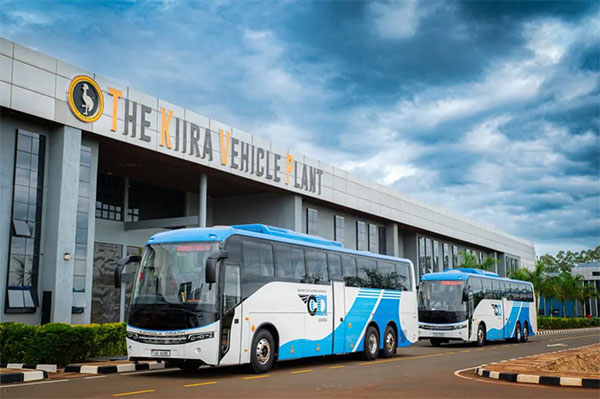
I was among those genuinely excited when President Museveni arrived at Makerere University on 24th November 2011 to launch what we now know as Kiira Motors Corporation. For years, many questioned the wisdom of annually allocating public funds to the project. Yet today, Kiira possesses a respectable factory sitting on 100 acres in the Jinja Industrial Park, with the capacity to produce approximately 2,500 vehicles annually.
Through purchases by the Uganda Civil Aviation Authority, Uganda Airlines, Kampala Capital City Authority, and private operators such as Kalita Bus Services, Ugandans have been able to see and appreciate the Kayoola EVS and Kayoola Diesel Coaches.
Whether Kiira ultimately succeeds or fails remains to be seen. But at the very least, it reflects an attempt at productive industrial ambition.
Now let me speak of the Rolex.
To foreigners, the word evokes an expensive Swiss watch. But in Uganda, the Rolex is something far more democratic — eggs, vegetables, and sometimes meat wrapped inside a chapati.
Heavy. Tasty. Economical. It is perhaps Uganda’s most successful indigenous fast-food innovation.
Its rise was not born from a presidential handshake or state bailout. Rather, it emerged from the ingenuity of ordinary Ugandans like Sula, the famed chapati seller from Busoga, whose stall near University Hall at Makerere became one of the early epicentres of the Rolex boom.
Today, the Rolex appears on high-end restaurant menus. It is served aboard Uganda Airlines. Tourists arriving in Kampala eagerly devour it, occasionally to the horror of their doctors back home.
And what was the government’s contribution? Municipal harassment of street vendors. Poor sanitation. Pollution from taxis and boda bodas parked beside roadside cooking stalls.
Yet despite this neglect, the Rolex economy thrives. Indeed, I personally know three young operators who used Mzee’s kasiimo from the Parish Development Model (PDM) to establish their own booths.

Then there is the case of Uganda Waragi.
Whenever my friend Obi (now a foreign national) lands in Kampala, one of the first things he purchases before departing Entebbe is a case of Uganda Waragi. Across Europe and North America, especially within Ugandan diaspora communities, it enjoys remarkable cultural and commercial appeal.
Yet Uganda Waragi itself is now effectively foreign-owned.
Uganda Breweries Limited, once one of Uganda’s notable state enterprises, was among the many assets disposed of during the privatisation era. Today, Japan’s Asahi Group Holdings controls a majority stake in East African Breweries Limited, the parent company of Uganda Breweries.
And herein lies the contradiction at the heart of Uganda’s political economy.
When the Chinese state invested in Huawei and Yutong, it was building long-term industrial power anchored in national control and productive capacity.
But in Uganda, too often, state intervention degenerates into the hurried enrichment of politically connected individuals with little accountability, little technological transfer, and little strategic return to the nation itself.
The question, therefore, is not whether the state should intervene in the economy. IT MUST.
Every successful modern economy, as Elison Karuhanga correctly states, from South Korea to China, from Singapore to even the United States during its industrial ascent, was shaped by deliberate state action.
The real question is this: Who benefits?
Is public capital being used to build productive national enterprises capable of surviving generations?
Or is it merely being converted into temporary political patronage masquerading as industrial policy?
For Tri-Star and, perhaps even Atiak Sugar factory, the sun rose at the wrong time, and if it continues to do so, as the old Bahororo warned, then both the rulers and the ruled shall continue sharing in the shame.
*****
By Andrew “Pi” Besi | On X: @BesiAndrew


Thank you for this piece
I have heard that there are insiders who sit on people’s concepts unless bribes are paid for them to forward the same to the “funding authority”. Other concepts are stolen and implemented (usually wrongly) by the same mafioso. That is if they don’t completely frustrate the innovator, due to conflict of interest because they are in the pay of foreign capitalists that don’t want to see Ugandan industry thriving. The more innovations on table, the higher the chances of finding those that work out. Yutong and Huawei may have emerged out of a large pool of nonstarter upstarts.