 The Independent Uganda: You get the Truth we Pay the Price


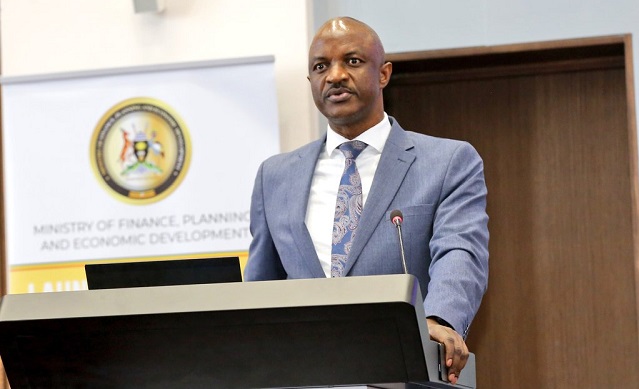
Kampala, Uganda | URN | The government will stop funding most national public holiday celebrations beginning in the 2026/27 financial year, with the savings to be redirected to wealth creation and other priority programmes, Permanent Secretary and Secretary to the Treasury Dr. Ramathan Ggoobi has announced.
For years, the government has spent billions of shillings annually on national events commemorating public holidays such as International Women’s Day, Labour Day, Heroes Day, NRM Liberation Day, Independence Day, and other national observances.
Traditionally, these celebrations have received budget allocations through various government ministries, departments, and agencies, with funds spent on parades, security deployments, tents, public address systems, transport, accommodation, and other logistical requirements.
Uganda currently observes 14 officially recognised public holidays each year, comprising both religious and statutory commemorations. However, economists and public finance experts have long questioned the cost of organising large-scale celebrations for statutory holidays, arguing that the resources could be channelled into more productive sectors of the economy and development programmes.
According to a statement posted on the Ministry of Finance’s X account, Dr. Ggoobi said government funding for most public holiday celebrations will be discontinued beginning with the 2026/27 financial year. Under the new arrangement,
“President Yoweri Museveni will address the nation from State House through radio and television broadcasts instead of presiding over large public gatherings and commemorative events,” he said in the post.
Dr. Ggoobi said only a limited number of key religious observances are expected to continue receiving public funding, while most statutory commemorations will no longer attract government expenditure. He explained that the decision is part of wider efforts to rationalise public expenditure, improve efficiency in the use of public resources, and prioritise investments that directly contribute to wealth creation and economic transformation.
According to the Treasury chief, the funds saved from organising public celebrations will be redirected to government priority programmes aimed at stimulating economic growth and improving household incomes.
The announcement comes as government finalises preparations for the 2026/27 national budget, which is scheduled to be presented to Parliament on June 11, 2026.Government has already signalled that the forthcoming budget will place emphasis on wealth creation, investment promotion, industrialisation, infrastructure development, export growth, and other interventions intended to accelerate socio-economic transformation.
The move marks a significant shift in how government commemorates national events and reflects growing efforts to contain recurrent expenditure amid competing demands for public resources.
If fully implemented, the decision will see many national commemorations marked through presidential broadcasts and other low-cost engagements rather than large-scale public events that have traditionally attracted significant government spending.


Dr Ggoobi’s decision to end government funding for most public holiday celebrations is sensible and welcome. Redirecting money spent on marquees and generators toward productive programmes is difficult to argue with.
But let us be honest about the scale of what we are dealing with.
The Inspectorate of Government estimates Uganda loses between Shs 9.1 trillion and Shs 10 trillion every year to corruption, roughly 44 percent of total domestic revenue. Against that figure, the holiday savings, real as they are, are a rounding error. The solution to Uganda’s public finance challenge is not higher taxes. Ugandans are already stretched. The answer is simpler and harder in equal measure: recoup the money that is already being collected and is currently disappearing before it reaches the people it was meant to serve.
That requires going through the public spending book line by line, with a red pen, and asking uncomfortable questions about every single allocation. The Speaker’s office budget rising from Shs 4 billion to Shs 19 billion in a single parliamentary term is perhaps the most visible example of what happens when that discipline is absent. But it is far from the only one. The 2026 to 2027 budget passed by Parliament stands at Shs84.3 trillion, of which Shs33.4 trillion, nearly 40 percent, goes to debt servicing alone. Meanwhile the government allocated just Shs198.7 billion to anti-corruption efforts in the previous financial year. That is roughly two percent of the annual cost of corruption itself. The arithmetic is sobering.
The Treasury is the custodian of Uganda’s public finances. It owns the accounting, control and reporting frameworks that govern every shilling passing through government hands. When fraud of the scale seen in September 2024, USD 17 million in debt service payments redirected to shell companies in Japan and the United Kingdom, can originate from within the Ministry of Finance itself and go undetected, the control environment has failed at its most basic level. A Chief Financial Officer at a major global corporation would not survive a failure of internal control of that magnitude, regardless of how thoughtful their economic strategy. Good economic thinking and robust financial governance are two distinct disciplines, and Uganda needs both working together.
The Office of the Auditor General is equally in need of honest attention. Only 31 percent of parliamentary recommendations on the Auditor General’s report for 2023 to 2024 were actually implemented. The same findings reappear year after year. Domestic arrears from weak audit enforcement now stand at around Shs 9 trillion. The European Commission is currently funding external support to bring the Auditor General’s office up to international standards. These are not the indicators of an oversight function that is working.
Operation Maliza Ufisadi is genuinely welcome, and Ugandans are right to feel encouraged that accountability can reach the highest levels. But removing one Speaker, however necessary, does not fix the system that allowed her office budget to grow by 375 percent unchallenged. That requires institutional reform: tighter Treasury controls, a genuinely independent and capable Auditor General, and a Parliament willing to enforce what its own committees recommend.
Uganda does not need to raise more revenue. It needs to stop losing the revenue it already has. That is the conversation the 12th Parliament and the incoming Finance team must be willing to have, line by line, from day one.
Good move!