The Independent Uganda: You get the Truth we Pay the Price


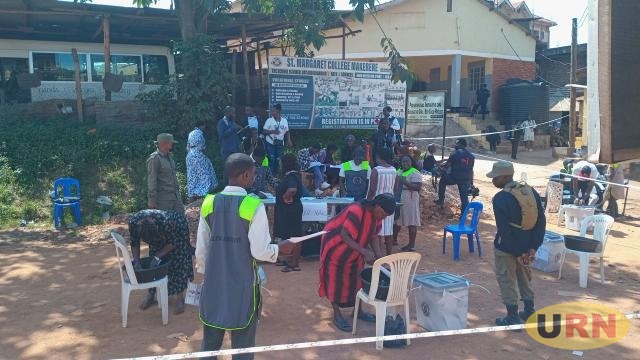
Kampala, Uganda | THE INDEPENDENT | The Electoral Commission has scheduled March 12, 2026, to conduct residual elections in areas where the February 4 Local Government Council III (LCIII) polls were not concluded due to administrative and technical disruptions.
In a letter dated February 20, 2026, to Returning Officers and District Election Administrators, the EC said several sub-counties, town councils and municipal divisions failed to complete elections for LCIII chairpersons and councillors.
The affected areas experienced challenges ranging from mismatched candidate photographs and symbol mix-ups to Biometric Voter Verification Kit (BVVK) machine failures, tied results, and incomplete electoral demarcations.
“Accordingly, the Commission has appointed Thursday 12th March, 2026 as the polling date for residual elections at Sub-county/Town/Municipal Division level,” wrote Richard Baabo Kamugisha, Acting Secretary of the Electoral Commission.“You are requested to liaise with the Election Management Department to ensure inclusion of your areas.”
Speaking to URN on Monday, Julius Mucunguzi, spokesperson of the Electoral Commission of Uganda, confirmed the development. “The EC will, on 12th March, conduct residual elections in areas where elections for LCIII/Town Council/ Municipal Division Chairpersons and councillors were not undertaken due to various reasons,” Mucunguzi said.
“The Commission has tasked all its District Returning Officers and staff at all levels to ensure that no area is left behind in this undertaking,” Mucunguzi added.
He further added that the Commission has instructed district officials to widely publicise the exercise to guarantee an inclusive and transparent process.
Under Article 61 of the Constitution of Uganda, the Electoral Commission is mandated to organise, conduct and supervise regular, free and fair elections.
The process is further guided by the Local Governments Act and the Electoral Commission Act, which empower the Commission to fix new polling dates where elections are disrupted or fail to conclude.
Residual elections are not uncommon in Uganda’s electoral cycle, particularly in lower local government tiers where logistical and administrative complexities can emerge on polling day.
LCIII councils play a critical governance role at the sub-county and division level, overseeing local service delivery, development planning, and supervision of parish and village structures. Delays in electing leaders can stall decision-making and budget execution at the grassroots.
While the Commission did not disclose the total number of affected electoral areas, officials cited: mismatched candidate photographs on ballot materials, mix-ups in party symbols, failure of biometric verification machines, tied results requiring fresh polls, incomplete or contested electoral boundary demarcations.
Election observers note that errors involving candidate photos and symbols can significantly confuse voters, particularly in rural areas where literacy levels vary and voters often rely on visual identifiers.
Technical failures of biometric kits have also previously raised concerns about preparedness and equipment maintenance.
Uganda has over 2,000 sub-counties and divisions nationwide. LCIII leaders form a critical link between district administrations and lower councils (LCII and LCI), influencing implementation of national programmes such as the Parish Development Model (PDM).
Incomplete elections in these areas risk governance gaps, delayed project approvals and weakened accountability at the local level. Political analysts argue that swift organisation of residual polls helps safeguard electoral legitimacy and public trust, particularly in tightly contested races.
The Commission has urged district election officials to intensify voter sensitisation and stakeholder engagement ahead of March 12. Observers say turnout in residual elections is often lower than during general polling days, partly due to limited publicity and voter fatigue.
***
URN