 The Independent Uganda: You get the Truth we Pay the Price


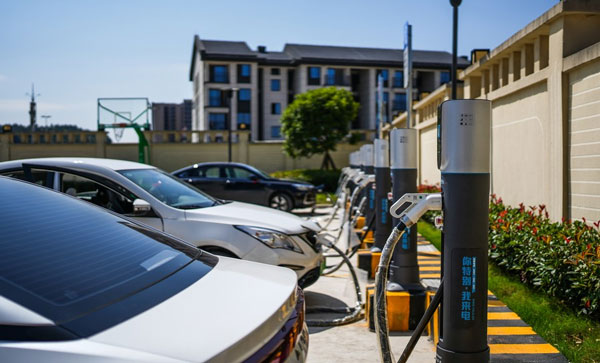
The US has long enjoyed the world’s cheapest energy, but China is now set to take that position
THE LAST WORD | ANDREW M. MWENDA | In 2020–2021, Taiwan Semiconductor Manufacturing Company Ltd (TSMC) leapfrogged US-based Intel in the production of advanced chips. All of a sudden, TSMC could produce 5.5nm chips at scale in a way Intel could not. In 2021, TSMC had a market cap one-third that of Intel. Today, in 2026, it is 12 times higher. It has become the leading semiconductor company in the world.
Note that in 2018, the US decided to pick a fight with China and determined that the battlefield would be advanced microchips. The US was leading in this field with Intel, so it had the best comparative advantage and could hammer Beijing there. Then all of a sudden, in 2021, the best semiconductor company to emerge was only 160km off the coast of China – in Taiwan. It was no longer Intel. It was TSMC. What does this mean in the geostrategic rivalry between the US and China? (see USA-China economic war)
Well, it means that Taiwan becomes very geostrategically important. Do a Google search. In 2021, the US pulled out of Afghanistan bruised and in shame. President Joe Biden went on NBC and said that the US would defend Taiwan. It was the first time a US president openly said this. Speaker of the House Nancy Pelosi also visited Taiwan. All of a sudden, the US moved from its position of strategic ambiguity on how it would handle a Chinese invasion of Taiwan to a direct commitment to defend Taiwan militarily. Why did the US put Taiwan into play at this time?
Having been given a bloody nose by the Taliban in Afghanistan and Iraq, and having messed up in Libya, the US needed something to justify its $800 billion defence budget. It now made sense for the military-industrial complex that runs that country to claim that China was about to attack Taiwan, and thus America needed to build a new aircraft carrier and more F-35s. This is another strategic vulnerability for the US. The capture of its state by powerful interests such as big tech, big pharma, big oil, the military-industrial complex, etc., makes it difficult for the government to plan ahead for the country. It is this failure that has allowed China to catch up and even overtake the US in many areas of competition.
Thus, in 2025, when President Donald Trump imposed punitive tariffs on China, he encountered unremitting resistance. Everywhere else in the world, countries caved in to Trump’s demands. Not China. He put restrictions on advanced microchips; China imposed them on rare earths and magnets. Then the US realised that within months of having no magnets from China, the General Motors plant for EVs would shut down. Then Boeing and Lockheed Martin, the largest military equipment manufacturing companies in the US, said that within weeks they would not be able to provide missiles and other weapons to Israel. The US realised its mutual vulnerability with China. Then all of a sudden there was no talk of Taiwan. Why?
Nvidia is worth $4.3 trillion; TSMC is worth $1.3 trillion. Yet Nvidia cannot live without TSMC, but TSMC can live without Nvidia. TSMC is the most valuable technology company in the world because what it does, no one else can do. But investors fear that if China invades Taiwan, their stock will be wiped out. If you take away that geopolitical risk, the market cap for TSMC could be $4 or even $6 trillion. However, the US cannot run away from mutual vulnerability. It also means that if China invaded Taiwan, the value of Nvidia, Apple, Boeing, Tesla, Lockheed, etc. would be wiped out.
Trump had no option but to drop the trade war with China. The US could not afford it, regardless of all the chest-thumping one reads in American and other Western media. The US has realised it cannot win a trade war with China without being badly bruised. When, in 2025, Presidents Xi and Vladimir Putin of Russia and Prime Minister Narendra Modi met in China, it marked a fundamental shift. Russia is the biggest producer of the cheapest raw materials; China is the biggest producer of capital goods and consumer goods; India is the biggest producer of skilled, cheap labour. An alliance of the three creates a boom of epic proportions.
For the past 15 years, Russia had been lobbying to build a gas pipeline to China, but Beijing was dragging its feet. In 2025, China announced it would build it at three times the capacity Russia had sought. Now all of a sudden, all the cheap gas that was going to Europe will be going to China. For the next 30 years, China is going to have the cheapest source of energy. That makes its industries highly competitive, and Europe loses. What is Europe’s response? Its dependence on the US for both security and economic prosperity is under strain. Trump has shown that he does not value the Europeans. Can Europe seek strategic autonomy from the US? At what cost?
The US has been enjoying the cheapest cost of energy in the world. Now China, a country that produces twice as much energy as the US, is going to have the cheapest source of energy in the world. What are the implications of this when it comes to competition over advanced technologies? If you are a believer in AI, the issue is, what is the biggest constraint to AI – cheaper energy or access to computing power? One’s answer determines where to invest. If you believe it is computing power, you will invest in Nvidia in the US. But this is an area where China is catching up fast. If it is cheap energy, China has won that race. And the biggest constraint to AI is cheap energy.
Someone once said that when China enters the room, profits walk out. China has entered AI, and it is going to be hard for firms to make profits from AI. The biggest challenge to Apple and Tesla in China is not Chinese nationalism; that is a very small part. The biggest issue is quality and price. Look at Tesla against BYD. The two are not comparable in quality and price. Anyone would choose BYD. The Tesla today is the same as it was four years ago. The BYD today is very different from the BYD of four years ago. That is the difference. The same applies to Apple versus Huawei.
We used to see Chinese products as cheap and of poor quality. That was true then. But just as Japanese cars became better than American cars in the 1970s and 80s in quality and price, Chinese cars and other products have become better and cheaper. The West just cannot compete. In fact, rather than compete, the West is now finding excuses to impose tariffs and quotas on Chinese imports. But this is self-defeating because that is not going to improve the quality and cost of Western products. Instead, it is going to encourage producers to remain mediocre, saddling the West with poor-quality products at high prices.
There is another catch for the West: Canada had imposed a 25% duty on Chinese EVs. Then Trump came and imposed high tariffs on Canada. What did Prime Minister Mark Carney do? He went to Beijing and met Xi. After the meeting, they announced a reduction in the tariff to 5%. Now all of a sudden, we are going to see Chinese car producers pushing their US counterparts out of Canada, right next door to the US. If there were ever a real Manchurian candidate in the US, Trump would be one — even if inadvertently.
*****

amwenda@ugindependent.co.ug


The cabals have done much to damage US standing and competitiveness. Some of us long knew that these things would catch up with them. Trump knew, too. That’s why he has attempted to arrest this decline of Western hegemony but when it’s too late. In five years from now, the East will have gained a near absolute foothold in many things. Big question is: while this is happening, Africa, tuli ku ki? How are we positioning or playing smart? Don’t tell me we’ve got nothing going in AI or whatever counts to compete!
Good question! The answer is quite simple. Africa is only writing articles about China’s progress and celebrating it as though it were Afria’s own.
As always, we remain on the sidelines proudly cheering China on while feeding her industries. We do not devote time to.writimg articles that discussi how Africa can draw lessons from countries like China to chart its own path and reduce ts heavy dependence on both the West and China.
M9; you should have ended your article with, or focused your article on “What lessons can Africa draw from the economic war between the US and China?” I hope that will be your part 3 of this series.
Good question! The answer is quite simple. Africa is only writing articles about China’s progress and celebrating it as though it were Afria’s own.
As always, we remain on the sidelines proudly cheering China on while feeding her industries. We do not devote time to.writimg articles that discussi how Africa can draw lessons from countries like China to chart its own path and reduce ts heavy dependence on both the West and China.
M9; you should have ended your article with, or focused your article on “What lessons can Africa draw from the economic war between the US and China?” I hope that will be your part 3 of this series.
Africa needs a new form of “Uhuru”, and not this kind that is overhyped and feted as though it were an end in itself. African independence was meant as an initial phase to launch us into bigger things. Once most of the countries gained independence, it was as if Kingdom had come. Now we are stunted and very “ripe” for harvesting by the same or more malevolent forces that/than “granted” us independence. Meanwhile, we are as stratified as we were 60-69 years ago; one big but hollow geographical entity, fenced in along USELESS country borders. China evolved, Singapore has evolved, USA is a superpower, Russia remains a power, Europe had a share of its glory, South America is at some distance ahead albeit with some struggles of its own. Africa?! As if SLEEPING, waiting to be reconquered, stripped and devoured. Bro(s), we MUST do SOMETHING(S) and NOW! Andrew has given us a platform to at least quarrel about it, but lead the new charge WE MUST!!