The Independent Uganda: You get the Truth we Pay the Price


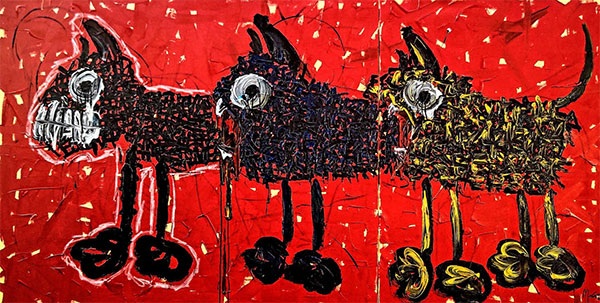
COMMENT | DOMINIC MUWANGUZI | MAKANO has just returned from Zambia for the opening of his debut solo show, Red Flags 2026, in this Central African Republic. He looks relaxed and is not showing any sign of anxiety that one would expect from an artist of his age – the artist is only 25 years old – when they have a show in another country. This experience usually means a new type of audience that may choose to accept or reject their work, and this uncertainty can be a source of great anxiety to many an artist.
In MAKANO’s instance, he’s just being who he is: calm, confident and bold. This personality has got him where he’s right now, and with this fourth solo show in a career that hardly spans five years, it is undoubtedly that he’s unstoppable and one to watch out for! But he doesn’t seem to be resting on his laurels yet, and as he sits in his studio surrounded with half-finished and finished works, some hanging and others leaning on the walls, his mind is preoccupied by several other projects he’s already working on, including his participation in Art Basel Switzerland next month and at Venice Biennale 2026.
The 5 ft tall artist with a slender frame and light-skin complexion wears crown-like chaotic, long thick locks that immediately give him away as a look-alike to the legendary Jean-Michel Basquiat. In fact, he shares the same creative energy with the iconic artist with his interplay of powerful, expressive images and text on canvas to create a strong visual language that cannot be ignored or forgotten.
“The most important thing I want my audience to get from my art is to not ignore it,” says the introverted artist with an aura of confidence that is attractive but can also be misconstrued to be bordering on arrogance.
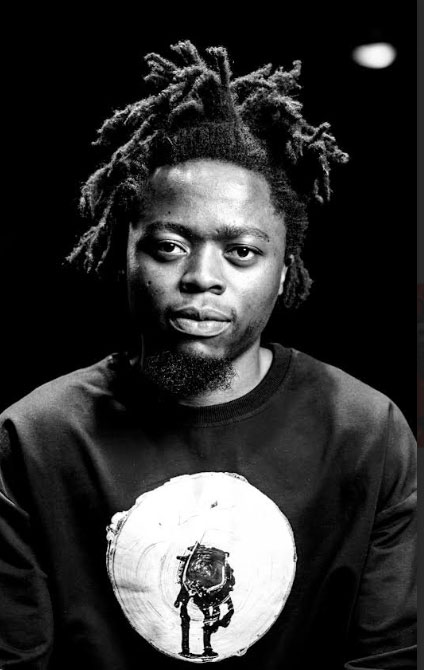
Incidentally, MAKANO is not bothered by what everyone thinks of him or the philosophy behind the message in his art. His paintings are like scribblings on canvas that evoke a sense of imperfections and coarseness. “This is how I perceive life. According to me, life is not perfect, and I cannot depict it otherwise,” he says.
This perception of life is largely inspired by his personal experience as an orphan and refugee from the Democratic Republic of Congo (DRC). MAKANO lost both his parents to the war in his home country and later migrated to Uganda with his sister and lived in the Nakivale Refuge settlement in the western part of Uganda for several years. As such, the artist has every justification to say that making art for him is an obligation. He always alludes to the fact that his art is born out of depression and frustration.
This harrowing life experience seemingly overlaps with the life story of Basquiat, who in his early days lived homeless on the streets of downtown New York. In order to survive, the prodigious artist sold sweat T-shirts and hand-painted postcards to Manhattans. With no money to buy canvas, he turned to creating art on all sorts of surfaces he could lay his hands on just to free his mind from a myriad of thoughts that wrestled there. Albeit such struggles, his resolve to succeed was not broken because he believed that inside him there was a greater potential to prevail over these temporary setbacks. Like his idol, whom, ironically, he says he got to know of after a couple of friends expressed concern in the similarity of their work, MAKANO’s numerous hiccups in life, including being rejected by numerous galleries, ignited in him a larger-than-life hunger to succeed in life.
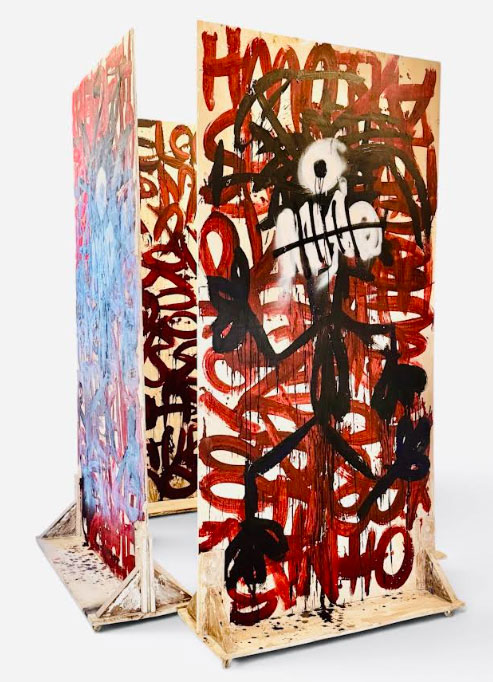
Though known to resent compromise from childhood, this experience of rejection awoke in him an unstable anger to succeed as an artist. In his debut solo show I AM in 2024, he shocked the local art fraternity with his unapologetic and energetic approach to painting that many artists were not used to. This multidisciplinary exhibition held at Amasaka Art Gallery was an emphatic introduction of the Congolese artist to the Ugandan art scene. The following year, he resurfaced with White Teeth 2025 at Umoja Art Gallery that ultimately underscored him as an emerging heavyweight not only on the local art scene but in the region. This exhibition critiquing the political excesses in his home country etched him among the few artists on the continent who use their art to speak the truth to power.
This fearless tone in his art is more of a revelation to the artist’s unique characteristic trait of being honest. MAKANO emphasizes that he is always honest in his art, and this has kept him away from following trends or making art that is too polite. “I don’t follow trends because if I do, I cannot be honest in my art,” he declares.
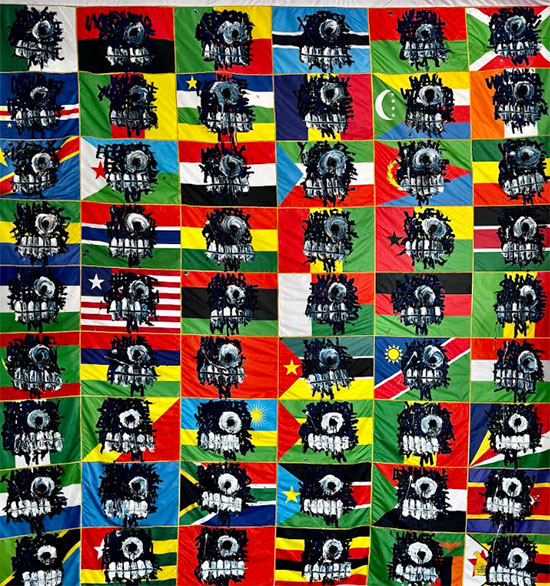
As an illustration to this statement, the artist has resisted the temptation of making the type of art that is saturated on the global art market. He has instead maintained his distinctive “style” of caricature images and indistinct poetic scribblings more like graffiti on canvas that are unmistakably full of a rebellious energy that cannot be confined to a structured system. “ I don’t seek perfection when I am drawing. In fact, I use only primary colours which is an unconventional way of painting,” he says. Again, this unorthodox approach to art resonates with Basquiat’s avant-garde art that pioneered the neo-expressionist art movement in the 1980s where the “Radiant Child” combined elements of graffiti, vivid colours and chaotic brush strokes on canvas to create startling images that confronted the viewer’s gaze with utmost discomfort. But MAKANO’s bravery to step out of the usual mould of young artists in the region who often play it too safe deserves every bit of acclaim because he has to contend with the friction that comes with this form of artistic transgression, especially in a conservative society like Uganda.
Yet this seemingly is the catalyst to MAKANO’s relentless pursuit for excellence, where he chooses to turn everything against him into fortune. He’s mostly driven by self-belief, believing that anything can happen if he takes a risk on himself and contentment is a sign of failure. Therefore, in MAKANO’s world, the impossible is the possible, and perfection is the best way to procrastinate. Perhaps, more like a protégé of Basquiat, both in art and life, this young, indomitable artist’s conquest of the art world has just begun.