 The Independent Uganda: You get the Truth we Pay the Price


The cattle in Karamoja have survived generations of drought and hardship. The question now is whether they can survive a changing climate
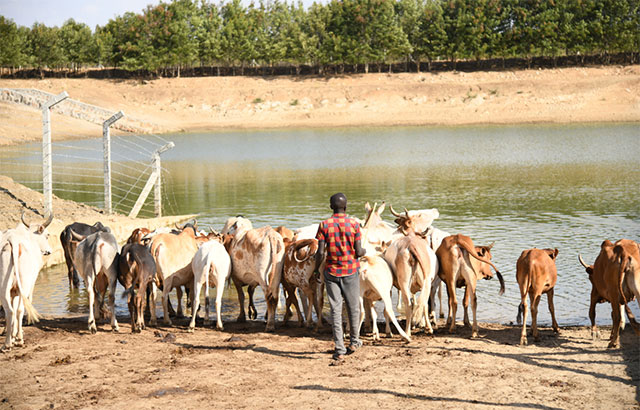
NEWS ANALYSIS | PATRICIA AKANKWATSA | Before sunrise, Christine Jemkeia walks towards the Akura Oyan Dam in eastern Uganda’s Amudat District, following a routine that has shaped life in this remote pastoral region for generations.
The sound of cattle bells fills the dry landscape as herders guide their animals towards one of the area’s most valuable resources: water.
For years, the Valley Dam in Kadikita Sub-county served as a lifeline for livestock keepers. But during the harshest months of the dry season, the water disappeared long before the rains returned, forcing pastoral families to move their animals farther in search of water and pasture.
“When the dam was shallow, the water would dry up before the end of the dry season,” Jemkeia said. “People and animals had to travel much longer distances.”
For communities across Karamoja, a semi-arid region in northeastern Uganda, such movements have always been part of pastoral life.
But climate change is testing a system built around adaptation. Dry seasons are becoming harder, pasture is under pressure and water sources are becoming less reliable.
The consequences are felt most sharply by families whose wealth, food security and livelihoods depend on livestock.
After rehabilitation through the Food and Agriculture Organization of the United Nations (FAO)-supported Project for Pastoralism and Livestock Adaptation to Climate Change in Eastern Africa (PLACE), the Akura Oyan Dam can now hold up to 20,000 cubic metres of water.
For Jemkeia and other pastoralists, the difference is measured not in storage capacity but in survival.
“Today, it holds much more water and has greatly reduced the distance livestock have to travel in search of water,” she said.
The dam is one part of a wider effort to protect Karamoja’s livestock economy, which is being challenged by drought, shrinking grazing areas, water shortages and animal diseases.
The question facing the region is no longer whether pastoral communities can survive another difficult season. It is whether a centuries-old way of life can adapt quickly enough to a changing climate.
Livestock as a lifeline
In Karamoja, cattle, goats and sheep are more than agricultural assets. They are savings accounts, sources of food and a form of insurance in a region where households often face repeated economic shocks.
A cow can help pay school fees, provide milk and meat, or support a family when crops fail.
But when animals die from disease or lose value because of poor health, the impact extends beyond livestock.
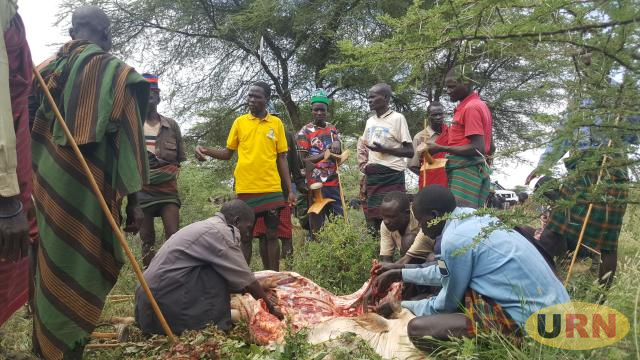
“For pastoral households, livestock losses are not only about losing animals,” said Dr Moses Okino, the principal veterinary officer and district veterinary officer for Moroto. “They affect income, nutrition and the ability of families to withstand shocks.”
While drought often dominates discussions about Karamoja’s future, veterinary officials say animal diseases remain one of the biggest threats facing livestock keepers.
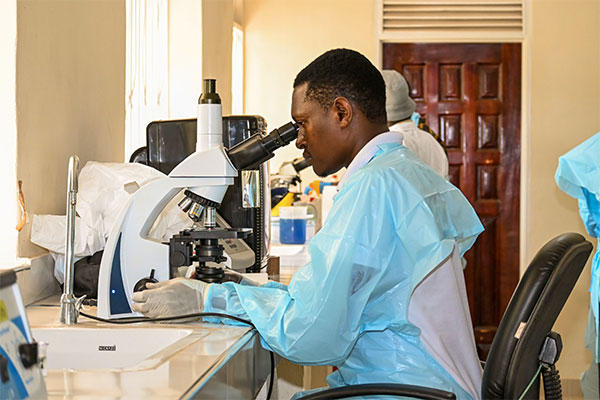
At the Karamoja Regional Referral Veterinary Laboratory in Moroto, scientists are working to identify those threats before they spread.
Technicians examine animal samples, monitor disease patterns and generate information used to guide vaccination campaigns.
“Our work goes beyond diagnosing disease,” Okino said. “We generate scientific evidence that supports vaccination campaigns, protects public health and enables Uganda to access regional and international livestock markets.”
The laboratory, supported by FAO through the PLACE project, serves Uganda and neighbouring pastoral regions in Kenya, South Sudan and Ethiopia.
Its work focuses on diseases including anthrax, brucellosis, rabies and other transboundary animal diseases that can spread as livestock move across borders.
Pastoral systems in East Africa do not follow political boundaries. When drought affects one area, herders move in search of water and pasture. And when animals move, disease risks move with them.
The hidden cost of livestock disease
For instance, in Kotido District, one of the biggest threats comes from one of the region’s smallest creatures: the tsetse fly.
The insect spreads trypanosomiasis, commonly known as nagana, a disease that weakens livestock, reduces productivity and lowers market value.
For communities that depend on cattle not only for wealth but also for cultivation, the impact can affect entire households.
“Trypanosomiasis affects the bulls that farmers use for ploughing,” said Dr Joseph Longoli, Kotido’s district production officer. “When those animals lose their draft power, farmers cannot cultivate enough land, and that contributes directly to household food insecurity.”
Surveys conducted in 2017 showed the scale of the challenge. In some areas, officials recorded more than 1,000 tsetse flies per trap per day, while laboratory analysis showed that about one in every four flies carried trypanosome parasites.
The disease created a cycle of economic losses. Sick animals produced less milk. Weak cattle could no longer provide labour for farming. Livestock that once represented household security lost much of their value.
A healthy bull could fetch about Shs2 million, Longoli said, but when severely affected by trypanosomiasis, its value could fall to about Shs500,000.
“It affects milk production, slows growth and lowers overall productivity,” he said.
Through the PLACE project, authorities introduced a combination of interventions. Livestock are treated with a 1% deltamethrin insecticide under a “live bait” approach, while insecticide-treated blue-and-black traps are placed in grazing areas to attract and eliminate tsetse flies.
The results have been significant. “In areas where we were recording about 1,000 flies per trap per day, we are now seeing between 50 and 100,” Longoli said. “The prevalence of infection has also dropped from about 25% to around 10%.”
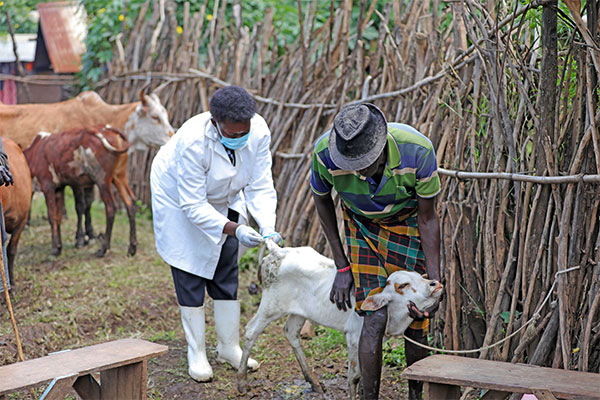
The reduction has allowed pastoralists to return to grazing areas they previously avoided because of disease risks.
“We have green belts with good pasture and some water, but many livestock keepers avoided them because of tsetse infestation,” Longoli said.
“As fly population fall, farmers have started returning to those grazing areas, especially during the dry season.”
A region under climate pressure
Disease control has provided relief, but officials say it cannot solve the larger pressures reshaping Karamoja.
The region’s pastoral communities have traditionally survived through mobility; moving animals according to seasonal availability of water and pasture.
Climate change is making that system increasingly difficult. Rainfall patterns have become unpredictable. Dry periods are lasting longer. Competition for natural resources is increasing.
According to the Integrated Food Security Phase Classification (IPC), about 41% of Karamoja’s population – approximately 517,800 people – faced acute food insecurity between March and July 2022, largely due to drought, crop losses and declining livelihoods.
In some districts, poverty levels have reached about 82%, compared with Uganda’s national average of 31%.
For pastoral households, losing livestock during these periods is not simply an economic setback. It can erase years of accumulated wealth.
A cow lost to hunger or disease can mean fewer resources for food, education, healthcare and recovery after future shocks.
That reality has pushed authorities and development organisations to focus on long-term resilience rather than emergency responses alone.
The rehabilitation of Akura Oyan Dam is one example.
But its importance extends beyond Amudat. Pastoral communities in the area share grazing landscapes and water sources with neighbouring West Pokot County in Kenya, where livestock keepers face similar climate pressures.
“Pastoral communities have always depended on shared natural resources,” said Michael Adey, FAO’s programme analyst for Farm Field School and Livestock Production.
“When drought strikes in one country, livestock and their owners move across borders in search of water and pasture. That means countries must also share solutions.”
Uganda’s relatively better pasture and water resources often attract livestock from neighbouring countries during severe drought periods.
“When conditions deteriorate elsewhere, Uganda becomes a refuge for many pastoral communities,” Adey said. “They come with their animals, and that means they also share water, grazing areas and disease risks.”
For that reason, officials say investments in water infrastructure, disease surveillance and veterinary services must be viewed as regional solutions.
“The same communities that share water must also share disease surveillance, vaccination and laboratory services,” Adey said. “These systems are designed to support pastoralists across the region, not just within one country.”
From survival to opportunity
For Uganda, improving livestock systems in Karamoja is not only about protecting rural livelihoods. It is also about unlocking economic opportunities.
The government sees livestock as an important contributor to agro-industrialisation, with potential growth in meat, milk, hides and skins.
Dr Robert Kibuuka, principal veterinary officer responsible for dairy and meat at the Ministry of Agriculture, Animal Industry and Fisheries, said stronger animal health systems are essential.
“Agro-industrialisation comes with the export of our products — meat, milk, hides and skins,” he said. “But to achieve that, we must increase production and productivity while ensuring that the quality of our products meets international standards.”
For Karamoja, where livestock remains central to economic life, disease remains one of the biggest barriers to reaching larger markets.
“Karamoja is basically livestock, and this sub-region can contribute significantly to economic development,” Kibuuka said. “But how do we achieve this? First and foremost, we have to fight the diseases affecting our livestock.”
Foot-and-Mouth Disease (FMD) remains one of the major concerns because it affects productivity and can restrict livestock movement and trade.
“When you have diseases around your livestock, you lose a lot,” Kibuuka said. “Foot-and-Mouth Disease is still endemic and continues to affect production and productivity.”
Through the PLACE project, more than 90,000 cattle have been vaccinated against diseases including Contagious Bovine Pleuropneumonia (CBPP) and Foot-and-Mouth Disease after surveys identified priority threats.
But officials acknowledge that vaccination alone is not enough. Water shortages, shrinking pasture and long-distance animal movement continue to influence livestock productivity.
“When animals move long distances looking for pasture and water, they pick up diseases, their growth rates reduce and their productivity is affected,” Kibuuka said.
The government is therefore supporting additional measures, including pasture improvement, hay and silage production, livestock dipping facilities, construction of water valley tanks and training of community animal health workers.
At the centre of these efforts is stronger veterinary capacity. Early detection, officials say, can determine whether outbreaks are contained or spread across communities and borders.
Kibuuka said the rehabilitation of the Moroto veterinary laboratory has strengthened Uganda’s response.
“Sometimes you have a laboratory, but it is not equipped,” he said. “FAO has rehabilitated and equipped a very good laboratory in Moroto. Samples can now be collected from across the region and submitted there for proper diagnosis and to inform the next course of action.”
A future beyond drought
For Jemkeia, the improvements at Akura Oyan Dam represent progress, but she knows the work is not finished.
The same watering points that protect animals during dry seasons can also increase disease risks when large numbers of livestock gather.
“Many animals mix here, so we are requesting continued support for vaccination against diseases such as contagious caprine pleuropneumonia (CCPP) and peste des petits ruminants (PPR),” she said.
She has also called for better management of the dam, including improved water channels and additional livestock watering points.
“If possible, the water channel should be strengthened so that runoff is directed safely into the reservoir without damaging the dam,” she said.
Despite the challenges, she believes the community has a responsibility to protect the investment.
“We are grateful for what FAO has done for our community,” she said. “We will continue mobilising residents to maintain and protect the dam so that it continues serving future generations.”
The river Nile starts from Uganda, and travels all the way to the Med Sea. Muve muntobazi….amazi mugaleke gagende a Misiri. Can you Imagine what Israel would look like with a river like the Nile? 2026…not 1BC. Uganda is one of the top 1% endowed countries with natural fresh water. Go look for foreign aid from Qatar who as by the way rely on Sea Water.