The Independent Uganda: You get the Truth we Pay the Price


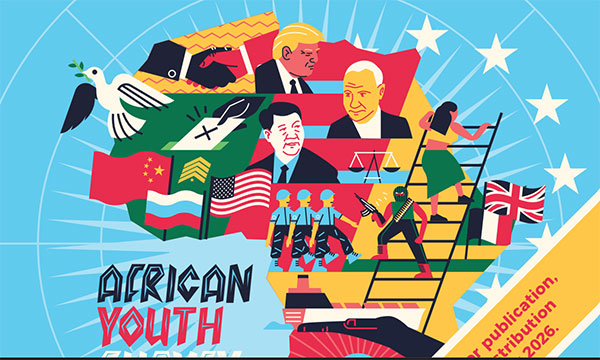
African Youth Survey 2026 reveals a rising generation more positive about the future than at any point since Covid-19 but pressure from the cost-of-living crisis means leaders must deliver work, accountability & democracy that reflects African realities
Johannesburg, South Africa | NEWS ANALYSIS | Africa’s young people are more optimistic about the future of their countries, economies and the continent than at any point since the pandemic, but they are demanding jobs, cleaner government, safer communities, a stronger political voice and a model of democracy that reflects African realities, according to the 2026 African Youth Survey released today.
The latest African Youth Survey, commissioned by the Ichikowitz Family Foundation and conducted by PSB Insights, interviewed 4,901 young Africans aged 18 to 24 across 16 countries in March 2026. It is the largest edition yet of the recurring survey, which was launched in 2020 to give governments, business, civil society and the media a rigorous understanding of the views of Africa’s rising generation.
Across the eight countries tracked in every wave of the survey, 47% of young Africans say their own country is moving in the right direction, up from 30% in 2024. Some 45% say their national economy is moving in the right direction, up from 26% in 2024. Across the same tracked markets, 43% now say Africa is moving in the right direction, up from 37% in 2024.
The rising cost of living is named as the single event or development that has had the biggest impact on Africa over the past five years, selected by 27% of respondents. When asked what Africa most needs to progress, young Africans put creating new, well-paying jobs first at 27%, followed closely by reducing government corruption at 25%. Making it easier to start a business is selected by 16%, up from 10% in 2020.
The recovery is especially striking in Ghana, Ethiopia and Zambia. In Ghana, positive sentiment about the country’s direction has risen by 51 percentage points since 2024. In Ethiopia, concern about employment has fallen by 44 percentage points while positive sentiment about country direction has risen by 44 percentage points. In Zambia, concern about employment has fallen by 41 percentage points while confidence in national direction has risen by 32 percentage points.
“Do not mistake this optimism for satisfaction. It is not a vote of confidence in the status quo. It is a warning. Young Africans still believe in this continent, but they are no longer prepared to confuse hope with patience while they struggle with the cost of living, unemployment, corruption and governments that too often talk about the future while excluding the very generation that will have to live in it,” Ivor Ichikowitz, Commissioner of the African Youth Survey and Chairman of the Ichikowitz Family Foundation, said.
“This is a generation that wants delivery, not slogans. It wants jobs, clean government, safety, business opportunity and a real voice in power. It is also telling the world something important: Africa’s youth are not interested in being lectured by East or West. They will judge every leader, every government and every foreign partner by the same standard. Who is helping Africa build? Who is creating work? Who is treating this continent with respect? The age of speeches without delivery is over.”

Security starts with jobs
While 70% of young Africans say they feel safe in their country today and satisfaction with police and security services has risen to its highest level since the survey began, only around a quarter are very satisfied. Unemployment and poverty are seen as the biggest threats to safety in local communities, selected by 54%, ahead of drugs and alcohol abuse, corruption in security services, violent crime and domestic violence.
Asked what governments should prioritise to improve security, 56% choose job creation for young people, ahead of military investment at 35% and anti-corruption measures at 33%. The finding reinforces one of the central messages of the survey: for Africa’s youth, employment is not only an economic issue, but also a security, governance and stability issue.
Countries surveyed for this year’s research: Burkina Faso, Chad, Congo Brazzaville, Democratic Republic of Congo, Ethiopia, Ghana, Kenya, Liberia, Mozambique, Nigeria, Rwanda, Somalia, South Africa, Togo, Zambia and Zimbabwe.
Democracy on African terms
The 2026 survey finds that young Africans continue to support democracy, but not uncritically. Some 73% say democracy is always preferable to any other kind of government. Clear majorities reject one-party rule and unchecked presidential authority, while equal treatment before the law, free and fair elections and freedom of speech remain core democratic priorities.
At the same time, 56% say Western-style democracy is not suitable for Africa and that a new form of African-style democracy is needed. When asked what matters most in such a model, young Africans prioritise national unity and stability at 48%, regular free and fair elections at 46%, leaders who deliver jobs and services at 43% and community decision-making at 36%.
A delivery generation in a divided world
The survey finds that 70% of young Africans say the world is becoming more divided and dangerous. In response, they are prioritising global partners that can deliver practical benefits. Some 55% say their country should prioritise alliances with partners that are effective and can deliver benefits like trade and investment, regardless of their system of government, while 42% say their country should prioritise alliances with countries that share similar values and systems of government even if they are less effective at delivering tangible benefits.
When asked what should matter most in choosing an international ally, the leading answer is the ability to invest in infrastructure and the economy, selected by 43%. This is followed by respect for natural resources at 39%, democratic values and a strong human rights record at 34%, sovereignty and non-interference at 34%, access to advanced technology and knowledge transfer at 30% and military and security support at 29%.
The United States and China remain the two most influential external powers in the eyes of young Africans. US influence is now seen by 81% of respondents, while China is seen by 79%. However, China’s influence is viewed more warmly among those who see it, with 95% describing it as positive compared with 85% for the United States. The UK’s perceived influence stands at 63%, Russia’s at 54%, France’s at 47% and India’s at 45%.
The findings also show that young Africans are approaching the Trump era pragmatically rather than ideologically. While 52% say their leaders should find a way to work with President Trump despite differences, 46% say the dismantling of USAID as an independent foreign assistance agency will have a negative impact on their country, especially in healthcare services and disease prevention.