The Independent Uganda: You get the Truth we Pay the Price


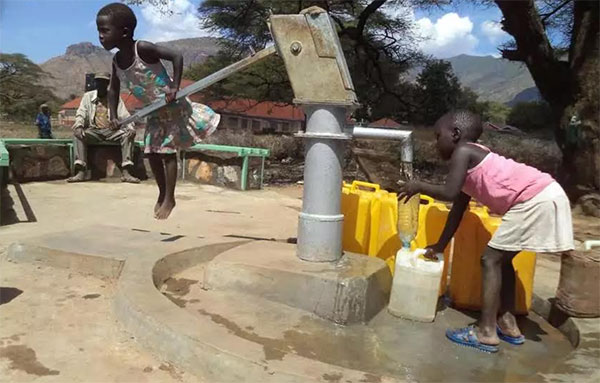
Each day spent fetching water steals time, education, and opportunity, highlighting inequalities that persist worldwide
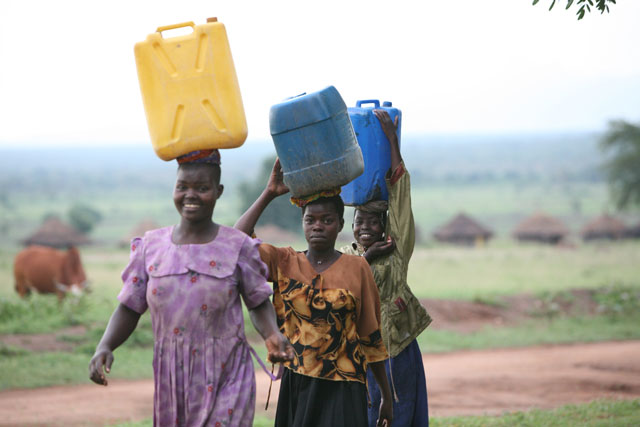
NEWS FEATURE | RONALD MUSOKE | In the vast, sun-scorched plains of Uganda’s northeastern region of Karamoja, the search for water begins before the day has properly broken. In scattered homesteads across this semi-arid region, women and girls set out in small groups at dawn, balancing empty jerrycans against their hips or heads as they begin the long trek to distant water points. The journey is often measured not in minutes, but in hours.
The land here is unforgiving. Seasons of drought have become more frequent, and water sources, already sparse, can dry up without warning. When that happens, the journey grows longer, the burden heavier. By the time the women return, the sun is high and relentless, and the containers they carry are no longer empty. Each one weighs heavily, a physical reminder of a task repeated day after day, year after year.
In Karamoja, water is not simply a resource. It is a daily obligation, one that shapes the rhythm of life and defines the boundaries of opportunity. For girls, it often determines whether they will attend school or stay behind to help their families, and for women, it limits the time available for work, for rest, for participation in community life.
This scene, quietly unfolding across northeastern Uganda, mirrors a global reality, one that has now been laid bare in stark detail by the latest United Nations World Water Development Report. Released on March 19 ahead of this year’s World Water Day commemorated every March 22 since 1993, the report published by UNESCO on behalf of UN-Water, underscores a truth that has long been understood but insufficiently addressed: the global water crisis is deeply intertwined with gender inequality.
Titled “Water for All People: Equal Rights and Opportunities,” the report finds that despite decades of progress, inequalities continue to compromise global water security, disproportionately affecting women and girls. Across the world, 2.1 billion people still lack access to safely managed drinking water. Yet it is women and girls who bear the heaviest burden of that absence.
In more than 70% of rural households without water on-site, they are the ones responsible for collecting it. Each day, they spend a combined 250 million hours on this task. It is a figure that is almost impossible to visualize, but its implications are clear; millions of hours lost to education, to livelihoods, and to the simple possibility of rest.
“Ensuring women’s participation in water management and governance is a key driver for progress and sustainable development,” said Khaled El-Enany, UNESCO’s Director General. “We must step up efforts to safeguard women and girls’ access to water. This is not only a basic right, when women have equal access to water, everyone benefits.”
His remarks reflect a growing recognition within international policy circles that water access is not merely a technical challenge, but a question of equity and inclusion. The report makes clear that while women are central to the daily management of water, they remain systematically excluded from the institutions and structures that govern it.
“It is time to fully recognize the central role of women and girls in water solutions – as users, leaders and professionals,” said Alvaro Lario, the President of the International Fund for Agricultural Development (IFAD), and the Chair of UN-Water. “We need women and men to manage water side by side as a common good that benefits the whole of society.”
Women underrepresented
Yet the gap between recognition and reality remains wide. Data cited in the report shows that women are significantly underrepresented in water utilities, governance bodies, and technical roles. In many countries, fewer than one in five water sector employees are women, and those who are employed often earn less than their male counterparts. In government positions related to water, sanitation, and hygiene, women’s representation is similarly limited.
This imbalance is not just a matter of fairness. It has direct consequences for how water systems are designed and managed. When women, who are often the primary users and managers of water at the household level, are excluded from decision-making processes, policies risk failing to reflect the realities on the ground.
That disconnect was highlighted during the High-Level Celebration of World Water Day in New York on March 19, where Annalena Baerbock, the President of the 80th Session of the United Nations General Assembly drew attention to the lived experiences behind the statistics. Quoting renowned marine biologist Sylvia Earle, she said, “No water, no life… No blue, no green.”
But she went further, emphasizing the stark inequalities that define global water access. “In a world where water is abundant – and where technology has enabled extraordinary feats of engineering – no one should be struggling to find water to drink or have to live without adequate sanitation,” she said. “Yet for billions of people, that remains the daily reality.”
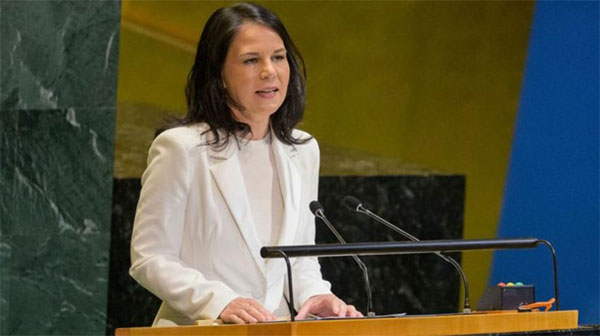
Her remarks underscored a central contradiction; even as technological advances make it possible to deliver water more efficiently than ever before, access remains uneven, shaped by geography, income, and critically, gender.
“In seven out of ten households where water is not available on-site, it is again women and girls, many barely school-aged, who are sent to collect it,” Baerbock noted. The consequences, she added, extend far beyond the immediate task. “These are women and girls missing school… These are women and girls unable to fully participate in the workforce. These are women and girls exposed to greater risks of violence, illness, and exploitation.”
The risks she described are not theoretical. The report highlights how inadequate water and sanitation systems expose women and girls to significant health and safety challenges. Poor sanitation facilities, particularly in rural areas and urban informal settlements, can lead to shame, absenteeism, and health complications. An estimated 10 million adolescent girls across 41 countries missed school, work, or social activities between 2016 and 2022 due to inadequate facilities for menstrual hygiene.
Climate change worsening water scarcity
In regions like Uganda’s Karamoja, these challenges are compounded by environmental stress. Climate change is intensifying water scarcity, altering rainfall patterns, and increasing the frequency of droughts. For communities already living on the edge of water insecurity, these changes can be devastating.
The burden of adapting to these shifts falls disproportionately on women. Evidence cited in the report shows that a one-degree Celsius (1oC) increase in temperature reduces incomes in female-headed households significantly more than in male-headed households, while increasing women’s labor demands. In practical terms, this means longer journeys for water, greater physical strain, and fewer opportunities to engage in economic activities.
African Union’s water theme
Across Africa, these dynamics are shaping development trajectories. Recognizing the central role of water in the continent’s future, the African Union has adopted as its 2026 theme: “Assuring Sustainable Water Availability and Safe Sanitation Systems to Achieve the Goals of Agenda 2063.”
The theme reflects a broader understanding that water is not just a basic need, but a foundation for economic growth, public health, and social stability. It also signals a commitment to addressing the inequalities that have long characterized water access across the continent.
In an op-ed published in African Renewal, a UN publication ahead of this year’s World Water Day, Mahmoud Ali Youssouf, the Chairperson of the African Union Commission emphasized the urgency of the challenge. “Without water security, there can be no food security, no industrialization, no public health, and no lasting peace or prosperity,” he wrote.
He also highlighted the disproportionate burden borne by women and girls. “Millions of Africans, disproportionately women and girls in rural communities, still walk long distances each day to collect water instead of attending school, pursuing livelihoods, or participating fully in the life of their communities,” he noted. “This is not merely an inconvenience. It is an injustice.”
That injustice is compounded by structural inequalities in land and property ownership. In many countries, water rights are closely linked to land rights, and discriminatory laws can limit women’s access to both. As a result, women may be excluded not only from decision-making processes, but also from the resources needed to improve their livelihoods.
Human rights dimension to water
The human rights dimension of the crisis adds further weight to these concerns. In his statement marking World Water Day, Volker Türk, the UN High Commissioner for Human Rights warned that the global promise of safe drinking water and sanitation is slipping out of reach.
“Today, 2.1 billion people still lack access to safe drinking water, putting entire communities at risk of preventable diseases,” he said. “Behind these numbers are hundreds of millions of women and girls walking hours each day to fetch water, sacrificing education, opportunities, and livelihoods.”
Türk’s assessment was unequivocal: “The water crisis is a gender equality crisis. Where water is scarce, inequality deepens, and those already in vulnerable situations are pushed even further behind.”
He also pointed to the broader forces driving water insecurity, including climate change, pollution, conflict, and unsustainable resource use. Without decisive action, he warned, these pressures will continue to widen inequalities and fuel instability. “Access to safe water is about more than survival,” he said. “Water is life. Water is dignity. Water is a human right.”
Way forward
The way forward, as outlined in the UN report, requires more than incremental change. It calls for the removal of legal, institutional, and financial barriers that limit women’s access to water, land, and services. It emphasizes the need for gender-responsive financing, improved data collection, and greater investment in women’s leadership and technical capacity.
It also calls for a fundamental shift in how water-related labour is understood and valued. For too long, the unpaid work performed by women and girls; collecting, managing, and conserving water, has been treated as invisible. Recognizing this labour, and designing systems that reduce its burden, is essential to achieving more equitable outcomes, the report notes.
Back in the northeastern Uganda region of Karamoja, as the day draws on, the women who set out at dawn return to their homes. The water they carry will be used sparingly; for cooking, cleaning, drinking. There is little room for waste, little margin for error.
Their journey is both ordinary and extraordinary. It is ordinary in its repetition; in the way it has become woven into the fabric of daily life. But it is extraordinary in what it reveals; a global system in which access to something as fundamental as water is still shaped by inequality.
As the world reflects on the significance of World Water Day 2026, the stories emerging from places like Karamoja serve as a powerful reminder of what is at stake. The challenge, experts say, is not only to improve access to water, but to do so in a way that addresses the underlying inequalities that define who benefits—and who bears the cost.
According to experts on water, sanitation and hygiene (WASH), until the burden of water collection no longer falls disproportionately on women and girls, until their voices are fully included in decisions about how water is managed, and until access to safe water becomes truly universal, the global water crisis will remain unresolved. And for millions of women and girls, the long walk for water will continue, not just as a daily task, but as a symbol of a deeper inequality that the world can no longer afford to ignore.