The Independent Uganda: You get the Truth we Pay the Price


Uganda’s digital public sphere and the 2026 election
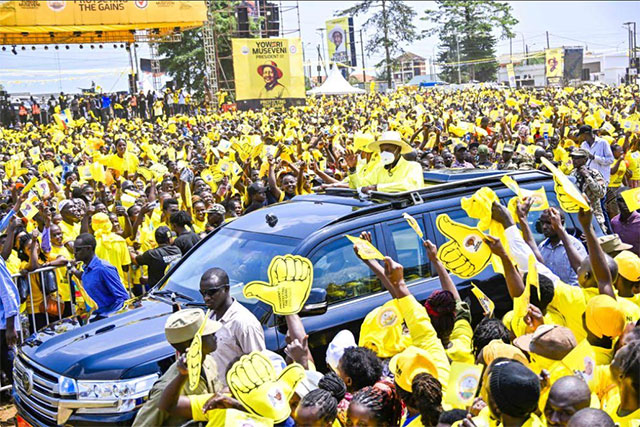
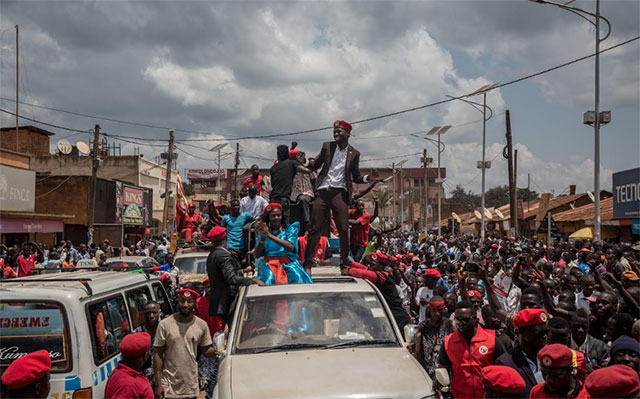
SPECIAL REPORT | RONALD MUSOKE | As President Yoweri Kaguta Museveni, 81, was sworn in on May 12 for a seventh straight term in office, Uganda marked another formal milestone in a presidency that has now spanned nearly four decades. The inauguration at Kololo Independence Grounds followed the Jan. 15 general election in which official results from the Electoral Commission declared Museveni the winner with 71.65% of the vote, ahead of the National Unity Platform (NUP) leader, Robert Kyagulanyi Ssentamu, who polled 24%.
On the surface, the swearing-in reinforced a familiar political arc: continuity at the level of institutions, ritual transition at the level of ceremony, and the reaffirmation of an electoral order that has defined Uganda’s post-independence politics for over a generation. But even as the constitutional pageantry of inauguration concluded, the election that produced it continues to be read in multiple layers, some visible, others unfolding far beyond the formal political stage.
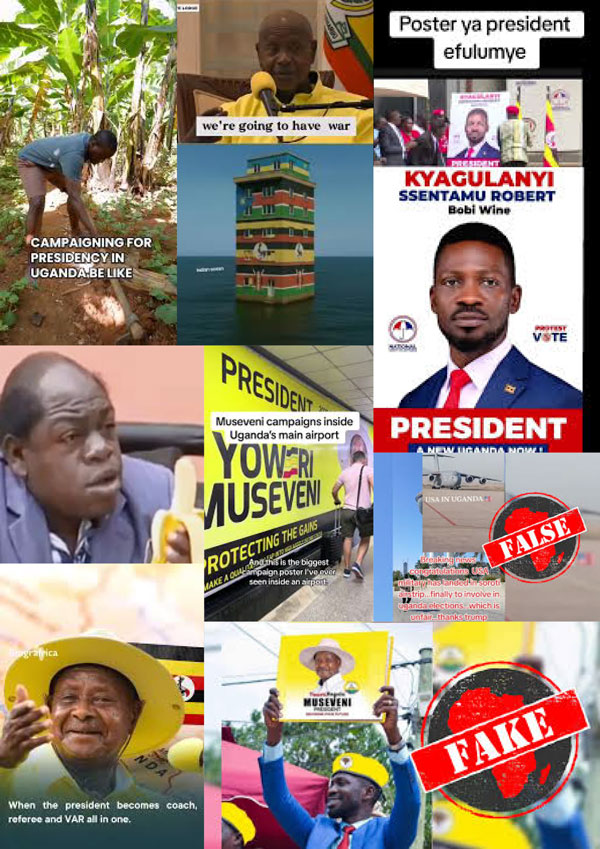
Beneath the official outcome, a parallel contest had already taken shape during the campaign and voting period. It was not confined to rallies, polling stations, or televised speeches but extended into TikTok feeds, X threads, memes, livestreams, hashtags, influencer networks, and encrypted messaging platforms. In this layered digital environment, political participation increasingly became fluid, fragmented, and shaped by algorithmic systems that determine what is seen, shared, and amplified.
Ugandans did not engage with the election solely as voters in a traditional sense. They also participated as audiences and producers within a constantly shifting online ecosystem; reacting, reposting, satirising, and circulating political content in real time. Visibility itself became a form of political currency, while attention, rather than deliberation, often determined which narratives gained traction in the public sphere.
A new report published on April 27 by House of Seshat, an African knowledge management institute focused on culture, policy and power, argues that Uganda’s 2026 election cannot fully be understood through ballot boxes alone. Titled “Democracy in the Feeds: TikTok, X and the Making of Uganda’s Digital Public Sphere”, the study presents the election as both an institutional contest and an algorithmic one; unfolding simultaneously in formal political arenas and inside digital platforms increasingly shaped by influencers, recommendation systems, AI-generated content and state control.
The researchers spent seven months inside Uganda’s digital public sphere, conducting ten weeks of digital ethnography between November 2025 and January 2026 while collecting and analysing over a million social media posts across TikTok, X and Facebook. They supplemented this with observations from WhatsApp, YouTube, Telegram, Bitchat and offline media environments to track how political narratives moved across platforms and between online and offline spaces.
“We spent seven months inside Uganda’s digital public sphere. Nearly one million posts. Ten weeks in the field. One question: What does political participation actually look like when the platforms are shaped by power, the algorithms are partisan, and the state can just turn off the lights?” the researchers ask. The answer, according to the findings, is both expansive and troubling. Uganda today, the report argues, exists simultaneously as both “an emerging and a stunted digital democracy.”
A digital democracy that is growing amidst restriction
Uganda’s internet and social media usage has expanded rapidly over the last decade. According to figures cited in the report from the Uganda Communications Commission (UCC), the country now has approximately 18.5 million internet users and more than 11 million social media users. More than 70% of internet users are aged between 15 and 35, placing young Ugandans firmly at the centre of the country’s online civic life.
TikTok has emerged as perhaps the single most important platform in this transformation. The researchers found that the platform now accounts for nearly half of Uganda’s internet traffic, fundamentally altering how political communication happens.
Unlike earlier digital spaces dominated by elite commentators, political parties and legacy media institutions, TikTok has opened political participation to musicians, citizen media personalities, influencers, comedians and ordinary users communicating through short videos, local languages, humour and pop culture. Yet the report argues that this digital expansion has not translated into deeper democratic participation.
Juliet Nanfuka, a researcher at the Collaboration on International ICT Policy for East and Southern Africa (CIPESA), who participated in the research, told The Independent that one of the study’s most important findings is the growing disconnect between online expression and meaningful civic engagement.
“Although internet access and social media use have expanded steadily in recent years, this growth has not translated into meaningful democratic participation,” she said. “Despite intense online political activity, the 2026 election saw historically low voter turnout, reflecting a gap between online discourse and actual civic participation in elections. The result is a widening gap between citizens’ digital expression and their meaningful engagement in formal democratic processes.”
The report repeatedly returns to this contradiction: Uganda’s digital sphere is highly active, emotionally charged and constantly visible, yet often politically shallow and structurally constrained. The researchers describe an online civic culture dominated less by sustained democratic deliberation and more by spectacle, amplification and emotional reaction.
Inside the research
To understand how Ugandans participated politically online during the election period, the House of Seshat combined ethnographic observation with computational analysis and large-scale data scraping. The ethnographic component ran for ten weeks between November 15, 2025 and January 26, 2026, with the researchers embedding themselves inside Uganda’s online political spaces.
The researchers systematically observed conversations on X and TikTok while also monitoring Facebook, WhatsApp, YouTube and emerging encrypted platforms such as Telegram and Bitchat. Weekly ethnographic notebooks were maintained and later analysed thematically to identify recurring patterns in discourse, participation and civic engagement. Alongside the ethnographic work, the researchers assembled a quantitative dataset spanning both pre-election and post-election periods.
The pre-election dataset covered July 1 to December 1, 2025, while post-election data spanned December 1, 2025 to January 22, 2026. Altogether, more than 1.1 million posts were analysed. TikTok dominated the dataset with over 826,000 pre-election posts scraped from the platform alone, underscoring its growing dominance within Uganda’s digital ecosystem. X, formerly Twitter, contributed over 109,000 posts alongside an additional 26,000 posts gathered through a lexicon-based dataset tracking political keywords and hashtags.
Facebook, despite remaining officially blocked in Uganda since 2021, still generated more than 11,000 posts accessed largely through VPN usage. The post-election dataset included more than 52,000 X posts, nearly 88,000 additional lexicon-based posts and over 9,000 Facebook posts. The researchers used account-mapping strategies to identify approximately 100 politically influential accounts per platform based on engagement levels, political visibility and discourse influence.
The study also relied heavily on computational tools. Python-based data science methods, natural language processing systems and AI classification tools were used to analyse political content. Luganda-language posts were translated using Google Translate API tools. Bot detection on X relied on the Botometer API, which analyses posting behaviour, network structure and language patterns to identify likely automated accounts. Artificial intelligence activity itself also became an object of study. The researchers used Meta’s facebook/bart-large-mnli model through zero-shot classification techniques to analyse how AI-generated content interacted with political discourse.
Passive Ugandan citizens
One of the report’s most striking findings is that Uganda’s online political culture remains heavily dominated by passive participation. On X, nearly half of all political activity during both the pre-election and post-election periods consisted of retweets.
Original authorship remained comparatively limited. Quote tweets increased slightly after the election as users attempted to contextualise or challenge narratives, but amplification remained the dominant mode of participation. TikTok presented an even sharper pattern. Video views vastly outnumbered all other forms of engagement. Likes remained relatively low while comments, shares and saves were comparatively minimal.
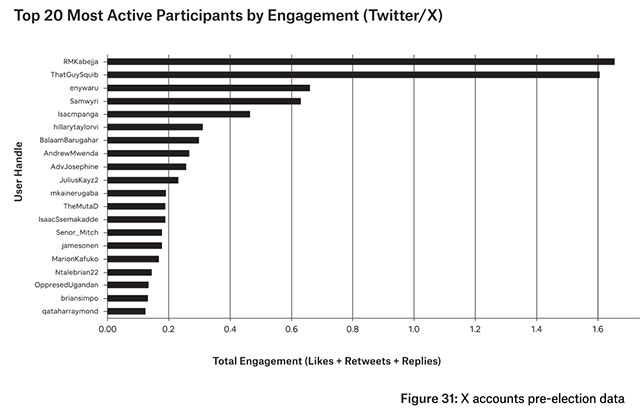
The result, according to the researchers, was a deeply spectatorial political culture in which users consumed political content far more than they actively participated in political discussion. “Together, these patterns paint a picture of Ugandan networked publics as spaces where active contribution remains the exception, not the norm,” the report states.
Gilbert Beyamba, the co-founder of House of Seshat, told The Independent that one of the most surprising findings was the extent to which political discourse online is driven by a very small number of highly active users. “While many people may generally assume this is the case, our research data made the scale of it much clearer and more sobering,” Beyamba said.
“A relatively small group of accounts were responsible for shaping and driving the majority of visible political conversations, while a much larger percentage of users participated passively through reposts, quote tweets, likes, or simply spectating without directly contributing their own voices.”
Beyamba says the findings became especially striking when viewed comparatively against other African countries. “When compared to Kenya (by observation since we haven’t done any study there yet), Uganda’s digital political culture seems far more cautious and reactive,” he said. “In many cases, conversations online are driven by a few influential personalities, commentators, media figures or politically active accounts, while wider active participation remains limited.”
However, Dr. Ivan Lukanda (PhD), a senior lecturer in the Department of Journalism and Communication at Makerere University, told The Independent that the findings mirror participation patterns already visible in Uganda’s traditional media.
“When you listen to radio, presenters literally know most of the callers in their programmes,” Dr. Lukanda said. “When you watch TV, it is usually the same people commenting on different topics. So, the current study is affirming an existing situation.”
TikTok versus X
The report paints Uganda’s digital ecosystem as highly fragmented along lines of class, geography, language and generation. Different demographics inhabit different digital worlds.
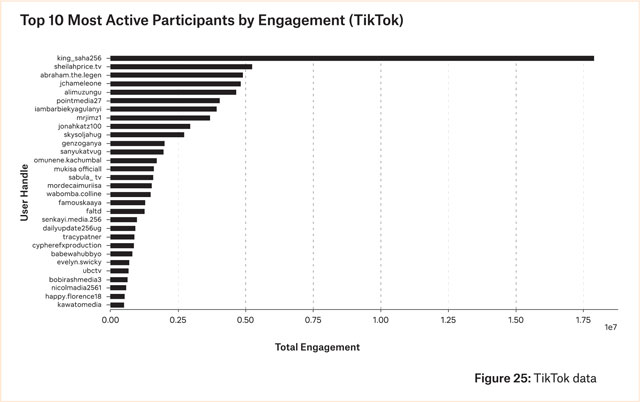
X remains dominated by journalists, lawyers, policy analysts, activists and politically engaged elites. TikTok, by contrast, has become what the report describes as “the platform of the masses.” Citizen media pages, musicians, influencers and Luganda-speaking commentary channels dominate political conversation there. WhatsApp continues functioning as an important organizational tool while Facebook persists semi-underground through VPN usage. Beyamba says TikTok has fundamentally transformed political communication among younger Ugandans.
“The platform allows political content to circulate through humour, audiovisual storytelling, local languages, music, satire and short-form commentary that feels more culturally accessible to wider audiences,” he told The Independent. “In many ways, this reflects the rise of a more “Kidandali-style” political communication culture online, where politics is increasingly packaged through entertainment, pop culture references, celebrity influence and emotionally resonant content.
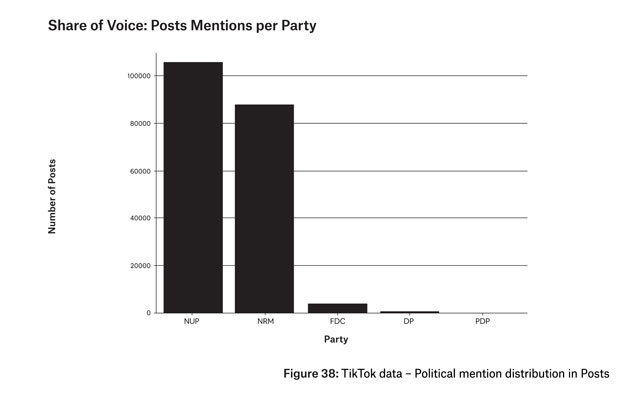
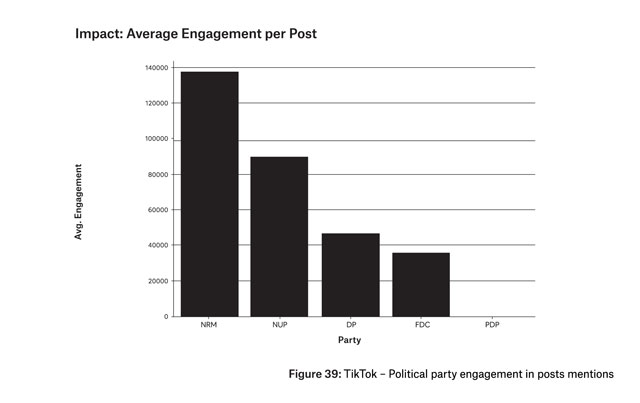
TikTok, it appears, has also democratized language. Unlike X, where English dominates discourse, TikTok allows creators to communicate politics through Luganda and other vernacular languages, broadening accessibility beyond urban English-speaking elites. Yet the report also finds that political influence on TikTok remains highly concentrated. The top 20 most influential accounts, for instance, generated more than 82% of all observed political engagement on the platform.
Citizen media actors emerged as major political intermediaries, translating events into emotionally charged commentary that often blurred the line between journalism, entertainment and political mobilisation.
The platforms also increasingly interact. Political narratives routinely migrate between X and TikTok. A viral X post may later become a TikTok explainer video. A TikTok clip may later dominate elite conversations on X. This cross-platform circulation has created an interconnected but unstable digital ecosystem where narratives constantly mutate as they move across audiences, the researchers say.
Memes as political language
Perhaps the report’s most compelling insight concerns the emergence of what the researchers call Uganda’s “shadow lexicon.” Under conditions of surveillance, restriction and political uncertainty, Ugandans increasingly communicate politically through memes, coded language, satire and indirect references. These forms of expression allow citizens to discuss politically sensitive issues while maintaining plausible deniability. The report argues that memes have evolved beyond humour into instruments of political participation.
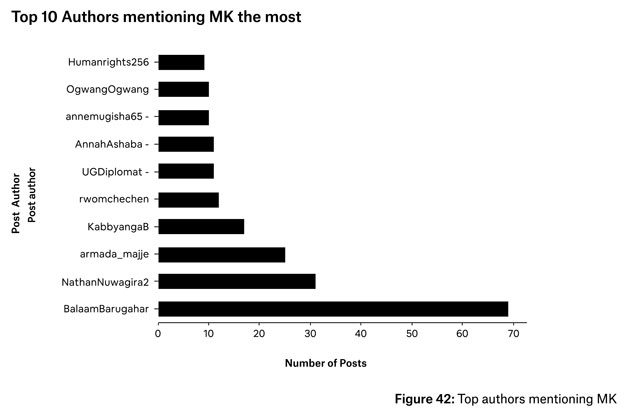
Their ambiguity protects users while strengthening in-group solidarity. Their visual nature allows rapid circulation across platforms. “The report sheds light on emerging issues; laws curtailing free speech online, internet shutdowns, and other aspects restricting civic space which have resulted in pushing the citizenry into passive participation,” said Raymond Amumpaire, a digital rights expert. “It is surprising how something such as ‘drone’ can be a whole lexicon for politically motivated abductions.”
The term “drone” has evolved online into shorthand for the Toyota Hiace vans associated with state-linked abductions. Such coded language allows politically sensitive discussions to happen indirectly, intelligible to insiders while potentially opaque to surveillance systems.
Beyamba argues that these expressive cultures should not be dismissed as superficial. “Memes, satire, coded language and humour are often adaptive responses to conditions where citizens may feel monitored, constrained or unsafe speaking openly,” he said. “Young people especially have developed highly creative ways of discussing political issues online without always engaging in direct or explicit political speech.” At the same time, researchers acknowledge the limits of symbolic politics.
Internet culture moves quickly. Political outrage trends intensely before disappearing. The report identifies the phrase “we move,” commonly used online in Uganda, as symbolic of a culture of rapid emotional turnover. Moments of outrage often dissolve quickly into new trends, scandals or memes. This tension between visibility and material political impact runs throughout the study.
Shutdowns, surveillance and migration
The 2025/26 election period also highlighted how state restrictions increasingly shape online behaviour. The researchers observed major spikes in political conversation during internet disruptions surrounding polling day, particularly after the shutdown imposed on January 13. When connectivity partially returned, political posting surged briefly before quickly collapsing back to baseline levels. Repeated shutdowns, platform restrictions and fears of surveillance have accelerated migration toward encrypted and decentralised communication spaces.
Telegram usage expanded during the election period while platforms such as Bitchat reportedly experienced significant spikes in downloads. Joseph Tahinduka, a digital ethnographer and researcher, who also participated in the research told The Independent that the migration reflects deeper anxieties about surveillance and freedom. “There is an inborn human need to live and be free,” he said.
“Whenever that need is taken away, even on social media platforms, human beings have always innovated their way out of the cage, and that explains the rise of alternative, less repressive platforms.” Tahinduka warns that excessive regulation may ultimately undermine the state’s own visibility into online discourse.
“If the goal is to watch, then they (the state) may eventually have nothing to watch as a result of over-regulation,” he said. “Market dynamics will always devolve towards safer, less regulated products and, more often than not, that creates uncontrollable black markets which worsen the very problems you set out to solve in the first place.”
Beyamba similarly argues that migration toward encrypted platforms reflects changing attitudes toward visibility itself. “People increasingly recognise that online speech is permanent and traceable,” he said. “There is growing anxiety around how past political opinions, jokes, affiliations or statements can later be recirculated or used against individuals socially, politically or professionally.”
The report suggests that Uganda’s future digital public sphere may become increasingly fragmented into smaller, trusted communities rather than large open networks. Yet this shift also creates new tensions. Encrypted spaces may protect citizens from surveillance, but they can also weaken public accountability and reduce opportunities for broad democratic deliberation.
AI enters Uganda’s political conversation
One of the report’s most unsettling findings concerns the growing role of artificial intelligence in shaping political discourse. The researchers observed increasing reliance on AI-generated summaries, explanations and commentary during the election period.
Grok, the AI assistant integrated into X, emerged as one of the single most active contributors to political conversations online. According to Nanfuka of CIPESA, Grok authored more than 2,000 posts in the weeks following the January 13 election. “It surpassed every human user to become the platform’s single most active account in Uganda’s political discourse,” she told The Independent. The report warns that many users increasingly circulate AI-generated information without verification, often perceiving AI outputs as neutral or authoritative. This becomes especially dangerous during elections.
“One of the concerns that emerged was that many of these AI tools still appear insufficiently trained on local political contexts, languages and histories,” Beyamba noted. “In several cases, users appeared to trust and circulate AI-generated information even when it contained factual inaccuracies.”
Tahinduka says coordinated inauthentic information campaigns involving AI, bots and influencers represent one of the least understood dimensions of Uganda’s evolving digital politics. “The digital public sphere is under severe contestation,” he told The Independent. “The government and other criminals too have learnt how to tweet or manipulate the TikTok algorithm.”
The researchers documented coordinated amplification networks, including accounts linked to organised influence operations. According to the report, political discourse online is increasingly shaped by recommendation systems designed to reward outrage, sensationalism and emotionally charged content. Rather than simply moderating content, platforms increasingly shape political experience itself. Users are funnelled into ideological echo chambers optimized for engagement rather than democratic deliberation.
Amumpaire says the report’s recommendations around AI oversight and algorithmic transparency arrive at a critical moment not only for Uganda but also for the wider East African Community region. “As we watch election seasons in neighbouring South Sudan and Ethiopia this year as well as Kenya next year, these recommendations can be key in informing interventions,” he says.
Still, he argues the report could have gone further in examining the risks posed by foreign information manipulation and interference. “The report, however, doesn’t give necessary attention to the potential foreign information manipulation and interference that can swing elections based on how information is packaged and where it is disseminated,” he says.
The limits of visibility
Despite the enormous scale of online political activity, the researchers repeatedly return to one uncomfortable question: how much of this digital participation actually translates into democratic power? This is because political engagement online remained surprisingly low relative to platform user bases.
On X, which has roughly 700,000 Ugandan users, average daily political posts often remained below 200. TikTok’s vast scale similarly masked shallow political engagement relative to overall platform activity. The researchers describe this as an “online civic culture crisis”. Entertainment consistently overwhelmed policy debate. Political scandals generated bursts of outrage before quickly dissolving into new content cycles.
The report argues that Uganda’s digital political culture increasingly resembles what scholars describe as “slacktivism”: highly visible engagement that rarely sustains long-term mobilisation. Still, the researchers stop short of dismissing Uganda’s networked publics as politically meaningless. Instead, they portray them as unstable but significant spaces where citizens continue improvising new forms of participation under restrictive conditions. Memes, satire, citizen journalism, influencer commentary and grassroots storytelling all represent attempts to remain politically visible in constrained environments.
Questions beyond the election
The report ultimately asks bigger questions extending beyond the 2026 election itself. What happens when politics increasingly unfolds through algorithms designed for engagement rather than democratic reasoning? What does citizenship look like when participation becomes reactive, fragmented and platform-dependent? And what are the consequences when online visibility begins substituting for material political power?
Yet, not everyone is fully convinced by the report’s analytical framework. One Kampala-based disinformation researcher who preferred anonymity so she could speak freely told The Independent that while the report effectively captures engagement patterns, it pays insufficient attention to narrative analysis and cross-platform dynamics.
“I feel like what this report particularly misses out on is the interaction and showing the cross-platform engagement,” the researcher told The Independent. “If I took a post from X and then went and did a whole video explainer of it on TikTok, analysing that and the trickle-down effect it has in TikTok would sort of enrich the report.”
The researcher argues that future studies need to move beyond engagement statistics toward deeper analysis of narrative construction, influence networks and offline impact. “Who is the narrative builder? Who’s the diluter? Who’s the influencer? Who is the centre of the conversation?” the researcher asks.
“Why is this conversation coming at this time? What is the ripple implication offline?” Those critiques themselves reflect the rapidly evolving nature of digital politics. The ecosystem is changing faster than researchers can fully map it. Platforms rise and fall quickly. AI systems evolve rapidly. Narratives mutate across platforms within hours. The election, in this sense, may represent less a final picture than a snapshot of an unfinished transition.
Godwin Toko, the Deputy Team Leader at Agora Centre for Research, a Kampala-based online digital public square that promotes human rights, public accountability, and social justice, told The Independent that there is, in his view, “nothing surprising in this study.”
“World over, a few people will shape political discussions, and the rest will engage with that,” he said. “Also, entertainment, celebrity gossip, and the like are more palatable for most people, and so they become easier to discuss.”
But Toko argues that Uganda’s context carries a more specific inflection, shaped by the political risks attached to speech itself. Over the last two years, he notes, “tens, maybe hundreds, of young people have been arrested for their views expressed via social media (especially TikTok),” a reality that, in his view, has had a chilling effect on participation. “This means that a lot of people will avoid voicing political opinions to stay on the safe side. That means even fewer people will discuss politics, at all.”
In that sense, what may appear as apathy or disengagement online is, he suggests, also a form of self-preservation. The rapid movement from one trending topic to another, he adds, should also be understood within the rhythm of contemporary digital life itself, where attention is constantly redistributed across an overwhelming volume of global and local events.
“News travels really fast,” he said. “Something can happen in Arua and within 30 minutes, it’s the discussion in Kampala. Given that the internet, and social media, do make the country and the world a global village, there’s just so much happening at any point that the discussion will take this form.” For him, this constant churn is not inherently problematic. “For me neither of these is a problem,” Toko added. “The bigger problem is the gagging that freedom of expression faces.”