 The Independent Uganda: You get the Truth we Pay the Price


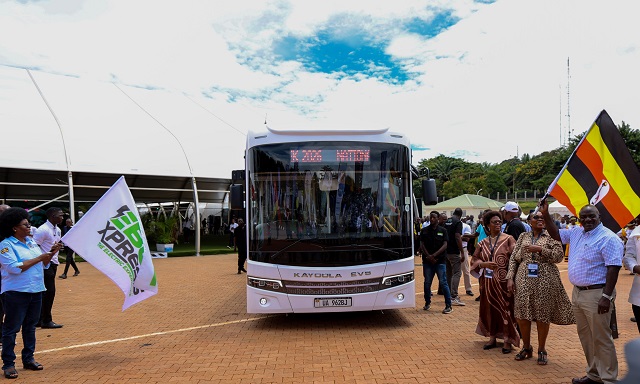
Kampala, Uganda | THE INDEPENDENT | Uganda has unveiled its first electric commuter bus service in the capital, marking an early step in a nationwide plan to modernise urban transport and cut emissions through electrification.
The service, unveiled by Works and Transport Minister Edward Katumba Wamala, introduces the first operational circuit under a broader rollout targeting 14 cities by 2030. The initial route connects Ntinda and City Square via Kampala Road, forming part of a five-circuit plan for the Greater Kampala Metropolitan Area.
The system is operated by E-Bus Xpress, a subsidiary of state-linked Kiira Motors Corporation. It enters service with an initial fleet of eight electric buses and a planned 15-minute headway between departures. The network also uses a fully cashless payment system, aligning with wider efforts to digitise urban mobility.
The Kampala launch follows a pilot project in Jinja in late 2024 and places Uganda alongside regional peers including Kenya, Rwanda and Ethiopia, which are also expanding electric public transport systems.
Katumba Wamala said the programme is designed to reduce fuel import dependence and stabilise commuter costs by relying on domestically generated electricity.
“Every electric mile driven is capital saved from fuel imports,” he said at the launch, adding that predictable fares would help shield commuters from volatility in global oil prices.
Under the government’s long-term plan, Uganda aims to deploy 1,500 electric buses across 14 urban centres by June 2030, supported by 260 fast-charging stations. Officials say the infrastructure build-out will be central to scaling operations beyond Kampala.
At the centre of the programme are Kayoola electric buses manufactured locally by Kiira Motors, which the government views as a key pillar of its industrialisation agenda and push for greater energy self-reliance.
Beyond transport efficiency, authorities are positioning the initiative as an economic development tool expected to generate jobs in vehicle servicing, charging infrastructure, park-and-ride facilities and mobile payments. A franchise-based operating model is also expected to integrate informal transport operators into the formal system.
The rollout comes as Uganda advances its National Development Plan IV, which prioritises infrastructure development and urban productivity as key drivers of economic growth.
Officials say modernising public transport is critical to addressing chronic congestion in Kampala, a rapidly growing city where road networks have struggled to keep pace with population expansion.
The electric bus system is also expected to reduce transport-related emissions, aligning Uganda with global decarbonisation targets and broader regional efforts to transition away from fossil-fuel-dependent mobility.
With operations now underway in Kampala, attention is turning to the system’s ability to scale commercially and operationally, as Uganda tests the viability of electric mass transit in a fast-growing urban environment.


This is fantastic news for Uganda. Seeing our country manufacture its own buses is a massive milestone and it fills me with immense pride.
Reflecting on this progress brings back a memory from six years ago. I was sharing a coffee at the Transport for London Southwark headquarters with my colleague and fellow Ugandan diaspora member, Mitul Chandarana. Looking out at the London network, we asked ourselves a profound question. Why are we using our expertise to shape and manage urban transport in London, instead of bringing these skills back home to Kampala?
Between Mituls deep financial expertise in major transport projects and my own background, we have always wanted to see Ugandas urban transport built on the strongest possible foundations.
A similar thought crossed my mind during the launch of Uganda Airlines. Having served as a young Ugandan diplomat in Ethiopia years ago, I saw at first hand how invaluable deep sector specific institutional knowledge is to launching a sustainable national carrier. Operating a complex network, whether in the air or on the ground, requires a unique blend of technical execution, specialised knowhow, and robust governance frameworks.
Having the vehicles and an educated workforce is a brilliant starting point. However, long term success relies on combining these assets with specialised operational systems and rigorous quality standards. Sometimes, taking a brief pause to embed this institutional knowhow before full execution can prevent the common growing pains that new infrastructure projects face.
My ex colleague and brother, Mitul, represents a unique part of our diaspora history. His family were among the Ugandan Asians who left under Idi Amin. Though he has never been to Uganda, his roots remain deep and he still fondly connects to home through family ties like his uncle, Sudhir Ruparelia.
Neither Mitul nor I are looking for employment. We are simply driven by a desire to see our homeland succeed. If Ugandas transport planners ever wish to tap into our experience to help design these foundational frameworks, our doors are always open to help.