The Independent Uganda: You get the Truth we Pay the Price


What happens when mobile money fails, hospitals lose data, and the invisible infrastructure behind modern life suddenly stops working?
NEWS ANALYSIS | RONALD MUSOKE | What if, tomorrow morning in Kampala, your mobile phone stopped working – not because the battery died, not because you forgot to buy data, but because the invisible digital public systems behind modern life simply failed?
At first, it might feel like one of those ordinary network interruptions Ugandans have become used to. But then the disruption spreads. The mobile apps or USSD codes on your mobile phone cannot process mobile money transactions. At the supermarket, customers abandon shopping baskets because card machines and payment systems are offline. A rider on a motorcycle taxi arrives but cannot confirm payment. Taxi-hailing booking platforms freeze midway. Parents trying to pay school fees through digital platforms cannot complete transactions.
This is the unsettling possibility at the centre of a major new international report titled “When Digital Systems Fail: The Hidden Risks of Our Digital World”, which was jointly published on May 5 by the International Telecommunication Union (ITU), the United Nations Office for Disaster Risk Reduction (UNDRR), and Sciences Po Paris School of International Affairs.
The authors of the report ask a fundamental question: Are we ready for solar storms, submarine cable cuts, satellite disruptions, and extreme weather to disrupt communication networks and potentially trigger a “digital pandemic”?
The report notes that a risky paradox has been created by the world’s growing dependence on digital public infrastructure. Digital Public Infrastructure (DPI) refers to open, interoperable and scalable digital systems that allow citizens, businesses and governments to access services efficiently. DPIs typically include three core layers: digital identity, payments and secure data exchange, supported by tools such as digital document systems, authentication platforms and open application programming interfaces (APIs).
According to the report, the technologies that have made life more efficient, connected, and convenient have also created forms of systemic vulnerability that many governments, companies, and societies are still poorly prepared to confront.
The report describes a future in which disruptions no longer remain isolated incidents. Instead, they spread rapidly across sectors, institutions, and borders. What might begin as a technical fault; a weather event, or an undersea cable break can quickly evolve into a cascading failure affecting hospitals, banks, transport systems, communication networks, and emergency services all at once.
“Resilience must be built into the DNA of the technologies we depend on,” said Doreen Bogdan-Martin, the Secretary-General of the International Telecommunication Union, the United Nations agency for digital technologies, driving innovation for people around the world. “This report urges us to consider the systemic nature of risks and rethink how we protect the systems that connect and empower humanity.”
Digital crises have happened before
For millions of Ugandans, such warnings may initially sound abstract or even exaggerated. But the report draws its authority not from speculation but from history. The world has already experienced fragments of the very crises now being described. The difference is that modern societies are now far more dependent on digital systems than they were when those earlier disruptions occurred.
In January 2022, the eruption of the Hunga Tonga-Hunga Ha’apai underwater volcano severed the only submarine cable connecting Tonga to the outside world. Almost overnight, the Pacific Island nation disappeared from the global internet. Communications collapsed, banking systems slowed dramatically, government coordination became difficult and families struggled to contact relatives abroad. The nearest cable repair vessel was more than 4,000 kilometres away in Papua New Guinea, and Tonga remained largely offline for weeks.
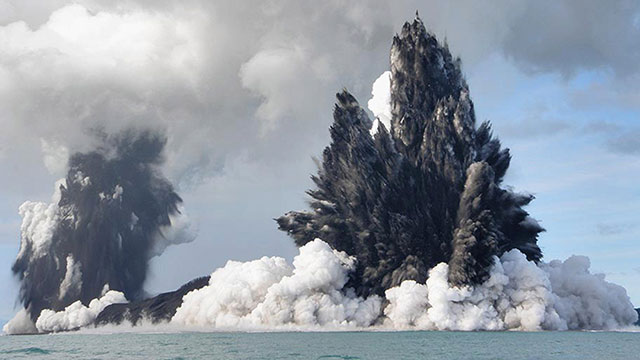
At the time, the event was viewed mainly as a regional disaster. But the report asks a disturbing question: what if the same type of cable disruption occurred along one of the world’s major internet routes carrying financial and communications traffic between continents?
Submarine cables may be hidden beneath oceans, but they form the backbone of the modern internet. More than 99% of international internet traffic travels through these cables. Yet most people rarely think about them until something goes wrong.
The report notes that the world possesses only a small number of specialized cable repair ships. In a major multi-cable disruption, restoration could take weeks or even months. During that period, businesses would struggle to process payments, ports would slow down, logistics systems would break down, and financial transactions could stall across entire regions. The frightening reality is that modern economies now depend on infrastructure most citizens never see.
The Carrington Event of 1859
The report also revisits one of history’s most extraordinary but often forgotten technological disasters: the Carrington Event of 1859. During that massive solar storm, telegraph systems across Europe and North America malfunctioned violently. Operators received electric shocks. Sparks flew from equipment. Some telegraph stations reportedly caught fire. Auroras appeared in skies far beyond their usual range.
At the time, telegraphs represented the cutting-edge communications technology of the nineteenth century. But despite the disruption, broader society continued functioning because daily life was not yet deeply interconnected through digital systems.
Today, the consequences would be radically different. A modern Carrington-scale solar storm could disable satellites, interfere with global navigation systems, damage power grids, disrupt financial timing systems, and cripple telecommunications simultaneously. The report notes that a solar event of similar strength narrowly missed Earth in 2012.
Modern financial systems, for example, rely heavily on Global Navigation Satellite Systems for timing synchronization. Banks do not merely use digital systems to transfer money. They rely on precise satellite timing to determine the sequence and legitimacy of transactions. If those timing signals fail, clearing systems may no longer determine which transaction occurred first. Payments can be rejected and financial systems can freeze. Meanwhile, airlines would struggle with navigation systems, shipping routes would slow dramatically, and emergency services relying on digital dispatch systems could lose coordination capabilities.
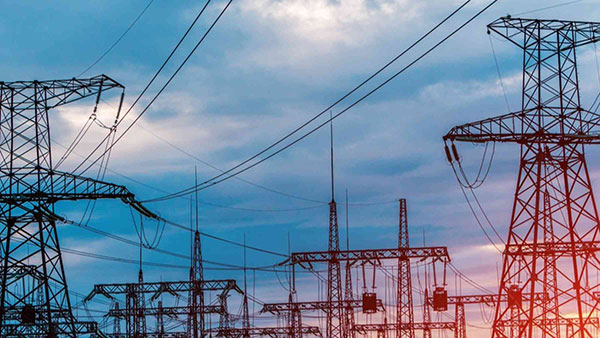
Even more worrying is the vulnerability of electricity infrastructure itself. Geomagnetically induced currents from severe solar storms can damage high-voltage transformers in power grids. Replacing such transformers can take between twelve and eighteen months under normal manufacturing conditions. There is currently no large international reserve system capable of rapidly replacing them after a global event.
Can analogue systems come to our rescue?
The report argues that many critical assumptions underpinning modern emergency planning are now dangerously outdated. Chief among them is the belief that analogue or manual systems can easily replace digital systems when disruptions occur.
In reality, the report notes, many societies have quietly lost the skills and infrastructure necessary to function without digital tools. The report uses aviation as an example. Global Navigation Satellite Systems have become so central to modern aviation that special training programmes are now required simply to preserve older navigation skills that pilots once used routinely.
The same problem exists across multiple sectors. Hospital workers trained almost entirely on electronic medical record systems may struggle to function effectively without them. Bank branches operating in increasingly cashless societies often no longer maintain sufficient physical cash reserves. Emergency services dependent on digital mapping and routing systems may lose operational efficiency when those systems fail.
The report repeatedly returns to one troubling observation: societies have become dependent on digital systems without maintaining reliable fallback options. “As our societies become more reliant on digital technologies, disruptions caused by disasters can cascade across systems and borders, triggering far-reaching and potentially catastrophic failures,” said Kamal Kishore, the Special Representative of the United Nations Secretary-General for Disaster Risk Reduction and head of UNDRR. “We must plan, build and maintain digital infrastructure with systemic risk in mind — now and for the future. Digital infrastructure must be resilient infrastructure.”
When a heatwave wreaks havoc
One of the report’s most compelling sections examines how seemingly manageable disruptions can evolve into full-scale systemic crises. The report imagines a severe European heatwave striking in today’s hyperconnected world. At first, no individual failure appears catastrophic. Data centres begin experiencing cooling stress. Electricity demand rises close to grid capacity. Regional power operators introduce short rolling outages to stabilize the system. Mobile network latency increases. Backup systems activate.
Individually, none of these developments crosses the threshold of national emergency. But together, they trigger a cascade. As data centres overheat, cloud services begin rerouting traffic to facilities in other regions. Telecommunications systems slow under the increased load. Some mobile towers lose active cooling. A cloud-hosted healthcare platform becomes inaccessible during a power fluctuation. Ambulance routing systems stop functioning properly. Hospitals revert to telephone coordination.
At the same time, electronic payment systems begin failing. Businesses close because card terminals cannot connect to remote servers. Emergency alerts struggle to reach the public because the communications infrastructure itself is degraded.
No dramatic explosion announces the crisis. There is no singular moment when society clearly recognizes disaster. Instead, systems quietly stop working. That invisibility is one of the report’s most disturbing themes. Unlike floods, fires, or earthquakes, digital failures often produce no immediate visual signal. Buildings remain standing. Roads remain open.
But essential systems underneath daily life cease functioning. This delay in recognizing the severity of disruption can itself become catastrophic because authorities lose valuable response time while trying to understand what is happening.
The report cites several real-world examples that reveal how physical events increasingly produce digital consequences. In 2021, a heatwave in Oregon caused outages at multiple cloud service providers after cooling systems struggled under extreme temperatures. The same year, flooding in Europe disrupted data centre operations. In 2022, failures involving Oracle and Google cloud infrastructure in London were linked partly to heat-related cooling problems.
Meanwhile, in 2025, a massive blackout in Spain involving the sudden loss of 15 gigawatts of electricity disrupted telecommunications across Spain and Portugal, with ripple effects extending as far as Morocco and even remote communities in Greenland.
Risk of concentrating critical DPIs in one place
The report also points to the growing concentration of digital infrastructure itself. As of 2024, the world had more than 11,800 data centres, with around 40% located in the United States alone. Increasingly, global cloud computing depends on massive clusters of facilities concentrated in particular geographic regions.
This creates what experts describe as “hidden concentration risk”. A single extreme weather event affecting a major data centre hub could disrupt cloud platforms, financial services, telecommunications systems, and public administration simultaneously.
“Facing systemic risks means looking beyond data and working across disciplines,” said Arancha González of Sciences Po Paris School of International Affairs. “This report shows how evidence-based policymaking can help us build resilience in an increasingly interconnected world.”
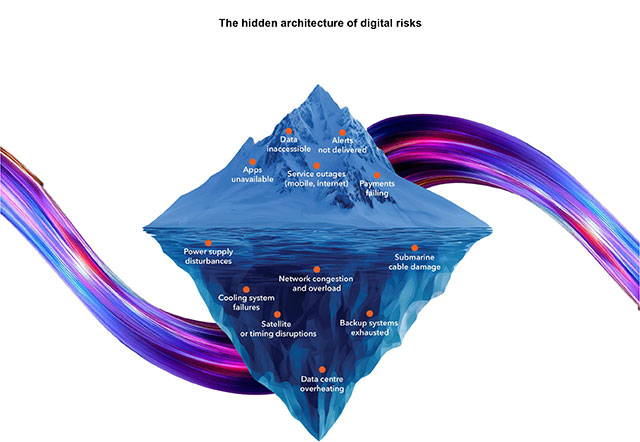
One of the report’s most striking findings is that up to 89% of digital disruptions linked to natural hazards are caused not by the original event itself, but by secondary cascading failures. In other words, the most dangerous part of a crisis is often what happens after the initial shock. A power disruption weakens cooling systems. Cooling failures affect data centres. Data centre failures disrupt hospitals, banking systems, and communications networks. Emergency coordination weakens precisely when demand for emergency services rises.
And because these systems depend on each other in ways that are often poorly mapped or understood, organizations frequently fail to anticipate how crises will spread. The report argues that modern risk management frameworks remain dangerously fragmented. Infrastructure systems are still largely managed sector by sector, even though the systems themselves now operate as interconnected ecosystems.
The challenge, according to the report, is not merely technical. It is political, institutional, and social. The authors call for governments, regulators, businesses, and international organizations to fundamentally rethink how digital resilience is approached.
They argue that countries must deepen their understanding of critical digital risks by identifying hidden vulnerabilities, mapping cross-sector dependencies, and modelling how disruptions could spread across interconnected systems. The report also urges policymakers to modernize disaster risk frameworks so that non-intentional digital disruptions are treated with the same seriousness as cyberattacks or physical disasters.
The report’s recommendations
The report emphasizes the need to preserve analogue fallback systems and maintain analogue skills across societies. Emergency planning, it argues, must no longer assume that digital systems will always be available. Governments and industries should conduct joint scenario planning exercises involving energy providers, telecommunications operators, financial institutions, healthcare systems, and emergency management agencies.
The authors further recommend stronger international coordination around critical infrastructure risks involving space weather, submarine cables, satellites, and data centres. Because these systems cross national borders, no single government can effectively manage them alone.
The report also argues that resilience ultimately depends not only on technology but also on trust. Countries, companies, and institutions must develop shared awareness, stronger cooperation mechanisms, and greater accountability if they are to respond effectively to future crises.
The warning emerging from the report is therefore not simply about technology failing. It is about what happens when societies become so dependent on invisible systems that they stop imagining life without them. And perhaps nowhere is that warning easier to understand than in rapidly digitizing cities like Kampala, where daily life increasingly flows through mobile money, cloud platforms, digital government services, and app-based transport systems. For now, these systems feel seamless, reliable, and permanent. Until one day, perhaps without warning, they are not.