The Independent Uganda: You get the Truth we Pay the Price


Kole, Uganda | URN | In the quiet village of Alelibanya in Kole District, Eunice Aceng spent three years living a life defined by pain, isolation, and stigma. “I had a disease called fistula. I leaked urine for three years,” she recalls.
Her condition, Obstetric fistula, left her constantly wet, battling a persistent smell that drove away friends, neighbors, and even simple human interaction. Like many women across rural Uganda, Aceng withdrew from society, her dignity eroded by a condition that remains both preventable and treatable.
“I had a problem, a disease called Fistula- I leaked urine for 3 years. I then came to Lira Regional Referral Hospital. They took me to Kanungu district, to a hospital called Bwindi Community Hospital, where I was helped.” Similarly, Winnie Akullo, a 21-year-old peasant of Amolatar district, lost her first child in 2022 when she was only 17 years. She had a stillbirth at a health center IV, after days of labour at home.
When she returned home from the facility, Akullo realized that she was experiencing continuous, uncontrollable urination; she had developed an obstetric fistula. She was immediately rejected and abandoned by the people close to her. “I was so stressed and sickly because no one would get close to me,” she said with teary eyes. “Even the boy who got me pregnant left me in the house alone; he started staying in his aunt’s house.”
Just like Aceng, Akullo underwent corrective surgery in 2024, regaining her dignity and starting a new life. These women’s experiences mirrors that of thousands of women across Uganda- a country where health experts estimate that millions of women are at risk of urogynecological conditions, often stemming from prolonged and obstructed labor, surgical injuries, or trauma.
Among these conditions, obstetric fistula stands out as one of the most devastating, leaving women leaking urine, stool, or both uncontrollably. In some rural Ugandan communities, up to 20 percent of women report knowing at least one or two people living with fistula, highlighting how widespread, yet underreported, the condition remains.
Pelvic organ prolapse, another related condition, affects an estimated 27.5 percent of women in rural western Uganda, further illustrating the scale of reproductive health challenges facing women. For both Akullo and Aceng, hope came after years of suffering. Their journey to recovery began at Lira Regional Referral Hospital, where local coordinators linked them to specialized care.
The two were later referred to Bwindi Community Hospital in Kanungu District, one of the few facilities in the country that were then offering fistula repair surgery. Then, in October 2023, Aceng underwent a life-changing operation, and by November 11th, she was discharged and returned home, this time with renewed hope. Akullo was operated on a year later.
Months later, a follow-up review conducted by a visiting team from Mbarara Regional Referral Hospital confirmed what Aceng had long prayed for: she was fully healed. “I am healed from both pain and the physical shame,” she says.
Her recovery was made possible through the support of leaders like Samuel Okwir Odwe, the Moroto County Member of Parliament, who sponsored her treatment, an intervention that underscores the critical role of political and community support in addressing maternal health challenges.
In Eastern and Western Uganda, the United Nations Population Fund (UNFPA), with funding from the Embassy of Iceland, is implementing the Survivors Treatment of Obstetric Fistula Prevention (STOP) Program, aimed at reducing maternal morbidity caused by obstetric fistula, and supporting the rehabilitation and social reintegration of survivors.
Through Marie Stopes Uganda in partnership with the Ministry of Health, local governments, and the Association of Obstetricians and Gynaecologists of Uganda, a three-year initiative is conducted, with free surgical camps across Eastern and Western Uganda, restoring dignity through corrective surgery. According to Dr. Musa Kayondo, an associate professor and the Head of Department of Obstetrics and Gynecology at Mbarara University of Science and Technology, between 24 and 28 percent of women across Africa experience urinary incontinence, with stress-related cases affecting up to 35 percent.
“Sometimes they have lost their babies, and after losing the baby, they are stigmatized, they are chased away from home. They have emotional and psychological effects and trauma,” he said. While these two women’s stories end in healing, many women are still waiting. For survivors like Aceng, healing goes beyond the operating table. “I am now free,” she said, her voice steady with relief. Their stories are a testament to resilience but also a reminder that thousands more remain hidden, waiting for the same chance at life, dignity, and acceptance.
Across Uganda, access to timely obstetric care remains uneven, especially in rural areas where health facilities are limited and long distances delay emergency interventions during childbirth, the primary cause of fistula. Poverty, lack of awareness, and stigma further prevent women from seeking treatment. Yet progress, though slow, is visible.
Dr. Kayondo explained the need for not only super specialization but decentralization of super specialized services in order to give the women the exact care they need at the right time. This is what the Mbarara University Urogynecology Program is hoping to address.
The program partners with regional referral hospitals to identify and treat survivors. These specialized surgical procedures are restoring not just physical health, but also dignity, allowing women to reintegrate into their communities.
“So not only were we preventing obstructed labor, but we’re also training the doctors who are doing caesarean sections to offer what we call safe caesarean section, such that our mothers do not get complications in the hospitals,” he said. Adding “We do this, it’s a program called Essential Training in Operative Obstetrics and Gynecology.”
Currently, there is a 33.3 percent rise in facilities offering fistula services across the country. This is made possible through collaborations between the Ministry of Health and partners such as the MUSA project, which is building infrastructures to support care for women with urogynecology conditions.
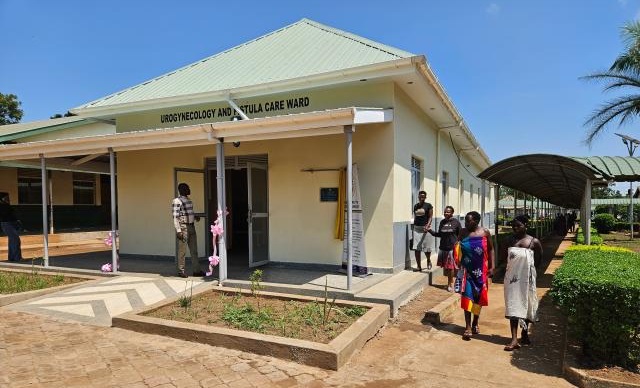
One such infrastructure, a dedicated urogynecology and fistula ward, was recently commissioned at Lira Regional Referral Hospital to serve the community of Lango, Acholi, Karamoja region, and Teso sub-region.
The ward has cubicles for privacy, and a High Dependency Unity (HDU) where the very sick mothers who have very difficult, life-threatening obstetric complications can be handled and monitored for a while.
He concluded, saying, “It’s very bad to have such a building, and we don’t have equipment to take care of the women.” Adding “So Project Cure is going to give us, already, the equipment is already packaged from the USA, a container full of equipment for both theater, ward, and ICU. Not only even gynecology, but there’s even equipment for urology, for pediatric surgery, and general surgery.”
In Uganda, UNFPA and partners support the Ministry of Health’s efforts in fistula prevention, treatment, support, and reintegration by improving maternity care and family planning, tackling social factors like poverty and child marriage. Recently, while opening the new Gynecology and Fistula ward at LRRH, Health Minister Dr. Jane Ruth Aceng Ocero explained how the fight against fistula has been progressing since the early 1990s, attributing the challenge to teenage pregnancy.
She advised young girls to “avoid pregnancies when their bodies are not yet mature enough to carry such pregnancies” because that is when they end up with a fistula. Similarly, Geoffrey Mukombi Mugisha, the Principal Medical Officer at the Ministry of Health, emphasized the need for fighting teenage pregnancies, saying urogyne conditions are not easy to live with because they “cause a lot of stress.”
Currently, the Lango Sub-region has the highest backlog of unrepaired fistula in Uganda. Dr. James Okello, the head of the Obstetrics and Gynecology Department at Lira Regional Referral Hospital (LRRH) says the facility screens over 100 patients for the condition. “Sometimes we have to take patients to Bwindi Community Hospital, so we work on about 100 to 120 patients.” He said, also attributing the high number to teenage pregnancy.
Dr. Andrew Odur, the Acting Director of LRRH, underscored the effect of having an unrepaired fistula on a young woman living in the community. “It means we are having a section of mothers who have been chased away from their marriages because they’re leaking urine, they are leaking fecal matter, they are having their genital organs prolapse outside. Their husbands have run away,” he said.
According to Dr. Odur, the delays in repairing such conditions to a lack of specialized manpower and infrastructures, thus the backlog. Being a gynecologist himself, he underscored the hospital’s commitment to ensuring quality care for women with such conditions.
He also emphasized the need for training of the health workforce to offer super-specialized care.
As the Ministry of Health develops the National Obstetric Fistula Strategic Plan, survivor stories reflect not only the devastating impact of obstructed labour and delayed maternal care, but also the quiet resilience of women determined to rebuild their lives after years of shame and rejection.