The Independent Uganda: You get the Truth we Pay the Price


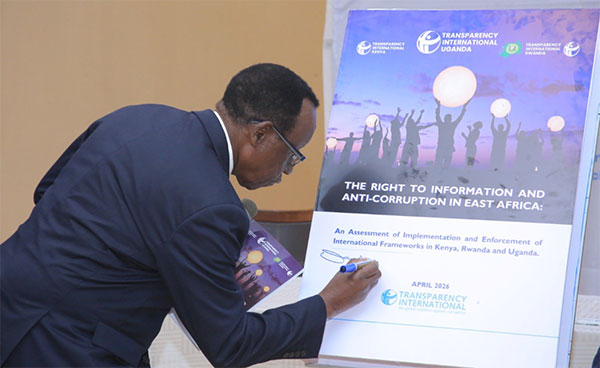
Uganda, Kenya and Rwanda have transparency laws, but corruption persists
NEWS ANALYSIS | PATRICIA AKANKWATSA | Uganda records some of the lowest levels of compliance with access to information requests in East Africa, highlighting a persistent gap between transparency laws and their enforcement across the region.
Between 2018 and 2025, only 25% of information requests in Uganda received responses, while 75% were met with what the report describes as “silent refusal”. Just 14% of applicants ultimately accessed the information they sought, according to findings presented at the launch of a new regional study in Kampala.
The report, produced by Transparency International Uganda, Transparency International Kenya and Transparency International Rwanda, examines whether access to information laws in the region are functioning as tools to fight corruption. It concludes that the main challenge is no longer legislation, but implementation.
Across East Africa, Uganda, Kenya and Rwanda have all enacted access to information laws, signed anti-corruption conventions and introduced digital government systems. Yet corruption remains widely perceived as entrenched.
Speaking at the report launch in Kampala, Lamex Apitta Omara, commissioner at the Uganda Human Rights Commission (UHRC), said transparency is central to governance.
“Governance is the process by which public institutions manage public affairs and resources in an accountable, transparent, participatory and responsive manner,” he said. “Governance legitimacy depends on participation and transparency.”
Omara linked access to information to constitutional rights and international frameworks including the Universal Declaration of Human Rights and the African Union Convention on Preventing and Combating Corruption, alongside Uganda’s Access to Information Act.
Rwanda emerges strongly
Despite this legal framework, corruption indicators across the region remain troubling. Rwanda is the strongest performer in East Africa, scoring about 53 out of 100 in Transparency International’s latest Corruption Perceptions Index. Kenya scores around 31, while Uganda trails at approximately 26, reflecting widespread perceptions of corruption in the public sector.
The differences, analysts say, reflect varying levels of enforcement. Rwanda’s performance is often attributed to stronger central oversight and digitised systems. Kenya combines strong constitutional institutions with recurring corruption scandals. Uganda, despite early adoption of access to information laws, continues to face weak enforcement and institutional resistance.
Gilbert Sendugwa, executive director of the African Freedom of Information Centre, said the region’s challenge lies in implementation.
“All these East African countries are significantly affected by corruption and have national legal frameworks on access to information, as well as having ratified key regional and international instruments,” he said. “The report shows weak implementation.”
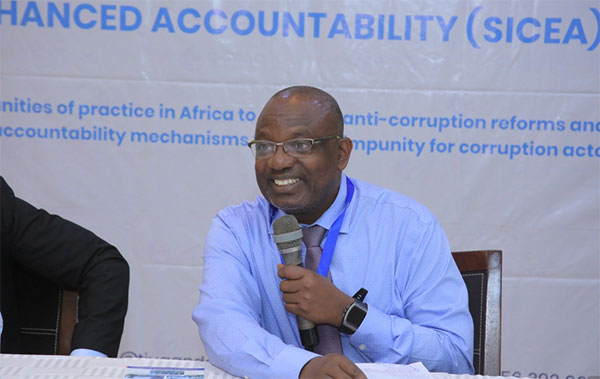
He said effective systems require institutional frameworks, proactive disclosure, capacity building and public awareness.
“How many public institutions are actually complying with these requirements?” he asked.
The report argues that access to information is not only an administrative issue but also has direct consequences for public services and rights.
“When medical supplies are procured secretly, the right to health is affected. When food procurement is not disclosed, the right to food is undermined. When judicial decisions are not provided, the right to a fair trial is compromised,” Omara said.
He added that transparency can act as a deterrent to corruption, particularly when officials know decisions may be scrutinised.
The COVID-19 pandemic, he said, highlighted the importance of disclosure in building public trust around procurement and distribution of relief supplies.
However, the report also notes that secrecy is often embedded in systems through legal exemptions, weak infrastructure, limited digital access and high request costs. Internet penetration in the region stands at about 40%, limiting access to online government information, particularly in rural areas.
Cross-border corruption
The study also highlights the growing cross-border nature of corruption. Omara cited cases involving firms operating across Uganda, Kenya and Rwanda, suggesting that governance failures are increasingly regional rather than purely national.
For Edrine Wanyama, programme manager legal at the Collaboration on International ICT Policy for East and Southern Africa (CIPESA), access to information laws are most effective when actively used.
“Corruption happens in the dark or behind closed doors,” he said, adding that scrutiny of budgets, procurement and spending records is key to accountability.
However, the report warns against overestimating the impact of legislation alone. Sendugwa noted that disclosure laws do not automatically eliminate corruption, pointing to past procurement scandals even in periods of increased transparency.
The study also raises concerns about enforcement institutions, particularly parliaments, which are tasked with oversight but rarely sanction non-compliance.
While Uganda, Kenya and Rwanda require annual reporting on access to information compliance, enforcement remains weak. In Uganda, institutions may submit reports when requested, but follow-up action is limited.
The result, the report concludes, is a system where transparency exists on paper but is uneven in practice, leaving citizens with limited access to information that is meant to underpin accountability.