 The Independent Uganda: You get the Truth we Pay the Price


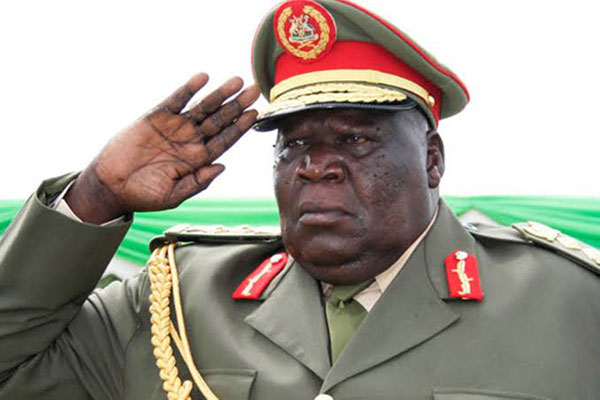
Uganda’s great political survivor who carried the nation’s history within him
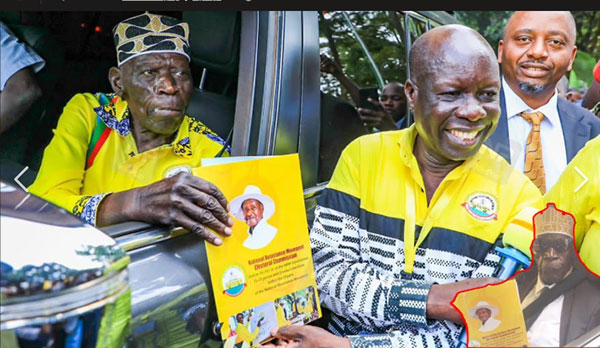
Kampala, Uganda | THE INDEPENDENT | The last time many Ugandans saw Gen (Rtd) Moses Ali in public life, he was not standing behind a podium or sitting in Parliament. He was seated inside a vehicle.
It was June 4, 2025, and the veteran politician had arrived at the ruling National Resistance Movement party headquarters on Plot 10, Kyadondo Road, to collect his nomination papers for the party’s parliamentary primaries. At 86, his body had grown weaker, his movements slower, and his health had become a subject of public discussion.
But the man inside the vehicle remained unmistakably Gen Ali. The same politician who had survived coups, wars, exile, changing governments and decades of political uncertainty was making one more attempt to return to Parliament.
To his critics, his decision represented an older generation unwilling to leave the political stage. To his supporters, it reflected something different: a lifelong commitment to public service and a belief that leadership was not defined by age but by the ability to continue serving people.
When questions were raised about his health during a press conference at his residence in Abiricaku Cell, Adjumani Town, in December last year before he headed for a major mobilisation rally in Ukusijoi Sub-county, Ali dismissed the concerns as political manoeuvring.
“Have you read the article claiming my personal doctor advised me to choose between politics and my health?” Ali asked. “That is a political dark art. My personal doctor has never issued any media statement.”
The voters of Adjumani West ultimately agreed with him. At 87, Moses Ali remained one of Uganda’s oldest elected politicians, bringing to a close a political journey that began before the country became independent.
But beyond his military career and political longevity, people familiar with Moses Ali say he was, at heart, an educationist and a farmer – a man who believed that transforming communities began with investing in people.
For decades, residents of Adjumani West remember him not only as a general or minister but also as a leader who personally supported education causes, helped pay school fees for children from struggling families and assisted vulnerable members of his constituency.
Those close to him say education was one of his strongest passions. He supported schools, encouraged young people to pursue learning, and often used his personal resources to help families who could not afford educational costs.
This connection with ordinary voters partly explains why he continued to win elections despite his advancing age.
In the 2021 general election, his family had reportedly agreed with him that he should not seek another term, believing that after decades in public service, it was time for him to step aside and take a rest.
But he had other plans. One morning, the family woke up to find campaign posters bearing Ali’s image already displayed across the constituency.
He contested, won and returned to Parliament. Ali carried many versions of Uganda’s history within his own lifetime. He was born under British colonial rule to Muhammad Ali and Veronica Porsche Ali.
.
He became a soldier as Uganda searched for its identity after independence. He served during Idi Amin’s military government. He later became a rebel leader after Amin’s fall, negotiated peace with a new government and eventually became one of President Yoweri Museveni’s most trusted political figures.
His life was not simply a biography. It was a reflection of Uganda’s political journey. It was therefore not surprising that when President Museveni announced his death on July 18, he described him as a national figure whose service had stretched across generations.
“It is with deep sorrow that I announce the death of our brother Gen. Moses Ali. He died today at Nakasero Hospital at 1600 hours,” Museveni said.
The president remembered him not only as a military officer and politician but also as a leader who contributed to the development of the West Nile region.
“In the West Nile region, he provided the good example of being a big modern farmer. We shall miss greatly his contribution,” Museveni said.
Ali died at 87 after decades spent at the centre of Uganda’s national conversation. His state burial on Tuesday, July 21, will mark the closing of a remarkable chapter.
But his story is larger than the ceremony. It is the story of a man who repeatedly returned when history seemed ready to move on without him.
A boy from the edge of Uganda
Ali was born on April 5, 1939, in Meliaderi Village, Atabo Parish, in what is now Adjumani District in the West Nile region, located in Uganda’s northwestern corner, bordered by the Democratic Republic of Congo to the south and west and by South Sudan to the north.
He arrived in a country that was not yet his own, as the East African nation was still under British colonial rule, and political independence was still more than two decades away. At the time, West Nile was a remote region, separated geographically from Uganda’s political and economic centre.
But it produced generations of ambitious leaders, soldiers and public servants. For a young Ali, education became the bridge between a rural upbringing and a future in national affairs.
He attended Erepi Church of Uganda Primary School before progressing through Church of Uganda Junior Secondary School and later Old Kampala Senior Secondary School.
Like many Africans of his generation, he entered adulthood during a period of enormous possibility. The colonial order was weakening. African nationalism was rising. New countries were preparing for independence. And, for ambitious young men, the question was no longer whether Africans would lead. It was what kind of leaders they would become, and Ali chose the military that would later define his life.
The making of a soldier
When Uganda gained independence in 1962, its army was small and still heavily influenced by British military traditions. The new country needed officers. It needed discipline. It needed institutions. But it also inherited unresolved political tensions.
Across Africa, armies became powerful forces because they often represented some of the few organised institutions in newly independent states. Uganda followed that pattern.
Ali joined the army in the late 1960s, entering at a moment when military service offered both opportunity and danger. He quickly distinguished himself.
He travelled abroad for training, including military studies in Israel, where he specialised in officer training, parachute operations and command. Later, he attended military courses in the United Kingdom. The young officer returned with skills and confidence that placed him among Uganda’s emerging military elite.
In 1969, after receiving his commission as a second lieutenant, he became an officer responsible for training at the Uganda Paratrooper School. He was only beginning his career. But the country around him was moving toward crisis.
The coup that changed everything
On January 25, 1971, Uganda woke up to a different political reality. President Milton Obote was away attending a Commonwealth meeting in Singapore when soldiers moved against his government. The army had taken power. Idi Amin became president. However, for Ali, the coup opened a new chapter.
He was among the military officers associated with Amin’s rise, becoming part of a new order that would reshape Uganda’s political landscape. However, the years that followed would become among the most controversial in the country’s history. Amin’s government was marked by violence, fear and economic collapse. Thousands of Ugandans were killed. Political opponents disappeared. Institutions weakened.
The economy suffered dramatically, especially after the expulsion of Uganda’s Asian community in 1972. Meanwhile, Ali rose within that system. He became a senior military officer. He became a Minister of Finance. The ascent of the young Ali from Adjuman to the new position at the time was extraordinary.
But it also placed him inside one of the darkest chapters of Uganda’s history. That contradiction would follow him for the rest of his life. Ali was never a simple figure. He was a man shaped by Uganda’s complexity.
Public figures who live long enough often find themselves judged by different generations. Ali belonged to a generation whose careers were forged during a time when the boundaries between military power and political authority were blurred.
His defenders argued that history must consider the circumstances of the time. They pointed to his later decades of service, his role in rebuilding national institutions and his commitment to the West Nile region.
His critics argued that senior officials must be accountable for the governments they served. Both arguments became part of the national debate around his legacy. Interestingly, Ali himself rarely engaged publicly with those questions. Instead, he focused on service. He survived. And survival became the defining feature of his political identity.
The man who refused to disappear
Many Ugandan political careers ended when governments changed. Ali’s repeatedly transformed. When Amin fell in 1979, many officials associated with his government disappeared from public life. Ali did not.
When Uganda entered another period of instability, he found a new role. When political alliances shifted, he adapted. When a new government emerged, he negotiated his place within it.
The ability to remain relevant across decades became both his greatest strength and the reason he remained such a fascinating figure. He was not simply a survivor of history. He was one of its participants. The rebel who returned from the wilderness
The fall of Idi Amin’s government in 1979 did not bring peace to Uganda. Instead, it opened another uncertain chapter. The country that emerged from Amin’s eight-year rule was deeply damaged. Institutions were weakened, the economy was struggling and political divisions that had existed since independence had become even sharper.
For many military officers associated with Amin’s government, the future was uncertain. Some fled into exile. Others disappeared from public life. Ali, however, took another path. He became a rebel.
This transformation was one of the most striking turns in a career already defined by reinvention. The former Finance Minister of Idi Amin’s government became leader of the Uganda National Rescue Front (UNRF), an armed movement largely based among communities from the West Nile region.
The circumstances that produced the rebellion were rooted in the tensions of the time. After Milton Obote returned to power following the disputed 1980 elections, many former soldiers and communities in West Nile feared political retaliation because of their association with Amin’s government.
As such, armed resistance became a means of Ali and his supporters for protecting their interests and demanding recognition.
The UNRF was not as nationally powerful as Museveni’s National Resistance Army (NRA), which was fighting a separate guerrilla war mainly in Luwero triangle, central Uganda. But it became one of the important armed groups operating during one of the country’s most fragmented periods.
The man who had once sat in government offices now operated from outside the state. He had exchanged ministerial files for military camps. The Cabinet room for the battlefield. The suit for the uniform. It was a remarkable reversal.
But these developments also revealed something about Ali’s political instincts: he understood power not only as something exercised from within government but also as something negotiated from outside it.
When Museveni’s National Resistance Army captured Kampala in January 1986, Uganda entered another political transition. For many armed groups, the choice was simple but difficult: continue fighting or negotiate. Ali chose negotiation.
Indeed, the decision would reshape his legacy. Rather than continuing an armed struggle against the new government, Ali entered talks with Museveni’s administration, eventually leading to an agreement that brought the UNRF into the national political system.
It was one of the most important political reversals in Uganda’s post-independence history. A man who had served under Idi Amin. A man who had fought against Milton Obote’s second government. A man who had once stood outside the state. Was now becoming part of the new government.
The agreement reflected a broader strategy adopted by Museveni’s government in its early years: integrating former opponents into the political and military establishment in an effort to stabilise the country.
For Uganda, still recovering from years of coups and rebellion, reconciliation was not simply an act of political generosity. It was a matter of survival. For Ali, it was another beginning.
He was commissioned into the National Resistance Army, eventually rising to become one of Uganda’s most senior military officers. The rebel commander became a government general. The outsider became an insider. The man who had challenged power became part of it, and lasting far longer than many expected.
After joining Museveni’s government, he gradually moved from military command into civilian administration. It was a transition that defined the later decades of his career. He was no longer only a soldier. He became a politician. A negotiator. An administrator. A legislator. A statesman.
His background gave him a unique perspective inside government. He understood security because he had commanded troops. He understood political opposition because he had once been part of it. He understood government because he had occupied some of its highest offices.
Unlike many former military figures who struggled to adapt to civilian politics, Ali successfully reinvented himself. He also invested heavily in education, reinforcing a reputation as a leader who valued learning.
He earned a Bachelor of Laws degree from Makerere University, obtained a Diploma in Legal Practice from the Law Development Centre and pursued further legal studies at the University of Wolverhampton in the United Kingdom.
In 2015, at an age when many people would have stepped away from formal education, he completed a Master of Arts in Intelligence Studies from American Military University.
His ministerial journey under President Museveni stretched across decades and administrations. He served as Minister of Youth, Culture and Sports. He served as Minister of Tourism, Wildlife and Antiquities. He served as Minister of Trade and Industry. He served as Minister of Internal Affairs. He served as Minister for Relief, Disaster Preparedness and Refugees. Each position reflected the government’s trust in his ability to manage difficult assignments.
But his most enduring role was that of deputy prime minister. For many Ugandans, Ali became familiar not because of a single policy or ministry but because he seemed permanently present in government.
His critics, however, raised uncomfortable longevity questions about political renewal and whether Uganda’s leadership structures had become too dependent on figures from earlier generations.
When his political career appeared to have suffered a major setback when he lost his parliamentary seat in 2006, he returned to Parliament in 2011, winning back the Adjumani West constituency.
He held the seat for years afterwards. By the time of the 2026 general election, when many leaders from his generation had left active politics, Ali was still seeking another mandate. His supporters viewed this persistence as evidence of commitment. They argued that his knowledge of government and national politics remained valuable.
Indeed, in the 2026 General Election, he secured another term in Parliament. His departure from Cabinet brought to an end one of the longest periods of continuous executive service in modern Uganda. However, his son Siraj Musa Ali later entered government, becoming Minister of State for Works, attracting discussions around succession.
Family
Behind the military uniforms, political titles, and public responsibilities was a man whose family life was equally significant.
Ali was married to Sarah Ali, who died in January 2024 after reportedly battling kidney-related complications. Her death marked a deeply personal loss for a man whose public life often overshadowed his private struggles.
The couple had a large family, with Ali widely reported to have about 30 children. One of his sons, Siraj Musa Ali, later entered government, now serving as Minister of State for Works, leading to discussions about political succession and the continuation of the family’s involvement in public affairs.


For some reason, Gen. Ali has been mourned respectfully by all sides. A powerful legacy of long service, peacemaking and nation building. A challenge to millennials and genz who want to remind us of futile differences and with an urge to gain power and wealth overnight. R.I.P,, Gen!!