The Independent Uganda: You get the Truth we Pay the Price


How a meeting between an American president and a teenage African king still shapes history, diplomacy and conservation more than a century later
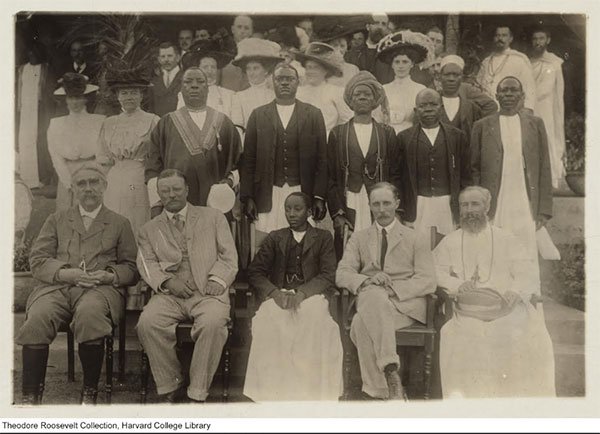
SPECIAL REPORT | RONALD MUSOKE | The slow climb up Mengo Hill in December 1909 marked one of the most extraordinary moments in the history of colonial Africa: a former American president meeting a teenage African monarch whose kingdom was at the time navigating uncertain currents.
Only months earlier, Theodore Roosevelt had left the White House after almost eight turbulent years as the 26th president of the United States. A forceful reformer known for challenging corporate monopolies, expanding America’s conservation movement and projecting U.S. influence abroad, Roosevelt had become one of the most recognisable political figures of his era.
But after leaving office, he embarked on a journey far from Washington D.C; a long expedition through Africa that combined scientific exploration, diplomacy and a search for a new chapter beyond the presidency. His travels brought him to the Uganda Protectorate, where he would meet the then Kabaka Daudi Chwa II of Buganda.
The reception waiting for him at Mengo could hardly have presented a sharper contrast. Roosevelt was 51, a former head of state whose career had already placed him at the centre of global affairs. Daudi Chwa was 13, a young king whose reign had begun under extraordinary circumstances, inheriting the throne of Buganda while still a child and ruling under the shadow of British colonial administration.
For generations, Roosevelt’s East African expedition has been remembered largely as an epic safari; a journey defined by dramatic wildlife encounters and thousands of specimens collected for the Smithsonian Institution. In American history, it remains one of the most celebrated expeditions ever undertaken by a former president.
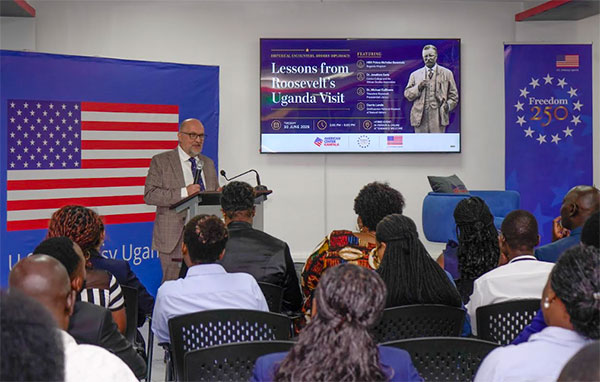
Uganda’s place in that story, however, has often been overlooked. But that is beginning to change. On June 30, diplomats, historians, scientists and representatives of the Buganda Kingdom gathered at the American Centre in Kampala to reflect on Roosevelt’s journey through present-day Uganda. Commemorating the 116th anniversary of the Smithsonian-Roosevelt Expedition, the discussion moved beyond nostalgia to examine the expedition’s enduring significance for diplomacy, conservation and cultural exchange.
The conversation revealed something easily missed in conventional accounts of Roosevelt’s safari: this was never simply the story of an American adventurer exploring East Africa. It was also the story of an encounter between two political worlds that challenged assumptions on both sides.
“We bring together scholars, scientists and diplomats; from Kampala to Kentucky to the halls of the Smithsonian and, very importantly, members of the Buganda Kingdom, all to explore a single remarkable thread of shared history,” said Mikel Cleverly, the Chargé d’Affaires at the U.S. Embassy in Uganda. He described Roosevelt’s visit as “America’s first act of public diplomacy in East Africa,” a relationship whose legacy continues to shape ties between Uganda and the United States. The description may sound ambitious, but it is difficult to dismiss.
Long before embassies became instruments of cultural diplomacy, Roosevelt’s expedition carried scientists, ideas and curiosity across continents. Accompanied by Smithsonian naturalists, the former president embarked on a mission to document East Africa’s remarkable biodiversity.
The expedition eventually collected more than 23,000 specimens; birds, mammals, reptiles, amphibians, fish, insects and plants, that remain in Smithsonian collections today, continuing to support scientific research more than a century later.
Yet science was only one part of the story. For Prince Nicholas Basammula, the great-great-grandson of Kabaka Daudi Chwa II, Roosevelt’s visit represents something far more enduring than an expedition preserved in museum archives. “The true legacy of the encounter is not a moment frozen in history”, he said, during a panel discussion. “It is an encounter that keeps on bridging relationships between Uganda, cultures and nations.”
His perspective shifts the centre of the narrative. Rather than portraying Roosevelt as the sole protagonist, Prince Basammula invites us to see the encounter through Buganda’s own history. Colonialism formed the backdrop to the meeting, but it was not the whole story, he said. Long before Roosevelt arrived, Buganda had developed sophisticated institutions of governance, diplomacy and administration that commanded respect across the region.
“Roosevelt did not meet a thirteen-year-old kid,” Basammula observed. “He met a prince. He met a king.” The distinction matters. Daudi Chwa inherited the throne during one of Buganda’s most turbulent periods. His father, Kabaka Mwanga II, had been exiled to the Seychelles islands in the Indian Ocean, following prolonged conflict with British colonial authorities and Christian missionaries. The young king ruled under a regency while imperial influence reshaped political authority across East Africa. By 1909, he was preparing to assume greater responsibility as monarch.
To foreign visitors, he appeared remarkably young. To Buganda, he embodied an institution that had endured for centuries. Roosevelt quickly discovered that reality. During his visit, he toured the Lukiiko, Buganda’s parliament, and observed a functioning political system that continued to operate despite colonial pressures. Instead of finding a society awaiting civilization, as many Western observers imagined, he encountered a kingdom confident in its traditions and institutions.
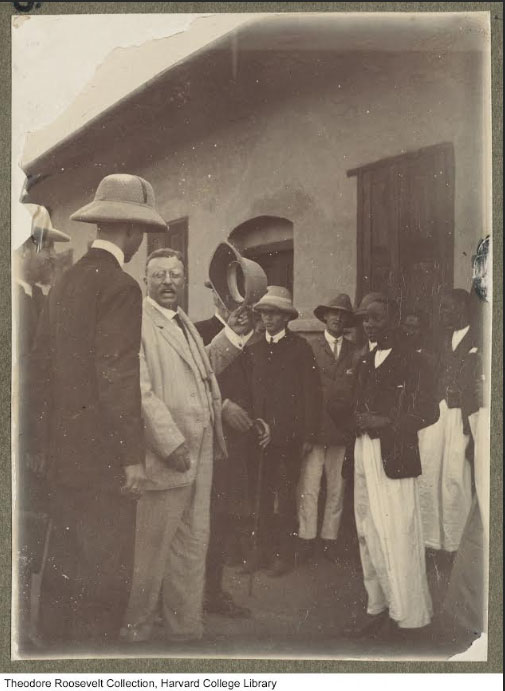
The welcome itself reflected Buganda’s diplomatic sophistication. Musicians performed The Star-Spangled Banner, while chiefs, advisers and royal officials received Roosevelt with the ceremony reserved for an honoured statesman. It was not an act of submission. It was diplomacy.
More than a century later, that meeting on Mengo Hill stands as far more than a footnote in Roosevelt’s celebrated safari. It marked an encounter between two leaders at very different stages of life, each representing political traditions shaped by vastly different histories. One arrived searching for adventure and scientific discovery. The other offered a lesson in statecraft that would challenge many of the assumptions Roosevelt had carried with him to Africa.
Seeing Buganda through new eyes
Like many Western leaders of his era, Roosevelt arrived in East Africa carrying assumptions shaped by explorers’ accounts, colonial reports and missionary writings. Africa was often portrayed as an untamed frontier; its societies measured against European notions of civilization. Buganda complicated that view.
As historian Dr Jonathan Earle observed during the panel discussion, Roosevelt’s expedition represented America’s first sustained encounter with the African interior. Yet what the former president found was not a political vacuum but a region with centuries of statecraft, diplomacy and commerce behind it.
Long before his caravan entered the Uganda Protectorate, kingdoms such as Buganda, Bunyoro, Tooro and Ankore had developed sophisticated systems of governance and maintained diplomatic and commercial ties across the Great Lakes region. Swahili and Omani traders had travelled these routes for decades, while Christian missionaries had established themselves in Buganda by the late nineteenth century.
“The early explorers believed that culture and civilization were theirs to give,” Earle noted. “But kingdoms and societies throughout the region already had really complicated ideas about civilization, the natural world and culture.” Roosevelt encountered those realities almost immediately, Earle said.
As his caravan climbed Mengo Hill, Kampala was still a modest settlement of about 40,000 people. But what unfolded before him bore little resemblance to the stereotypes common in Western imagination. Broad roads wound through carefully cultivated banana groves and gardens. Royal drummers transmitted messages across the kingdom using rhythms that formed a sophisticated communication network. Chiefs, advisers and royal pages moved confidently through the Lubiri while members of the Lukiiko deliberated on matters of governance within an institution whose roots stretched back generations.
Roosevelt observed closely. He later described Daudi Chwa’s advisers as “shrewd, powerful-looking men” and members of the Lukiiko as “substantial-looking men, well dressed in the native fashion, and representing the districts of all the kingdom.” These were not the remarks of a traveller describing an exotic curiosity. They reflected the observations of an experienced statesman recognising another functioning political order.
Perhaps the most symbolic moment came during his official reception, when Buganda’s musicians performed The Star-Spangled Banner, America’s national anthem. For Prince Basammula, that moment deserves far greater recognition than it has received. “I think we should not look at that period through the lenses of colonial power,” he said. “We should look at it through the lenses of the sophistication that was there at the time.”
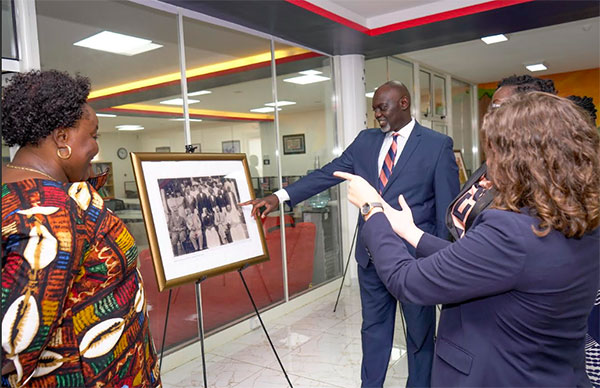
His argument challenges one of the enduring weaknesses in many historical accounts of colonial Africa. Too often, African societies are portrayed merely as subjects of imperial rule rather than as political actors with institutions, traditions and agency of their own. Buganda’s monarchy was only one part of a much broader constitutional structure. The kingdom possessed an executive, a legislature and established systems of administration that continued functioning even as the young Kabaka matured into leadership. Roosevelt was witnessing a political order that complicated many Western assumptions about governance in Africa.
Even more striking was Buganda’s recognition of women’s leadership. Long before women’s suffrage became law in the United States, influential women in Buganda held positions of considerable authority. The Nnaalinnya (Kabaka’s sisters) exercised significant influence, while other royal women occupied respected political and cultural roles within the kingdom.
“This was a time when women in the United States could not even vote,” Prince Basammula observed, “and in Buganda, women were leaders.” The comparison does not diminish either society. Rather, it illustrates how history often resists simple narratives of progress and civilization. Different societies developed different political traditions, each with strengths that challenge conventional assumptions.
A changed perspective
Roosevelt appears to have left Uganda with a more nuanced understanding of African societies than the one with which he arrived. According to Dr Earle, his conversations in Buganda, and later in Bunyoro, shaped his evolving views on governance and civilization in Africa. Roosevelt increasingly described Buganda as an “outpost of civilization” and argued that it should remain, in his words, “essentially a black man’s country”.
Those comments carried considerable weight during an era when European powers were partitioning Africa with little regard for existing political institutions. His journey through Bunyoro reinforced those impressions. There, Roosevelt encountered the court of Omukama Andereya Duhaga II and learned about the enduring legacy of Omukama Yohana Chwa Kabalega II, whose resistance to British rule had become one of East Africa’s defining stories.
He also glimpsed the wider influence once exercised by the Bunyoro-Kitara kingdom, whose political and commercial networks had stretched across much of the Great Lakes region. Far from finding isolated societies, Roosevelt discovered a landscape shaped by diplomacy, trade and cultural exchange that long predated European colonialism.
History rarely transforms people through a single conversation. More often, it changes them gradually, one encounter at a time. By the time Roosevelt departed Uganda, his expedition had become more than a scientific mission or an adventure through East Africa’s wildlife. It had become an education in the political sophistication and cultural richness of societies too often misunderstood in the West.
Science, conservation and a legacy reimagined
If Roosevelt’s meeting with Kabaka Daudi Chwa II reshaped his understanding of African societies, the expedition itself transformed the world’s understanding of East Africa’s natural heritage. Its most enduring legacy is found not in trophy photographs but in the Smithsonian’s National Museum of Natural History in Washington, D.C., where thousands of specimens collected during the 1909–1910 expedition continue to inform scientific research more than a century later.
For Darrin Lunde, a mammalogist and field biologist at the Smithsonian who has worked extensively in Uganda, that distinction is crucial. “It was primarily a scientific expedition,” he told the audience in Kampala, via a video link. Popular memory has long celebrated Roosevelt as the exuberant big-game hunter posing beside elephants, lions and rhinoceroses. Those dramatic images became synonymous with the expedition, overshadowing its larger purpose.
In reality, Roosevelt travelled with Smithsonian naturalists whose mission was to document East Africa’s biodiversity systematically. Together, they collected more than 23,000 specimens; including mammals, birds, reptiles, amphibians, fish, insects and plants, from present-day Uganda, Kenya and South Sudan.
What appeared to many as an extraordinary safari became one of the most important biological surveys ever undertaken on the continent. Every specimen represented more than an animal or plant. It recorded where a species lived, the habitat it occupied and what East Africa’s ecosystems looked like before a century of urbanisation, agricultural expansion and climate change transformed the landscape.
At the time, no one could have imagined the scientific value those collections would acquire. DNA had not yet been identified as the basis of heredity. Modern genetics did not exist. Yet preserved specimens collected in 1909 are now helping scientists’ study everything from evolutionary change to emerging infectious diseases.
Historical collections have become vital in tracing the movement of pathogens such as Ebola through wildlife populations and understanding how ecosystems have changed over time. As Lunde put it, history, carefully preserved, becomes science. That legacy is no longer confined to museum collections in Washington.
Over the past three decades, Smithsonian researchers and Ugandan scientists have been retracing Roosevelt’s route, returning to many of the same locations to repeat the biological surveys carried out more than a century ago. The objective is not to recreate Roosevelt’s safari, but to measure change. “We’re not going out with guns,” Lunde said. “We’re collecting grass mice, just like Roosevelt did.”
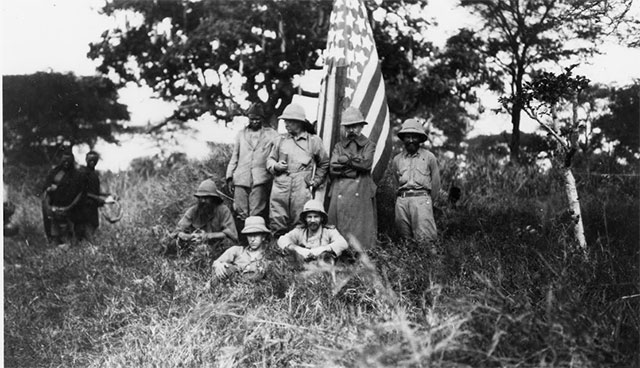
The comparison neatly captures how conservation has evolved. Where Roosevelt’s generation relied on collecting specimens to build scientific knowledge, today’s researchers employ ethical field methods, genetic analysis and partnerships with local institutions. Yet the central questions remain remarkably familiar: Which species still survive? Which have disappeared? And how have ecosystems changed?
The answers are often sobering. Many of the landscapes Roosevelt travelled through remain recognizable, but the wildlife communities that sustain them have changed dramatically. Without the expedition’s detailed records, scientists would have little basis for measuring those changes. “You can’t restore something to its original state,” Lunde observed, “if you don’t have a record of what it was before it was transformed.” Few statements better capture the expedition’s lasting scientific importance.
Roosevelt is rightly remembered in American history as one of the pioneers of modern conservation, having created national parks, forests and wildlife refuges on an unprecedented scale. His East African expedition reinforced a principle that remains central to conservation today: effective protection begins with knowledge. You cannot conserve what you do not understand.
Viewed through a modern lens, however, the expedition also presents an undeniable paradox. Many of Roosevelt’s hunting practices would be unacceptable today. Conservation has shifted from collecting wildlife to protecting living ecosystems and empowering local communities as their custodians.
Yet dismissing the expedition solely because of its methods would overlook the remarkable scientific foundation it created. The very records produced by Roosevelt’s team now help scientists and conservationists restore species, monitor biodiversity and better understand ecological change across East Africa. In many ways, Roosevelt’s greatest trophies were never mounted on a wall. They were preserved in museum drawers.
A trail into the future
The discussion at the American Centre in Kampala ultimately turned away from the past and toward the future. If Roosevelt’s journey through Uganda had been an expedition of discovery in 1909, what should its legacy become in the 21st century? The answer proposed by the panellists was clear: not another monument, but a living journey.
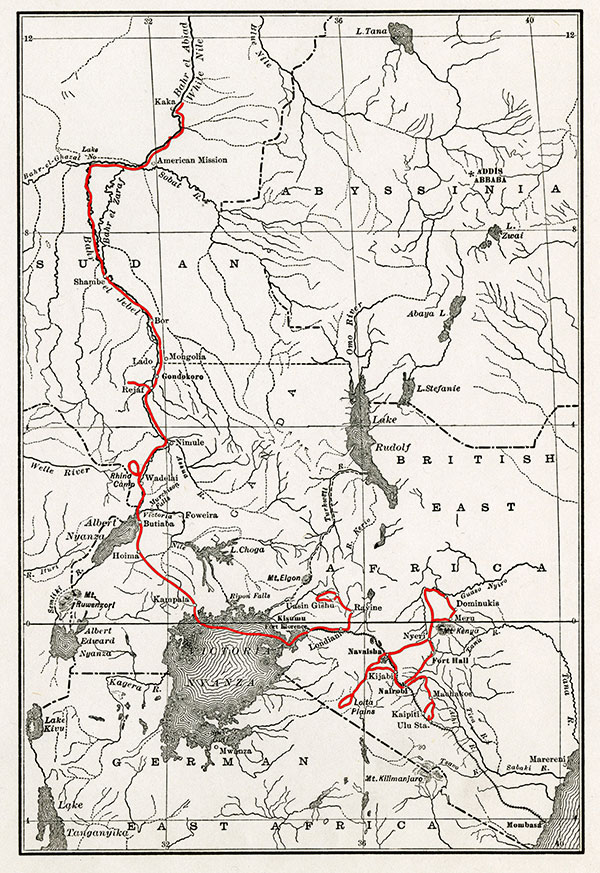
The proposed Roosevelt Trail would retrace the former president’s route through Uganda, linking the places, communities and stories that shaped one of the twentieth century’s most remarkable expeditions. But those behind the initiative envision something far more ambitious than a historical itinerary.
The trail would serve as a platform for education, scientific research, conservation, cultural exchange and heritage tourism, placing Ugandan history, not Roosevelt alone, at the centre of the narrative. For Prince Basammula, the initiative is less about commemorating the past than continuing a relationship. “I believe the most enduring lesson,” he said, “is that relationships matter.”
His vision extends beyond tourism. He imagines partnerships between Ugandan and American universities, collaborative conservation projects, cultural exchanges and new opportunities for young researchers, entrepreneurs and innovators. Rather than importing history, the Roosevelt Trail would illuminate a chapter of Uganda’s own story that has remained largely overlooked.
Historian Michael Cullinane, who also spoke virtually on the panel, believes storytelling itself lies at the heart of that ambition. “Storytelling is the thing that drives economies,” he observed. “It’s the thing that drives politics, and it certainly drives conservation efforts as well.” Increasingly, countries compete not only through trade and diplomacy but also through the stories they tell about themselves. Visitors seek experiences rooted in history, culture and identity rather than simply landscapes.
Uganda possesses no shortage of compelling stories. Still, the Roosevelt Trail has the potential to connect one of them to the world, not because it celebrates an American president, but because it reveals Uganda through an encounter that transformed everyone involved.
Technology could also play an important role. Cullinane described an artificial intelligence project developed for the Theodore Roosevelt Presidential Library in the United States that allows visitors to interact with a digital version of Roosevelt based on his speeches and writings.
Similar innovations could enrich the Ugandan experience, using digital archives, interactive exhibitions and historical reconstructions to bring the stories of both Roosevelt and Kabaka Daudi Chwa II to life. The technology matters. But perspective matters even more. For decades, Roosevelt’s East African expedition has largely been told as an American adventure. The discussion in Kampala offered a more balanced narrative, one that places Buganda and Uganda firmly at the heart of the story.
Roosevelt arrived seeking wildlife and scientific discovery. He left having encountered kingdoms with deep political traditions, resilient institutions and leaders navigating extraordinary historical change. Uganda, in turn, welcomed one of the world’s most influential statesmen, whose writings would carry new impressions of Buganda and Bunyoro back across the Atlantic Ocean. Neither side emerged unchanged.
More than a century later, that encounter continues to inspire new conversations among historians, scientists, conservationists and diplomats. Its significance has only grown with time. The Roosevelt Trail, if realised, would not simply retrace the footsteps of a former American president. It would invite visitors to follow the path of an idea, one built on curiosity, mutual respect and the recognition that genuine discovery begins by listening as much as exploring.
One hundred and sixteen years after Theodore Roosevelt climbed Mengo Hill to meet Kabaka Daudi Chwa II, that conversation is still unfolding. Perhaps that is the expedition’s greatest legacy. Not the thousands of miles travelled. Not the animals collected. But the enduring relationships and shared understanding that continue to grow long after the journey itself came to an end.