The Independent Uganda: You get the Truth we Pay the Price


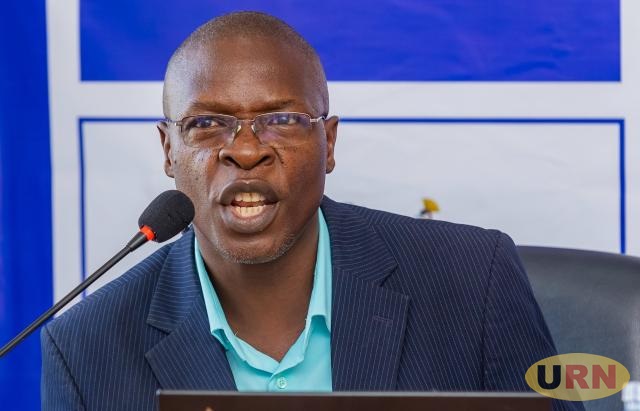
Kampala, Uganda | URN | As anti-corruption arrests of district engineers intensify, Mbale City Engineer Daniel Mufumba says Uganda’s local government engineers are increasingly being held responsible for failing roads without addressing the funding model, political decisions and institutional constraints that shape the quality of road works.
Mbale City is one of the local governments affected by the anti-corruption inspections led by Local Government Minister Balaam Barugahara.
In recent weeks, engineers in several local governments have been arrested over alleged shoddy road works and misuse of public funds as the minister pursues President Yoweri Museveni’s directive to root out corruption in local governments.
While the engineering fraternity says it fully supports the campaign against corruption, it argues that investigations into poor road infrastructure must also examine the conditions under which engineers work.
That was the central message delivered by Mbale City Engineer Daniel Mufumba during a press conference hosted by the Uganda Institution of Professional Engineers (UIPE) Voice forum, where engineers reflected on the challenges facing technical staff in local governments.
Mufumba, who had traveled to Kampala for the briefing explaine why many local government engineers struggle to deliver quality roads despite being the ones who ultimately face public criticism and criminal investigations.
“We appreciate the duties that Hon. Balaam is trying to do to get out the corrupt,” Mufumba said.
“But we also have some challenges that we would like everyone to understand and probably get to know that they might be the causes of the gaps that are bringing these kinds of issues.”
He noted that in the case of poor road and alleged shoddy work, the starting point is not the engineer standing on a construction site but the system that determines how roads are funded, planned and implemented.
According to Mufumba, one of the biggest weaknesses in country’s road maintenance programme is the uniform allocation of road maintenance funds to local governments under what some have described as one size fit all.
He said the ggovernment provides every district, city and municipality with an annual road maintenance grant of one billion shillings. Mufumba argues that the allocation ignores the different realities facing local governments.
“One of the challenges that local government engineers are having is that there is a uniform road maintenance grant. Government provided all districts, cities and municipalities in the country with one billion. We appreciate the funds first of all, but we are saying the way it is allocated is the challenge.”
He explained that the districts, cities and municipalities have different road network lengths.
“They have different populations they are serving. The geographical sizes and terrain are not similar. The traffic volumes and road conditions that are available there are different, but these funds were allocated uniformly,” he said.
Instead, he suggested that the government should abandon the uniform allocation and adopt a formula based on actual infrastructure needs.
“We recommend that they should introduce a needs-based funding formula when allocating this grant.”
He says the grant itself is designed for routine maintenance even though many roads have deteriorated beyond routine repairs and require rebuilding.
“The grant that was given to us is routine maintenance. But the need on the ground is not routine maintenance. The need on the ground is road rehabilitation,” Mufumba stated.
He explained that years of weather damage and inadequate investment have left many roads requiring complete reconstruction rather than periodic maintenance.
“Over time these roads are being affected by the weather and they are almost not in existence. Other roads require opening, other roads require reconstruction, other roads require rehabilitation.”
Yet engineers are expected to restore such roads using budgets intended for grading and spot repairs.
“The amount allocated is for maintenance of spot improvement, but what we have as a challenge is not spot improvement,” he said.
Citing the example of Mbale City, Mufumba said the city has approximately 523 kilometers of roads under its jurisdiction. However, after deducting funds reserved for mechanical operations and other mandatory expenditures, the remaining budget can only maintain about 53 kilometres annually.
“When you remove the amounts for mechanical operations and some operations, what remains gives you around 53 kilometres, but the road network that you are having is 523 kilometres,” he said.
“The percentage that you are going to offer to the community is too little. It is insignificant. It will not be noticed at the end of the day.” The result according to Engineer Mufumba is a widening maintenance backlog that engineers say cannot be solved under the current funding model.
Across the country, engineers have complained that the pollical wing tends to interfere with the execution of their work for political reasons. Mufumba said engineers often find themselves balancing technical priorities against political expectations.
He explained that road work plans must be approved by district councils and road committees, whose members tend to insist that projects are distributed across their constituencies.
“This is like sharing a cake in the city or in a district. Every area has political representatives. You may find that you have around 20 sub-counties in a district. Every representative wants to take something for their people,” he explained.
That pressure, he said, frequently prevents engineers from concentrating resources where they would have the greatest technical impact.
“As a technical person, even when you want to work in a very small area to achieve quality, your requirement will not be approved.” Said Mufumba.
Instead, he explained that available resources are spread thinly across numerous roads. “You may be told to work on a road without being given the gravel, without being given the culverts required, but to do very little spot improvements such that everyone benefits.”
According to Mufumba , when projects later fail to meet expectations, engineers are left carrying the blame.
“That affects us because at the end the quality will be poor and therefore whoever comes to investigate will choose the engineer.” Mufumba also questioned the approval system governing engineering projects. Unlike several other technical departments whose work plans are approved through their line ministries, engineering projects require approvals from multiple institutions.
“The works engineering budget must be approved by two different institutions. You find yourself as an engineer in the middle. The district council approves a different budget and the road committee approves different requirements.”
The result, he said, is confusion over which directives should take precedence.
“You fail to know whose requirements you will implement because at the end every committee will accuse you of not implementing theirs.” he stated. He proposed harmonising the approval process and giving the Ministry of Works and Transport a greater technical oversight role similar to other sectors.
Another issue raised by Mufumba was the widespread practice of appointing district and city engineers in acting capacities. According to him, substantive appointments remain rare despite legal requirements.
“The requirement for one to be a district engineer or city engineer is to be substantive as the law states, but when you look at the entire country the substantive engineers are very few.”
He argued that acting officers often lack the independence to resist improper directives because they can easily be replaced.
“When you are in the acting capacity, in most cases you must follow whatever is being told to you. It is a challenge because when you are not substantive, it is very easy to remove you from office.”
He said this contributes to the frequent turnover of engineering staff in local governments. “You find that when you go to the district this year, you have a different district engineer from the previous one because of not fulfilling the interests of your users. But when one gets substantive, in most cases the law protects you.”
Responding to the concerns, Geoffrey Etedu, Assistant Commissioner for District Administration at the Ministry of Local Government, acknowledged that engineers do not operate in isolation.
“Service delivery is not a one-man affair. If we talk about a road, yes, in the final analysis, the person who technically guides the process is the engineer. But like the engineer has presented, there are a number of stakeholders who are involved in bringing this together.” Etedun also conceded that the current funding envelope is inadequate.
“The decision was taken to give one billion shillings. But it now turns out that, yes, it has come down there. But is it adequate? Certainly no.” Said Etedu.
He further acknowledged that political decisions sometimes complicate technical planning. “In a number of cases, political leaders say, ‘For us, we want this,’ regardless of where there is a problem. It brings in the engineer, and then the engineer is highlighted as a bad apple.” He explained. While defending the minister’s anti-corruption campaign, Etedu said investigations must ultimately be guided by due process. That notwithstanding, these engagements are going to continue.
“There has to be a complaint, and that complaint is subjected to investigation… all the necessary due process, and then action is taken.” “We must appreciate that the two ministers are new brooms in the ministry. And it is now up to us to pick a leaf from where, in our knowledge, we know that the intention is right, and possibly maybe the way of administering it could be having slippages here and there.”
He revealed that Local Government Minister, Balam Barugahara has invited various leaders in the local governments, cities for a meeting on the 5th of August to iron emerging concerns since he took office. For Mufumba, that is precisely the conversation local government engineers have been asking for.
His argument is not that engineers should be shielded from accountability, but that accountability should extend beyond the individual engineer to the systems that determine how roads are funded, prioritised and delivered.
As government intensifies its campaign against corruption in local governments, the debate may ultimately shift from identifying who should be held responsible for poor roads to asking whether the country’s current road funding model is giving local governments the tools they need to succeed.