The Independent Uganda: You get the Truth we Pay the Price


The report found one notable exception: men reported higher levels of rape than women. Eight male respondents (9 percent) said they had been raped, compared with about five women (4 percent).
Kampala, Uganda | URN | Sexual harassment in Uganda’s newsrooms has declined over the past five years, but it remains a widespread problem affecting four in every ten journalists, according to new research presented to the Uganda Editors’ Guild.
The study, conducted by Women in News (WIN) in partnership with St. George’s University and BBC Media Action, found that the prevalence of sexual harassment dropped from nearly 53 per cent in 2020 to 40 per cent in 2025. Researchers surveyed 205 journalists from across Uganda, including 116 women and 89 men.
The findings show that women continue to bear the greatest burden of workplace sexual harassment across almost every category.
Verbal harassment was the most common form of abuse, affecting 77 percent of the women surveyed (about 90 respondents), compared with 45 percent of men (40 respondents).
Nearly half of the women interviewed (47 percent) reported experiencing physical sexual harassment, compared with 34 percent of men.
Online sexual harassment also remained widespread, affecting 56 percent of women and 46 percent of men.
The report found one notable exception: men reported higher levels of rape than women. Eight male respondents (9 percent) said they had been raped, compared with about five women (4 percent).
Researchers noted that several of the male survivors reported experiencing repeated assaults but remained silent for fear of losing their jobs.
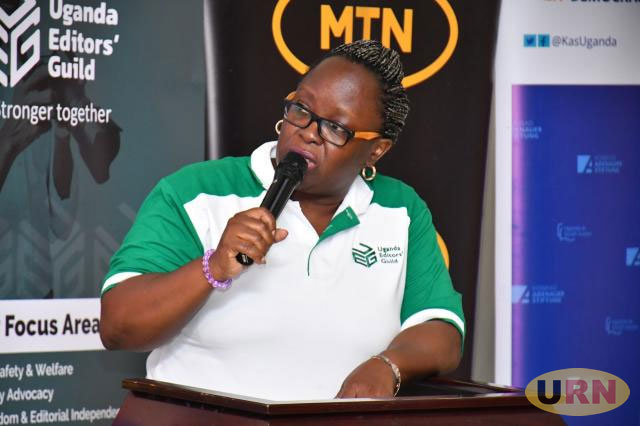
Presenting the findings, Women in News trainer Carolyne Nakazibwe said many victims continue to suffer in silence because they fear retaliation from supervisors or damage to their careers.
She urged media organisations to strengthen reporting mechanisms and create safer working environments where complaints can be investigated independently and fairly.
Nakazibwe said the organisation is willing to work with media houses by providing training for journalists, editors and owners aimed at preventing sexual harassment and improving workplace responses.
She also recommended that media organisations appoint independent investigators, rather than relying solely on internal management, to handle complaints impartially.
Poor performance or sexual harassment?
The presentation also sparked discussion on false accusations. Vision Group’s Francis Kagolo acknowledged that sexual harassment remains a genuine challenge in the media industry but cautioned that some employees have used allegations to deflect attention from poor performance or disciplinary issues.
He cited an instance where a reporter allegedly ignored workplace procedures before making harassment claims against a supervisor.
Kagolo warned that false accusations can undermine efforts to protect genuine survivors and create safer workplaces.
Responding, Nakazibwe acknowledged that fabricated complaints do occur but stressed that they represent a small proportion of cases and should not discourage employers from taking all allegations seriously.
She said the focus should remain on building credible, independent systems that protect both complainants and those accused while ensuring every case is investigated fairly.
The findings come amidst concerns about press freedom and newsroom conditions in Uganda.
Another study conducted in 2025 by media scholars John Semakula, Emilly Comfort Maracatho, and Angella Napakol found that sexual harassment of female journalists in the Ugandan media is a common practice; however, as in some other parts of the developing world, it is rarely documented in either mainstream media or academic scholarship.
In their study, sexual harassment was highlighted as one of the challenges female journalists face in newsrooms.
Using data collected with the help of an open-ended, self-administered structured interview guide and media house policies from four mainstream media newsrooms, the study investigated the modes of sexual harassment of female journalists through the experiences of victims in selected Ugandan media.
The findings showed that several participants experienced sexual harassment in the newsrooms.
It said the practice exists in different forms, such as unwarranted touches, suggestive remarks, soliciting for sex, verbal attacks, aggression towards victims, attempted rape, and rape.
Although there is no comprehensive official data on sexual harassment in media workplaces, journalist organisations such as the Uganda Editors’ Guild, the Uganda Journalists Association (UJA), the Human Rights Network for Journalists (HRNJ-Uganda), and Women in News have repeatedly identified harassment as one of the reasons women leave journalism or avoid leadership positions.