The Independent Uganda: You get the Truth we Pay the Price


Kampala, Uganda | URN | The Head of the Austrian Embassy, Dr Katja Kerschbaumer, has warned that prolonged court proceedings, excessive pre-trial detention and human rights violations, including torture, risk eroding public trust in Uganda’s institutions, calling for timely justice and strict adherence to constitutional protections.
Kerschbaumer said respect for human dignity, equal application of the law and timely resolution of disputes are essential to building public confidence in government institutions and sustaining national stability.
“Justice delayed can very quickly become justice denied,” she said, warning that prolonged court proceedings have far-reaching consequences for individuals, families, businesses and communities.
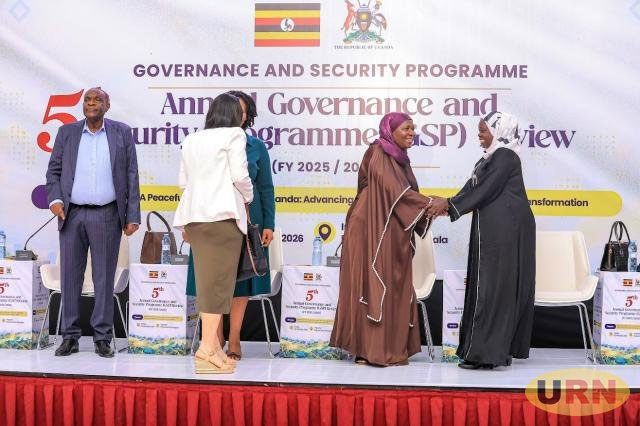
She was speaking on behalf of the Justice Sector Development Partners Group during the Fifth Annual Governance and Security Programme (GSP) Review meeting at Imperial Royale Hotel in Kampala.
Kerschbaumer raised concerns about the human rights implications of prolonged investigations and court proceedings, particularly where suspects spend excessive periods in police custody or prison awaiting trial.
“Persons awaiting trial should not spend excessive periods of police custody or prisons because their cases cannot be dealt with in a timely manner,” she said.
She stressed that certain fundamental rights cannot be suspended under any circumstances, specifically citing the prohibition of torture and cruel, inhuman or degrading treatment.
“No public emergency, no security concern, no government objective can justify torture or cruel, inhuman, or degrading treatment,” Kerschbaumer said, emphasising that respect for human dignity must remain central to a society governed by the rule of law.
The diplomat explained that although some constitutional rights may be limited under specific circumstances in the public interest, such limitations must be lawful and accompanied by appropriate safeguards.
She cited property rights as an example, noting that government may need to acquire private land for infrastructure projects such as roads, railways, schools, hospitals and power transmission lines. However, she said such interventions must be lawful, transparent and proportionate, with appropriate protections and compensation for affected individuals.
Kerschbaumer praised Uganda’s Constitution for providing extensive protection of fundamental rights and freedoms, including freedom of expression, association, equality before the law and protection against arbitrary detention.
Beyond access to justice and human rights, she identified public trust as a critical ingredient in strengthening governance and national security.
She said citizens must have confidence that institutions are fair and impartial, the law applies equally to everyone and their grievances will be addressed through established legal processes.
“When citizens trust institutions, social cohesion is strengthened. Cooperation with public institutions increases and stability and security are enhanced,” she said.
She added that trust is equally important in attracting investment because businesses and investors require reliable, transparent and accountable institutions to operate with confidence.
Kerschbaumer commended Ugandan institutions for allowing development partners to visit police detention facilities and prisons, inspect local registers and interact directly with inmates, their families, prison officers, police officers and judicial officials.
She said such engagements demonstrate institutional openness and provide opportunities to recognise achievements while openly discussing implementation challenges.
Meanwhile, Minister for Kampala Affairs Hajjat Minsa Kabanda, who represented the Minister for the Presidency, Milly Babalanda, called for stronger accountability, improved implementation of audit recommendations and more effective anti-corruption measures.
Delivering the keynote address, Kabanda said the Governance and Security Programme should be assessed not merely by institutional activities and reported achievements but by the actual improvements citizens experience in security, access to justice, public accountability and equality.
She said patriotism should be demonstrated through protecting public resources, putting national interests above personal gain and ensuring that public expenditure delivers value to Ugandans.
“For government officials, patriotism means putting the public interest above personal gain, protecting public resources, and ensuring that everything we have in every donation delivers value for the people of Uganda,” she said.
Kabanda highlighted reported recoveries of Shs41.9 billion from corruption-related interventions, alongside savings of Shs17.8 billion, describing the results as evidence of institutional efforts to strengthen accountability and protect public resources. She also reported that the Office of the Attorney General had achieved 98.4 per cent of its financial performance targets.
However, she cautioned that institutional achievements should not be confused with the overall attainment of national development objectives, arguing that the real measure of progress is whether government interventions improve people’s lives.
Kabanda also identified gaps in governance performance, including the implementation of audit recommendations, gender and equity compliance, refugee resilience and international cooperation.
She said implementation of audit recommendations stood at 59 per cent, while Uganda’s compliance with gender and equity requirements was reported at 61 per cent against a target of 70 per cent.
Refugee resilience performance stood at 39 per cent against a target of 50 per cent, with inadequate refugee financing identified as a major constraint.
She called for stronger coordination among government institutions, development partners and civil society organisations, warning against duplication of interventions and urging partners to align their support with national priorities.
Kabanda outlined key priorities for the programme, including strengthening peace and security, improving governance and accountability, implementing audit recommendations, intensifying anti-corruption efforts, improving access to justice and protecting human rights.
She said programme budgets should be aligned with the Fourth National Development Plan (NDP IV), supported by clear institutional responsibilities, measurable targets and regular follow-up.
The minister urged government institutions and development partners to translate their commitments into practical action, saying the programme’s success should ultimately be measured by improvements in citizens’ security, access to justice, confidence in public decisions and quality of life.