The Independent Uganda: You get the Truth we Pay the Price


A US Department of State report has identified endemic corruption, weak judicial independence, restrictions on democratic space, and human rights violations among the major challenges facing Uganda’s investment climate.
Kampala, Uganda | URN | A United States Department of State report has raised concerns over endemic corruption, weakening democratic space, human rights violations, and shortcomings in public financial accountability.
The report identifies these as among the major challenges facing Uganda’s investment climate.
The 2026 Uganda Investment Climate Statement, published in September, says corruption, weak rule of law, human rights violations and the closing of civic space are undermining the country’s attractiveness to investors despite continued economic growth and increasing foreign direct investment.
The report identifies corruption as a major obstacle to investment, particularly in government procurement, where foreign companies have complained that some competitors secure contracts through bribery and disregard for environmental and labour regulations.
It also raises concerns about the treatment of politically connected individuals accused of corruption, saying that although Uganda has an established legal framework and several institutions mandated to fight corruption, well-connected individuals often enjoy what it describes as de facto immunity.
“While anti-corruption laws extend to family members of officials and political parties, in practice many well-connected individuals enjoy de facto immunity for corrupt acts and are rarely prosecuted in court,” the report states.
The report notes that Uganda has established an interlocking network of anti-corruption institutions and has laws requiring bidders and contractors to disclose potential conflicts of interest when seeking government contracts.
However, it says implementation remains a major weakness. It further observes that Uganda has ratified the United Nations Convention against Corruption but does not provide protection for non-governmental organisations investigating corruption.
Some watchdog organisations have also reported harassment by government agencies. The assessment also questions the effectiveness of public financial oversight, particularly the government’s use of supplementary and classified budget accounts, which it says undermines parliamentary and public scrutiny of expenditure.
Although government budget documents and annual debt statistical bulletins are publicly available, the report says significant reliance on supplementary and classified accounts, often in violation of public finance laws, weakens accountability over public resources.
On judicial independence, the report says corruption undermines the impartiality of the judiciary, while understaffing and a backlog of cases delay the resolution of disputes.
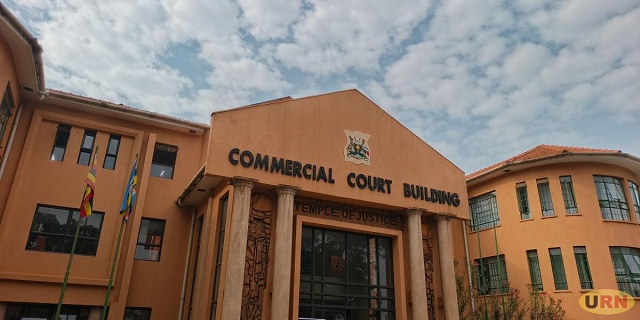
It also points to reports of high-level government officials influencing court decisions, raising concerns about the ability of the justice system to provide impartial remedies in disputes involving investors and government institutions.
The report says the Inspectorate of Government and the courts are mandated to oversee compliance with administrative procedures, but corruption can weaken these oversight functions.
Human rights and democratic governance also feature prominently in the assessment.
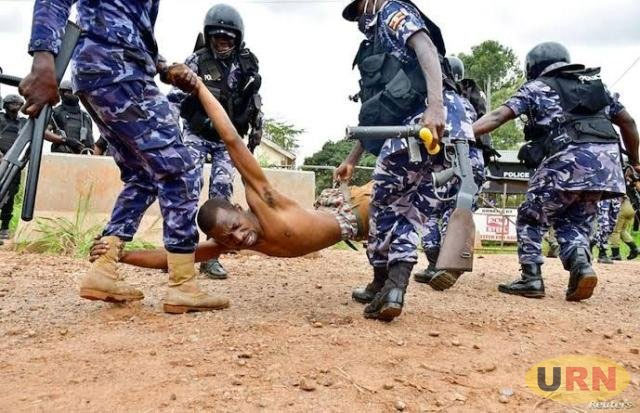
The report says opposition supporters frequently face restrictions on their ability to organise demonstrations and hold political rallies, despite constitutional guarantees of freedom of assembly, speech and expression.
It further cites reports of security forces arresting opposition supporters and holding them in detention beyond constitutionally mandated limits.
“Reports of torture allegedly perpetrated by elements within the official security forces persist,” the report states, adding that security agencies routinely use excessive force to stop peaceful protests and demonstrations.
The assessment also links political uncertainty to the investment environment, noting that Uganda has never experienced a peaceful political transition.
It points to questions surrounding succession to President Yoweri Museveni, who won a seventh term in the January 2026 elections with 72 percent of the vote, amid reports of political violence and restrictions on democratic institutions.
The report says speculation about the 2031 elections and the perceived absence of a succession plan add to uncertainty for investors.
It also highlights restrictions on internet access, including the continued ban on Facebook, which has been in place since January 2021.
The assessment also identifies aggressive tax collection, rising public debt-service obligations, low public investment in health and education, shortages of skilled labour and complicated land tenure arrangements among the challenges facing businesses.
It says foreign investors have complained about the aggressive pursuit of law-abiding private sector firms to meet revenue collection targets, while bureaucratic delays and inconsistent enforcement of regulations increase the cost of doing business.
The report, however, acknowledges Uganda’s economic performance and continued attraction of foreign capital.
The economy grew by 6.7 percent in 2025, according to the International Monetary Fund, while foreign direct investment inflows increased by 8.8 percent to a record 3.7 billion US dollars, largely driven by oil-related investments. Industrial activity recorded the strongest growth, followed by agriculture, as investments in preparation for oil production continued.
Despite these gains, the US assessment suggests that sustained investment will depend not only on economic opportunities but also on improvements in institutional accountability, the rule of law, transparency and protection of rights.
The report therefore presents a mixed assessment of Uganda’s investment climate: a growing economy with significant opportunities in infrastructure, energy and agriculture, but one facing persistent governance, institutional and human rights challenges.
The 2026 Investment Climate Statement was prepared by the US Department of State as an assessment of the investment environment and risks facing American and other foreign businesses operating in Uganda.