The Independent Uganda: You get the Truth we Pay the Price


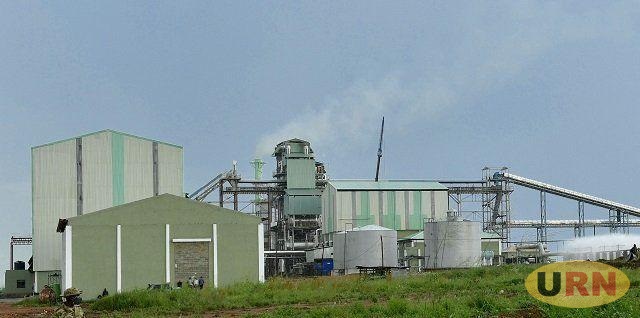
Amuru, Uganda | URN | Atiak Sugar Factory has returned to the centre of national debate, with the government projecting the start of sugar production by September 2026, six years after its commissioning. The revised timeline was announced by State Minister for Industries David Bahati during a parliamentary sitting on March 5, 2026, as lawmakers debated Supplementary Expenditure Schedule No. 5 for FY 2025/26.
The update followed an additional capital injection of UGX 37.9 billion through the Uganda Development Corporation (UDC), aimed at completing irrigation infrastructure and stabilising sugarcane supply. Conceived as a cornerstone of Northern Uganda’s post-war economic recovery, the factory was commissioned in October 2020 by President Yoweri Kaguta Museveni.
Operated by Horyal Investment Holding Company Ltd under entrepreneur Amina Moghe Hersi, the project was designed to process 1,650 tonnes of cane per day, with expansion plans to 5,000 tonnes alongside value addition through ethanol, molasses, and electricity generation. Government involvement in the project dates back to 2018 through UDC, which has since increased its stake from 10.1 percent (UGX 20 billion) to approximately 40 percent, with cumulative public investment exceeding UGX 668.7 billion by early 2026. The private investor’s contribution is estimated at UGX 125 billion for a majority stake.
The project aligns with key policy frameworks, including the National Sugar Policy (2010), the Sugar Act, 2020, and Uganda’s National Development Plans III and IV, all of which prioritise agro-industrialisation, import substitution, job creation, and regional equity. Despite its strategic importance, the project has faced persistent criticism in Parliament, particularly over continued funding without tangible output.
Leader of the Opposition Joel Ssenyonyi questioned the rationale for additional capital injections under supplementary expenditure, warning that Parliament risks becoming a “conduit of fraud” by approving billions without clear returns. “We cannot continue appropriating funds where there is no production to show,” Ssenyonyi argued, demanding clarity on government equity, expected dividends, and timelines for commercial viability.
His concerns echo provisions under the Public Finance Management Act (PFMA), 2015 (as amended), which restrict supplementary spending to expenditures that are unavoidable, unforeseeable, and unabsorbable. The law also imposes limits, generally up to 3 percent of the approved budget, and requires rigorous justification and parliamentary oversight.
Shadow Minister for Finance Ibrahim Ssemujju Nganda further warned that planned allocations of UGX 100 billion in FY 2026/27 would push total government exposure to nearly UGX 769 billion, raising concerns about fiscal sustainability and budget prioritisation.
Minister Bahati defended the additional UGX 37.9 billion capitalisation through UDC, saying the completion of irrigation infrastructure would stabilise sugarcane supply and reduce climate-related risks. “This investment is critical for unlocking the economic potential of Northern Uganda,” Bahati said, positioning the factory as a long-term national asset rather than a short-term commercial venture.
Kilak North MP Anthony Akol, who is also Chairperson of the Acholi Parliamentary Group, urged patience, attributing earlier delays to sugarcane shortages and the time required to establish outgrower networks. He said ongoing mechanisation and plantation development would ensure sustainable feedstock for the factory.
However, Atiak Sugar Factory’s track record exposes recurring structural bottlenecks that have slowed progress. Since commissioning, the project has struggled with sugarcane shortages that triggered intermittent operations and a full suspension in 2022, delayed irrigation infrastructure, logistical challenges, wildfires that destroyed plantations, and reports of idle machinery alongside operational inefficiencies.
Reports from the Auditor General have previously raised concerns over unutilised funds, weak oversight by UDC representatives on the board, and insufficient transparency regarding private capital contributions. Members of Parliament argue that, if successful, the factory could transform livelihoods in Northern Uganda through employment opportunities and outgrower schemes targeting up to 15,000 farmers.
The expected multiplier effects, including infrastructure development and increased household incomes, form part of the government’s justification for continued investment. Atiak Sugar Factory has increasingly become a litmus test for Uganda’s state-led industrialisation agenda. Supporters argue that its success would validate public-private partnerships as vehicles for structural transformation, strengthen agro-processing as a driver of economic growth, and support Uganda’s push toward middle-income status.
Although the government insists commercial production will begin in September 2026, past timeline extensions, with some projections stretching into late 2027, have prompted cautious optimism among legislators and analysts. Lawmakers are now demanding a comprehensive value-for-money audit, stronger governance and oversight by UDC, transparent reporting on equity stakes and capital flows, as well as accelerated support for outgrower schemes to secure a stable supply of raw materials.
For communities in Northern Uganda, Atiak Sugar Factory represents both the promise and risks of ambitious state-backed industrial projects. After decades of conflict, many residents see such investments as critical to delivering jobs, incomes, and long-term economic recovery.
****
RELATED STORY