The Independent Uganda: You get the Truth we Pay the Price


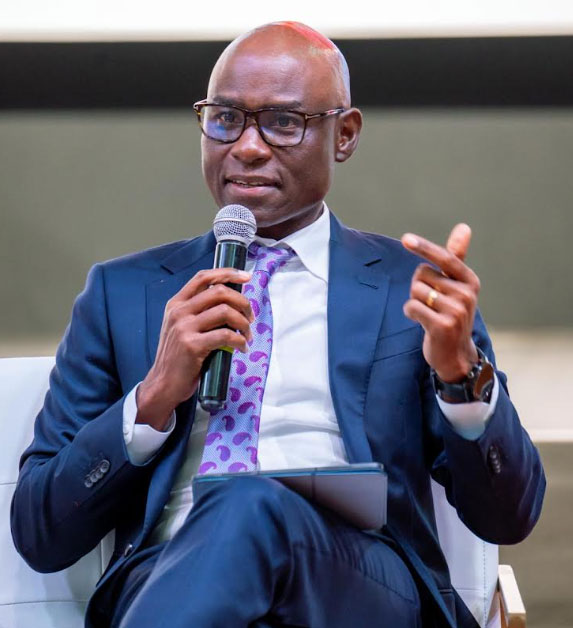
Kampala, Uganda | NEWS CORRESPONDENT | The 100 young leaders participating in the Equity Leaders Program taking place at Africa Bible University Lubowa were challenged this week to embrace discipline, integrity, and purposeful leadership during intensive leadership and career development sessions featuring senior executives and industry experts.
The program brought together speakers from banking, marketing, finance, risk management each offering practical lessons on leadership in an increasingly uncertain and fast-changing world.
Professor Matthew Miller of African Bible University opened the session with a reflective message on leadership resilience, describing modern life as “permanent white water.”
Drawing from leadership scholar Peter Vaill’s theory, Miller explained that unlike previous generations that experienced cycles of calm and crisis, today’s leaders must navigate constant disruption.
“The 21st century leader is navigating through permanent white water,” Miller said. Using Psalm 61, he urged participants to develop inner stability amid external uncertainty. “When my heart is faint, lead me to the rock that is higher than I,” he quoted.
Miller argued that leadership is not only about managing others but also managing one’s own heart during seasons of pressure, fatigue, and uncertainty.
“You may overcome your Goliaths, but you will also battle your Philistines, challenges that stay with you for life,” he said.
Head of Enterprise Controls Jimmy Kisomba emphasized the importance of internal controls, ethics, and compliance in both professional and personal life.
Kisomba explained that controls are systems, rules, and procedures designed to prevent risks such as fraud, operational failures, and financial loss.
“A risk is anything that can go wrong,” he told students.
Using the analogy of vehicle brakes, he explained how controls function in organizations. “You cannot drive a car without brakes. Brakes control movement. Controls do the same in organizations,” he said.
He warned participants against shortcuts and unethical behavior, stressing that intelligence without character is dangerous. “You can be smart, but without ethics, it will not help you,” Kisomba noted.

Kisomba, himself a former participant in the program, reflected on his own journey. “Fifteen years ago, I was seated where you are. today, I am here speaking to you,” he said.
Head of Marketing and Corporate Communications, Clare Tumwesigye highlighted the strategic role of communication in building reputation, managing crises, and sustaining trust. She noted that in today’s digital world, perception matters more than ever. “Marketing is about perception. It is about building trust,” Tumwesigye said.
Regional Trade Desk Manager, Lindah Nagudi delivered a message on self-leadership, urging participants to make intentional decisions. “Your future is crafted by the choices you make today,” she said.
Finance leaders also emphasized self-awareness and professional growth.
“Know who you are. You do not have to follow the crowd,” participants were told during the finance session. Students were encouraged to understand financial statements, remain agile, and continuously learn from others.
Equity Executive Director, Claver Serumaga used football as a metaphor to explain organizational success.
In his analogy; Defenders represent Internal Audit, Risk, and Compliance, midfielders represent HR, Marketing, and Operations while strikers represent sales and commercial teams. “If one department fails, the whole team collapses,” Serumaga said. He stressed that organizational success depends less on individual talent and more on systems and coordination.
“It was the same players but a different system, and suddenly the team started winning,” he explained. Serumaga challenged students to reject the notion that leadership belongs only to the future. “You are not the future. You are the present,” he said.
He emphasized discipline, communication, and problem-solving as the real determinants of success. “Talent may open the door, but discipline keeps you in the room,” he noted.
Across all sessions, a common message emerged-leadership is not merely positional, but deeply personal.
Participants were urged to start building ethical foundations, professional competence, and clarity of purpose now, rather than waiting for future opportunities. “What will differentiate you is not talent, but discipline, purpose, and action,” Serumaga concluded.
As the Equity Leaders Program continues, participants leave not only with technical insights into banking and business, but also with a challenge to lead lives marked by integrity, courage, and meaningful impact.