The Independent Uganda: You get the Truth we Pay the Price


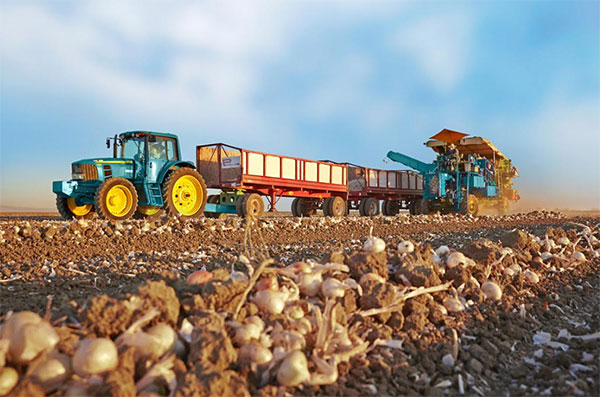
NEWS ANALYSIS | Riyadh is investing in African agricultural production and export infrastructure in a bid to boost its food security amid global political shocks, writes Harry Clynch.
The countries of the Middle East and North Africa (MENA), which face an arid climate, limited arable land, and persistent water shortages, are some of the most dependent on food imports anywhere in the world. Saudi Arabia imports approximately 80% of its total food needs, and, according to some analysts, the country could be entirely reliant on imports for domestic consumption by 2050.
With the country’s population expected to increase from around 36m this year to an estimated 47m by 2050 – and a changing climate further complicating efforts to boost domestic agricultural production – Riyadh has made ensuring its food security a strategic priority.
Indeed, Saudi Arabia’s “Vision 2030” development programme includes several key pledges aimed at boosting the Kingdom’s food security. As well as achieving high levels of self-sufficiency in certain essential commodities, Riyadh is also seeking to reduce food loss and waste by around 50% by 2030, while working to ensure price stability and consistent availability of produce.
Shocks highlight vulnerabilities
Recent shocks – including the outbreak of war in Ukraine in 2022 – underlined how vulnerable the Gulf’s supply chains in this area are. Russia and Ukraine are two of the world’s largest agricultural exporters – jointly representing roughly one-third of wheat exports before the war – and provide the majority of MENA’s supply.
Shortly after that conflict started, Saudi’s finance minister Mohammed al-Jadaan warned that “the MENA region [was] very, very, very vulnerable” to disruption in global food supplies.
It is in this context that Saudi Arabia has been looking to strengthen ties with Africa, particularly in the agricultural industry, as a way to guarantee its food security and make itself more resilient to future shocks.
Africa is home to roughly 65% of the world’s remaining uncultivated arable land. The continent has, in parts, an abundance of sunshine and fresh water; it is an obvious partner for countries looking for ways to strengthen their food supply chains. Speaking at the Saudi-Arab-African Economic Conference in Riyadh in 2023, al-Jadaan said that the continent “represents one of the priorities of the Public Investment Fund” – the PIF, Saudi Arabia’s sovereign wealth fund. He added that “we have established partnerships with Africa to expand in several sectors, and the Kingdom supports more than 400 projects in the African continent… The Kingdom is keen to consolidate its relations with the African continent, which is one of the most important axes for the future of the global economy.”
Move into production
Saudi Arabia’s efforts to secure stronger access to African agricultural produce are relatively nascent, as is much of the country’s Africa strategy, but investments are growing from a small base. Historically, the Kingdom’s strategy involved purchasing swathes of land, particularly in the Horn of Africa, which is relatively close to the Gulf and therefore allows for reliable transportation of agricultural products.
Back in 2009 Saudi-Ethiopian billionaire Mohammed Hussein Al-Amoudi established Saudi Star Agricultural Development, which purchased a 10,000-hectare lease in Ethiopia’s Gambela region for a major rice farming project. In 2011 the company said it would invest $2.5bn in Ethiopian agriculture by 2020.
In the same year Saudi Arabian holding company Manafea announced plans to invest $125m in a 5,000-hectare farm in Zambia to grow pineapples and other fruit. In 2016 Sudan’s National Assembly approved a bill granting Saudi Arabia the right to cultivate around 420,000-hectares of land for 99 years. Before the outbreak of Sudan’s civil war in April 2023, Saudi Arabia is reported to have invested in excess of $35bn in the country. In 2022 Crown Prince Mohammed bin Salman pledged to provide $3bn to projects in Sudan – a plan that stalled after hostilities started.
Displaced communities
The idea behind these initiatives was to produce agricultural goods in the Horn’s more favourable climates that would be destined for export to Saudi Arabia. While African governments have unsurprisingly tended to welcome the prospect of Saudi investments, some projects have been less popular among local communities, some of whom have been displaced as a result of the land purchases.
Indeed, the Saudi Star project in Ethiopia sparked protests in Gambela, with aggrieved local Anuak villagers reportedly attacking the company’s compound and killing several employees in 2012. Human rights groups have raised concerns of “neo-colonialism”.
Perhaps partly as a result of this, Saudi Arabia’s strategy appears to have shifted in recent years to focus more on investing in agriculture-related infrastructure rather than land purchases. Last year Vision Invest, Saudi Arabia’s infrastructure fund, announced a $700m equity investment in industrial ecosystems operator Arise Integrated Industrial Platforms (Arise IIP) which allowed the Kingdom to gain priority access to agricultural products from several African countries.
Infrastructure focus
Vision Invest’s capital is to be used to accelerate projects including a fertiliser blending facility in Togo, a green ammonia project in Kenya and a cotton complex in Rwanda. Mohammed Abunayyan, chairman of Vision Invest, said at the time that “we are not buying land; we are buying networked access to Africa’s future supply of fertiliser, processed crops and light-manufactured goods.”
In November 2023 the Saudi Fund for Development (SFD) signed a memorandum of understanding with the Africa Finance Corporation (AFC) to co-finance sustainable infrastructure projects across Africa. In the private sector, too, Saudi Arabia has made some major moves to gain deeper exposure to African agriculture products.
In December 2024 Saudi Arabia’s SALIC International Investment Company, which is owned by PIF, completed a $1.24bn deal to acquire a 35.43% stake in Olam Agri, a subsidiary of Singapore-headquartered Olam Group and a global agribusiness firm that distributes essential food, feeds and fibres in markets across Africa and Asia.
In February 2025 SALIC purchased a further 44.6% of the company for $1.78bn, bringing its total share to just over 80%.
Sulaiman Al Rumaih, SALIC’s CEO, said that “the full acquisition agreement of Olam Agri aligns with SALIC’s strategic objectives of diversifying sources of essential commodities to secure a key position in the global grains sector.”
While it appears that the Saudi Arabian strategy in Africa has shifted away from controversial land purchasing deals and towards investments in major companies and infrastructure projects, there remains work to be done if Riyadh is to achieve its food security goals.
Samir Bhattacharya, an associate fellow at the Observer Research Foundation in New Delhi, has pointed out that whereas “the UAE [United Arab Emirates] has established its leadership as a logistics and re-export hub through significant investments in ports and infrastructure in the Horn of Africa and the Red Sea area… Saudi Arabia faces more significant logistical challenges,” as it lacks extensive port infrastructure.
Need for scale
Saudi Arabia’s clear need to invest in African agriculture and associated infrastructure undoubtedly creates opportunities for African private sector players and national governments. Ronak Gopaldas, a director at the Signal Risk consultancy in Cape Town, argues, however, that in order to maximise the value of these opportunities African countries should consider collaborating to present multi-country projects that would offer Saudi Arabian investors the opportunity to invest in lucrative, highly scalable projects. “Riyadh tends to operate at scale and prefers structured, high-impact investments,” he says.
“Therefore, African sovereigns would do well to align their offerings with sectors that resonate with Saudi priorities – most notably those which cut across agriculture, investment and energy – and consider pooling projects across countries or regions to create scale and investment appeal.”
****
Source: The Conversation