The Independent Uganda: You get the Truth we Pay the Price


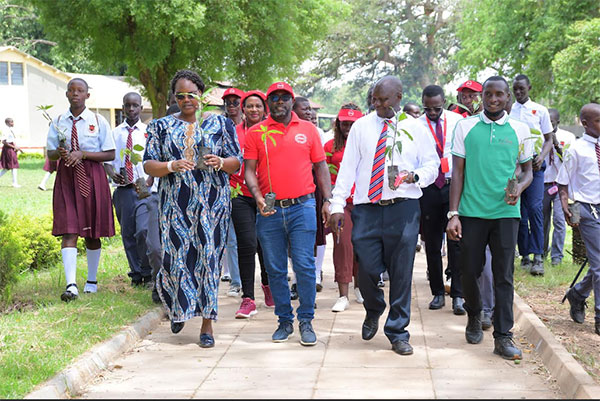
Drive is to grow 700,000 trees in 300 Schools Across Northern Uganda
Gulu, Uganda | NEWS CORRESPONDENT | Absa Bank Uganda, has announced a bold commitment to grow 2 million indigenous, fruit, shade and medicinal trees over the next three years, reinforcing the bank’s long-term dedication to climate action, environmental restoration, and sustainable community development across the country.
The commitment was unveiled alongside the launch of the 2026 School Greening Drive in Northern Uganda, in partnership with My Tree Initiative (MTI). The Northern Uganda programme represents a major pillar of the overall three-year target and will see 700,000 trees planted and nurtured across 300 schools by December 2026.
The initiative was officially launched in Gulu City, led by Christine Olok, Deputy Mayor of Gulu City, underscoring a strong alignment with government priorities on environmental restoration, climate resilience, and community development in the region.
Under the theme “Growing 700,000 Trees in 300 Schools Across Northern Uganda,” the programme will engage approximately 150,000 students across 12 districts: Gulu, Lira, Arua, Kitgum, Pader, Agago, Apac, Oyam, Dokolo, Nebbi, Yumbe, and Adjumani. Tree planting activities will take place in each district from April through November, with the final event scheduled for November 11, 2026 in Adjumani.
Speaking at the launch, Francis Topacho, Chief Information Officer at Absa Bank Uganda, said the initiative forms part of the bank’s broader commitment to grow 2 million trees over the next three years.
“Absa has been involved in greening efforts across Central, Eastern, and Western Uganda. Expanding into Northern Uganda, a region bordering some of the hotter, more arid parts of East Africa, is a natural and significant next step. This partnership reflects our genuine commitment to climate action and to being a positive force in the communities where we operate,” Topacho said.
Christine Olok, Deputy Mayor of Gulu City welcomed the initiative, noting its contribution to national development priorities.
“This initiative speaks directly to our national priorities of environmental restoration, climate resilience, and community development. By focusing on schools, we are not only restoring ecosystems but also shaping a generation that understands the importance of protecting our natural resources. We commend Absa Bank Uganda and My Tree Initiative for working with government to deliver practical, community-based solutions that will have lasting impact across the region.”
The programme will incorporate geo-tagging technology to digitally map every tree, ensuring accountability and long-term monitoring through to 2027. In addition, over 50 Fruit Forests will be established across participating schools, featuring fruit-bearing and shade trees such as mango, avocado, guava, jackfruit, grevillea, and umbrella trees.
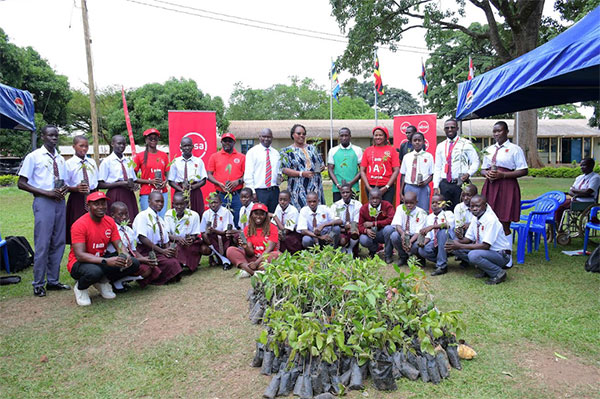
Eguma Michael, the deputy headmaster of Gulu High School, also highlighted the importance of the initiative at a community and school level. “For us at Gulu High School, this initiative goes beyond tree planting. It supports biodiversity, improves the school environment for our children, and contributes to better health and livelihoods for all. We welcome partnerships like this that bring lasting value to our community.”
Absa Bank will also install 450 permanent signboards across participating schools and its branches in Northern Uganda to reinforce awareness and visibility of the initiative.
Since 2023, Absa Bank Uganda and My Tree Initiative have planted nearly 900,000 trees across 860 schools, engaging more than 440,000 students in Central, Eastern, and Western Uganda.
“What we’ve learned from this work is that when students plant a tree themselves, a transformation occurs. They water it, protect it, and take pride in it. This kind of lasting relationship with the environment is invaluable. Bringing this to Northern Uganda, we intend to have 150,000 young people participate in this initiative,” said Enjer Ashiraf, Executive Director, My Tree Initiative.
Beyond environmental restoration, the initiative is expected to deliver broader community benefits. The fruit trees will provide nutritional support for students, while improved tree cover will enhance soil conservation and reduce reliance on firewood in surrounding communities.
To ensure sustainability, Green Club champions will be trained in each participating school to lead ongoing tree care and environmental education, embedding a culture of environmental stewardship long after the planting phase is complete.