The Independent Uganda: You get the Truth we Pay the Price


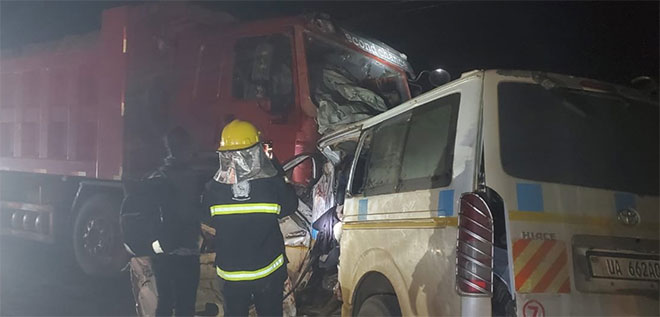
COMMENT | MATHIAS RUKUBA | Every morning, thousands of Ugandans leave their homes and get onto the roads with a simple expectation. To return safely at the end of the day. They hug their children goodbye, promise to be back for supper, head to work, school, business, or the market, believing that the greatest challenge of the day will be earning a living. Yet for many road users, there is another silent question that lingers in their minds every time a heavy truck appears in the rear-view mirror: “Will I make it home tonight?”
This is not a question born out of imagination. It is a question shaped by experience.
Across Uganda’s highways, many professional truck drivers demonstrate discipline, patience, and respect for traffic laws. They transport goods that keep our economy moving and deserve recognition for the demanding work they do. However, the actions of a small but dangerous minority have created fear that extends far beyond the road itself.
For countless motorists, passengers, motorcyclists, cyclists, and pedestrians, encountering a speeding heavy truck has become a moment of anxiety. The sheer size and weight of these vehicles mean that even a simple careless decision can have devastating consequences. An unsafe overtake, excessive speed, following too closely, distracted driving, or ignoring other road users can instantly transform an ordinary journey into a life-changing tragedy.
Unlike smaller vehicles, heavy trucks possess enormous momentum. A mistake made behind the wheel of a forty-tonne truck rarely ends with minor damage. More often, it leaves behind crushed vehicles, grieving families, orphaned children, permanent disabilities, and communities asking the same painful question after every major crash. Could this have been prevented? The answer, in many cases, is yes.
Road crashes are rarely acts of fate. They are often the result of choices. The decision to speed. The decision to overtake where visibility is poor. The decision to drive while fatigued. The decision to ignore basic safety procedures. These are human decisions, and because they are human decisions, they can also be changed.
Every professional driver carries more than cargo. They carry responsibility for every life sharing the road. Every steering wheel is connected to countless families whose futures depend on the decisions made in a matter of seconds.
The transport industry is under immense pressure. Tight delivery schedules, demanding clients, long-distance travel, driver fatigue, mechanical failures, and financial competition all contribute to difficult working conditions. These realities cannot be ignored. But neither can they become excuses for risking innocent lives. No delivery is so urgent that it is worth a funeral. No deadline is more valuable than a human life.
Road safety is not solely the responsibility of truck drivers. Transport companies or truck owners must invest in continuous driver training, enforce reasonable driving hours, maintain vehicles properly, and reward safe driving rather than fast driving. Fleet managers should monitor driver behaviour using modern technologies such as GPS tracking, speed monitoring systems, dash cameras, and fatigue management programmes. Safety should become a performance indicator equal to profitability.
Government agencies also have a critical role. Stronger enforcement of traffic regulations, regular roadside inspections, meaningful penalties for dangerous driving, and consistent monitoring of commercial transport can significantly reduce preventable crashes. Laws only save lives when they are applied fairly and consistently.
Yet responsibility does not end there.
Private motorists must avoid driving in heavy truck blind spots, maintain safe following distances, exercise patience during overtaking, and recognise that heavy vehicles require much longer distances to stop. Motorcyclists should resist weaving unpredictably between trucks, while pedestrians must remain alert near highways and loading zones where visibility may be limited.
Road safety is a shared responsibility, but shared responsibility does not mean shared blame. Those operating the largest and heaviest vehicles carry an even greater duty of care because the consequences of their mistakes are far greater.
And to those whose driving continues to endanger others, remember this: The person beside you is not an obstacle delaying your journey. They are someone’s parent, someone’s spouse, someone’s child, someone’s future.
*******
 MATHIAS RUKUBA | Security Management Advisor & Security Consultant
+256773061600