The Independent Uganda: You get the Truth we Pay the Price


NEWS ANALYSIS | URN | As Uganda joined the world in International Albinism Awareness Day during the weekend under the theme “Proudly in My Skin- Celebrating All Skin Tones,” folk stories from villages provided an opportunity to examine one of nature’s rarest genetic conditions- not only in humans but also in wildlife.
For decades, the appearance of unusually white animals in many Ugandan communities was surrounded by myths and superstition. A white snake crossing a path, a pale monkey in the forest or an unusually light-coloured bird often sent villagers running in fear, with many believing such creatures were spiritual messengers or symbols of impending misfortune.
Science, however, paints a very different picture.
Albinism is a rare inherited genetic condition that occurs when an animal receives mutated genes from both parents, preventing normal production of melanin, the pigment responsible for colouring the skin, fur, feathers and eyes. The condition occurs naturally in mammals, birds, reptiles, amphibians and fish across the world.
Wildlife experts explain that not every white animal is albino. Some species exhibit other genetic conditions such as leucism or isabellinism, which reduce pigmentation without completely eliminating melanin. One of the easiest ways to distinguish true albinism is through the eyes, which often appear pink or reddish because blood vessels show through the lack of pigment.
Unlike humans, whose biggest challenge is often social discrimination, albino animals face immediate survival challenges in the wild.
Poor eyesight is common among albino animals, making it difficult to hunt or detect predators. Their bright appearance also eliminates the camouflage that many species rely upon for survival, making them easy targets for predators.
Scientists note that many albino reptiles and mammals die before reaching adulthood because they are easily spotted by predators. Difficulty finding mates can further reduce their chances of reproducing in the wild.
The unusual appearance of albino wildlife can also attract illegal wildlife traders and trophy hunters seeking rare animals for exotic pet collections or private displays. Around the world, conservationists have had to place some albino animals under special protection because of their rarity and intrinsic value.
Yet not all albino animals disappear quickly. Some isolated populations have survived where communities actively protect them. In parts of the United States, for example, albino squirrels have become a celebrated symbol of local identity and enjoy legal protection from hunting and road accidents.
Uganda has also recorded rare sightings of albino wildlife.
The Uganda Wildlife Authority (UWA) says albino hippopotamuses have occasionally been observed in Queen Elizabeth National Park, although the authority does not maintain statistics on the number of albino animals in protected areas.
UWA spokesperson Hangi Bashir says the authority’s primary conservation focus is not on counting albino animals but on ensuring that populations of hippos and other protected wildlife species continue to grow across Uganda’s national parks.
Similarly, there are no official statistics globally on the number of albino animals, largely because albinism occurs randomly and very infrequently across thousands of species. Cases get documented through isolated scientific observations rather than wildlife census.
Conservation researchers estimate that albinism affects only a tiny fraction of wild animal populations, making every documented case exceptionally rare.
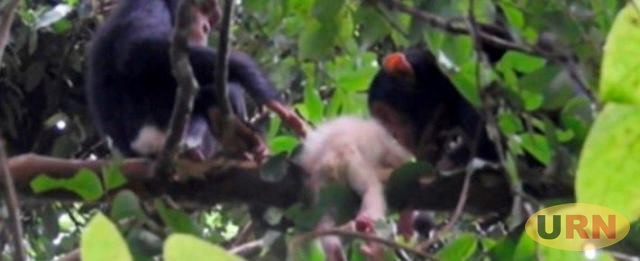
Uganda itself gained international scientific attention in 2021 when researchers documented what is believed to have been the country’s first recorded albino infant chimpanzee in Budongo Forest. The young chimpanzee’s unusual appearance attracted intense attention from other members of its community before it later died, illustrating the unique challenges albino animals face in nature.
The comparison with humans is striking.
According to the 2024 National Population and Housing Census, Uganda has an estimated 78,876 persons living with albinism aged two years and above. Unlike wildlife, whose greatest threats come from predators and survival in nature, people with albinism face discrimination, stigma and harmful myths.
Both humans and animals with albinism have reduced melanin, making them vulnerable to sunlight exposure and visual impairment. However, while albino wildlife struggles against natural selection, people with albinism struggle largely against social exclusion and misinformation by fellow humans.