The Independent Uganda: You get the Truth we Pay the Price


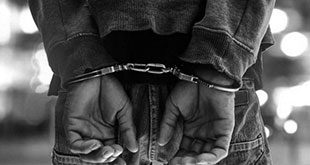
The young party has learned that opposition politics in Uganda follows a familiar script: arrest, denial, detention, court, bail and another wait for justice
COVER STORY | IAN KATUSIIME | Few political parties in Uganda’s post-independence history have evolved as dramatically as the National Unity Platform (NUP). In just six years, the party has experienced the kind of turbulence that many political movements endure over decades—contentious elections, deadly protests, military raids, abductions, torture, parliamentary triumphs, internal fractures, and the exile of its founder.
But rather than fading away, NUP has emerged as Uganda’s principal opposition force, raising a broader question about the resilience of political movements forged under sustained political pressure.
NUP was born out of one of the defining constitutional battles of President Yoweri Museveni’s long rule. In the aftermath of the Togikwatako campaign against the 2017 constitutional amendment that removed the presidential age limit, a new generation of opposition activists coalesced around the People Power movement led by musician-turned-politician Robert Kyagulanyi, better known as Bobi Wine.
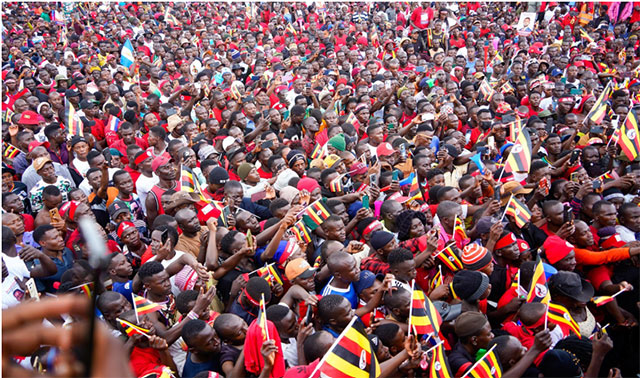
Draped in its now-iconic red berets and banners, the movement channelled the frustrations of a youthful electorate into a formidable political force, catching both the ruling National Resistance Movement (NRM) and the state security apparatus off guard.
In July 2020, as Uganda grappled with the uncertainty of the COVID-19 pandemic and an election unlike any in its history, Bobi Wine and his allies—including David Lewis Rubongoya and Joel Ssenyonyi—adopted the little-known National Unity, Reconciliation and Development Party, renamed it the National Unity Platform (NUP), and transformed it into the vehicle for their political challenge.
The move triggered immediate controversy, including the dismissal of senior Electoral Commission officials following allegations surrounding the party’s registration, underscoring the political sensitivity that would come to define NUP’s existence from its inception.
NUP’s rise coincided with a profound demographic shift. Nearly three-quarters of Uganda’s population is under the age of 30—a generation confronting unemployment, rising living costs, strained public services, and diminishing faith in established political institutions.
For many young Ugandans, NUP represented more than just another opposition party; it became the embodiment of generational change and the promise of an alternative political future. The party’s rapid growth owed as much to this demographic moment as it did to Bobi Wine’s personal appeal.
That optimism was tested almost immediately. In November 2020, the arrest of Bobi Wine in Luuka District on allegations of breaching COVID-19 campaign regulations ignited two days of nationwide protests.
Security forces responded with overwhelming force, deploying live ammunition against demonstrators in Kampala and other towns. Official figures put the death toll at more than 50, while opposition groups and human rights organisations argued that the number was significantly higher.
To date, no comprehensive independent investigation has established the full circumstances surrounding the killings or led to meaningful accountability. Barely months after its formation, NUP had undergone its defining baptism by fire, setting the tone for a political journey marked by repeated confrontation with the state.
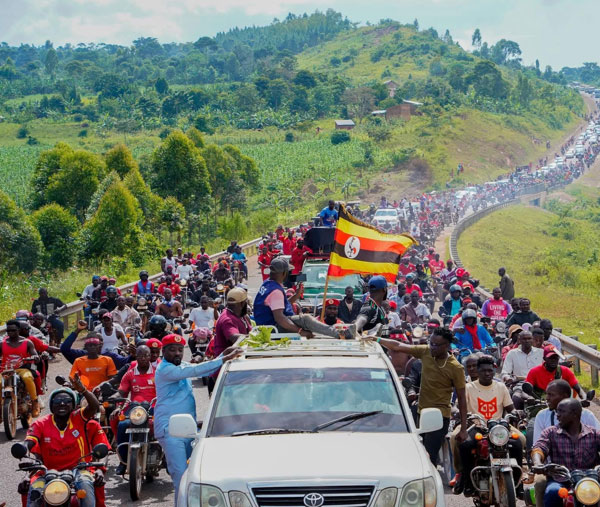
The violence that accompanied the November 2020 protests foreshadowed an even more contentious general election two months later. Buoyed by a wave of public enthusiasm, NUP fielded Bobi Wine for the presidency and parliamentary candidates in nearly 100 constituencies.
Its rapid ascent reshaped Uganda’s opposition landscape almost overnight, attracting about two dozen legislators from the Democratic Party (DP)—the country’s oldest political party—and underscoring NUP’s growing appeal as the principal vehicle for challenging the NRM.
The election results confirmed NUP’s arrival as Uganda’s dominant opposition force. Bobi Wine officially secured 3.5 million votes, equivalent to about 35% of the presidential vote, while the party won 59 parliamentary seats—an unprecedented performance for a political party that was barely six months old.
It eclipsed the parliamentary strength previously achieved by the Forum for Democratic Change (FDC), long regarded as Uganda’s leading opposition party, fundamentally reshaping the country’s opposition politics.
Enduring pressure
But the electoral success came at a considerable cost. Throughout the campaign and in its aftermath, NUP members and supporters reported a sustained pattern of arrests, enforced disappearances, torture, raids on party offices, and prosecutions before military and civilian courts.
“Resilience—and, of course, the grace of God—is what has kept us going,” Rubongoya told The Independent. “Our members have been compromised, our funding has been cut off, and many of our people continue to face court cases.”
“The government has passed several laws targeting us, but the resilience of the People Power movement has given us strength. The people have always been our shield,” he added.
Rubongoya argues that NUP’s survival has rested on a combination of sustained mobilisation, grassroots fundraising, nationwide campaigns, rallies, and organisational adaptation—but above all, the continued support of its base.
In his view, the party became a political lightning rod because its attempt to expand beyond its movement roots brought it into direct confrontation with a state determined to contain its growing influence.
That confrontation produced some of the most severe political pressure faced by an opposition party in recent years, with NUP supporters enduring arrests, prosecutions, raids, and allegations of abuse. The result has been a prolonged struggle between a party seeking to establish a nationwide political presence and a state security apparatus determined to limit its expansion.
Human rights organisations have documented widespread abuses, while the government has maintained that its actions are necessary to preserve public order and national security.
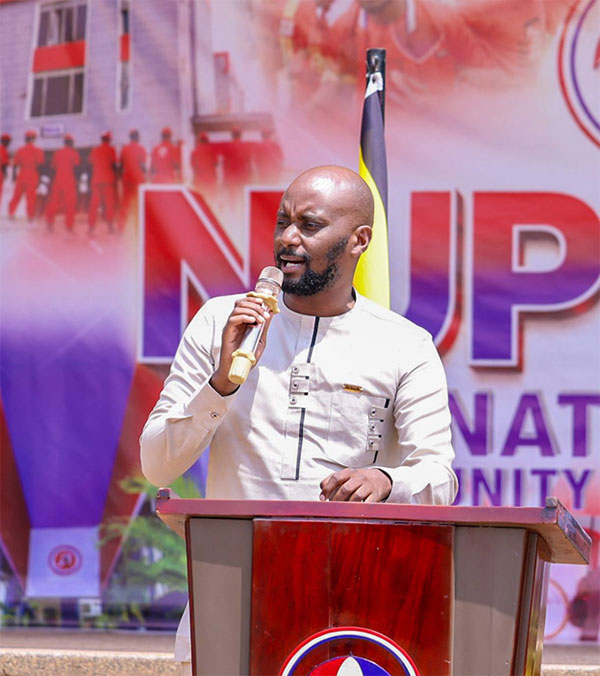
Barely months after its formation, NUP found itself navigating what would become the defining reality of its existence: operating as Uganda’s largest opposition party under relentless pressure from the state’s security and law enforcement agencies.
Encounters with the police, military intelligence, the Internal Security Organisation (ISO), the criminal justice system, and other security agencies became a recurring feature of the party’s political life. For NUP, the challenge was no longer simply how to win elections, but how to survive as an institution in an increasingly hostile political environment.
The party’s evolution was perhaps best symbolised in late 2023 when it moved from its modest offices on Old Kiira Road to a purpose-built headquarters in Kavule, near Makerere University.
Financed largely through contributions from supporters at home and in the diaspora, the new headquarters represented more than a change of address. It signalled NUP’s intention to outlast the turbulence of its formative years and transform itself from a campaign movement into a permanent political institution.
The blast furnace
If there is one experience that has come to define membership in NUP, it is the reality of abduction. Over the past six years, scores of party supporters, activists, and leaders have reportedly been seized by armed men, often in broad daylight, and bundled into unmarked Toyota Hiace vans—popularly known as “drones”—that have become synonymous with Uganda’s shadowy security operations.
NUP president Bobi Wine and his family went into exile following threats on his life by the Chief of Defence Forces, Gen. Muhoozi Kainerugaba, President Museveni’s son. Muhoozi made the remarks on X. Soldiers harassed Bobi Wine’s wife at their home in Kampala. For many within NUP, such incidents have reinforced the belief that political persecution has become an ever-present reality.
The names have accumulated over the years: Eddie Mutwe, Achileo Kivumbi, Bobi Giant, Sauda Madada, Doreen Kaija, Wasswa Mufumbiro, Olivia Lutaaya, Yasin Nyanzi, Tony Kaweesi, Shafik Lukenge, and Edwin Serunkuma, among many others. Each case has its own circumstances, but together they form a recurring pattern that has shaped the lived experience of Uganda’s largest opposition party.
On July 3, several of them appeared before the Kanyanya Chief Magistrate’s Court, where their lawyer, Kira Municipality MP George Musisi, sought their release on bail.
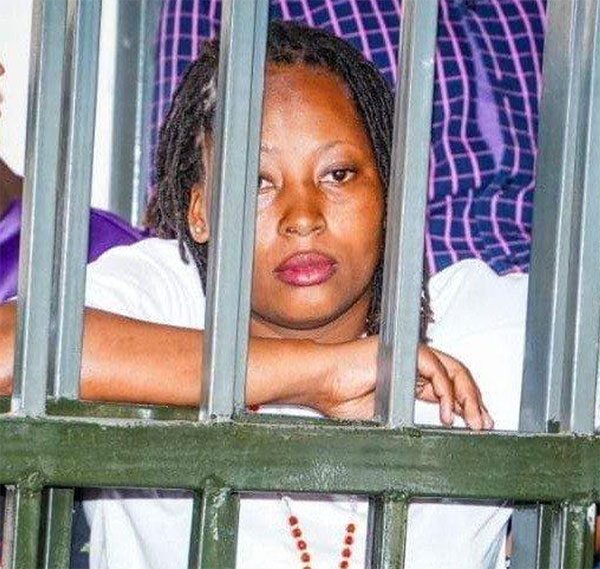
Musisi says it is the party’s youthful membership that has sustained NUP over the years. The human rights lawyer, who has represented numerous political detainees, also credits the party’s leadership for its resilience.
“The party’s willingness to depart from conventional approaches to politics has also contributed to its survival,” he said.
Many of the political detainees face charges of unlawful military drilling—an offence that has increasingly featured in prosecutions involving opposition supporters. The court declined the bail application, citing concerns that the accused might interfere with witnesses, and adjourned the case.
For many in NUP, the sequence has become painfully familiar: an arrest or alleged abduction, prolonged detention, a court appearance, a bail application, a denial, and another wait for justice.
Among the many cases illustrating the revolving door between Uganda’s security agencies and the courts is that of Olivia Lutaaya. She and several co-accused were first prosecuted before the General Court Martial after their arrest in Kalangala in December 2020 on charges of unlawful possession of ammunition.
They spent four years in detention before being convicted and later pardoned by the state. Yet their legal ordeal did not end there.
During the 2026 presidential election campaign, Lutaaya was arrested again, this time on charges of unlawful military drilling—the offence that many opposition supporters have increasingly faced.
Her case encapsulates what many within NUP describe as a cycle of repeated arrests, detention, and prosecution that has come to define the party’s experience with Uganda’s criminal justice system.
The recent abduction of NUP deputy president Muhammad Muwanga Kivumbi, shortly after he had been granted bail while facing treason charges, has also cast a spotlight on the country’s justice system. Reports indicate that Kivumbi was tortured while in detention.
On July 22, the High Court declined to grant a writ of habeas corpus compelling authorities to produce Kivumbi in court after his lawyers sought judicial intervention over his disappearance following his abduction in Mpigi on July 10, shortly after his release.
The court ruled that the application could not succeed because it remained unclear against whom the order should be directed, noting that police had denied knowledge of his whereabouts.
The respondents, including the Chief of Defence Forces and the Inspector General of Police, were given until July 29 to provide the outcome of further investigations into the matter.
The case has highlighted one of the central challenges facing families and lawyers of missing opposition supporters: securing accountability when state agencies deny responsibility for a person’s detention or refuse to disclose their whereabouts.
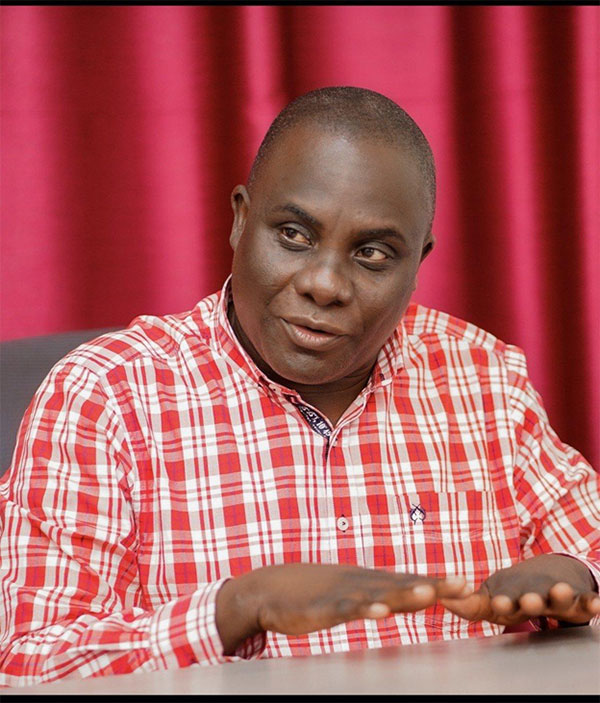
Beyond the high-profile cases lies a much larger story. NUP says thousands of its supporters have been arrested over the past six years, with many spending prolonged periods in detention as police and military operations targeted party activists across the country.
Human rights organisations have repeatedly documented cases of arbitrary arrests, prolonged detention and alleged brutality against opposition supporters. The government, however, has maintained that security agencies operate within the law and act to preserve public order and national security.
Agora Discourse, a human rights organisation, has emerged as one of the key groups documenting the experiences of NUP supporters caught up in the state’s security response.
Godwin Toko, co-founder of Agora, argues that the state’s approach towards NUP reflects a much older pattern in Uganda’s politics.
“The NRM views opposition it can’t control as a rebellion and deals with it that way,” he says.
“We saw this with FDC before NUP, but with NUP, it is even more in the open. The rise of NUP thrust the UPDF into an openly partisan position,” he adds.
Toko argues that, in practice, the UPDF has become a more formidable challenge for NUP than the ruling National Resistance Movement itself.
“You saw videos of recent army graduates warning NUP supporters that they will be crushed,” he says, arguing that such rhetoric illustrates how sections of the state increasingly frame opposition politics through a security lens.
Adaptation
Yet the pressure intended to weaken the party also forced it to reinvent how it organised and communicated.
As physical space for political mobilisation narrowed, NUP increasingly relied on digital platforms, diaspora networks and international advocacy to maintain visibility and sustain engagement with supporters.
Social media became a crucial political infrastructure, allowing the party to document arrests, mobilise supporters and maintain direct connections with a youthful electorate beyond the reach of traditional political structures.
As political space narrowed at home, the diaspora became an increasingly important extension of NUP’s political and organisational strategy.
Supporters abroad amplified the party’s message, mobilised resources and helped maintain international attention on allegations of human rights abuses against opposition supporters.
What began as an emergency response to mounting domestic pressure gradually evolved into a permanent pillar of the party’s operations.
Daniel Kawuma, NUP’s Diaspora Team Leader, has led much of that effort, coordinating mobilisation and fundraising activities across the United States, where the party has developed one of its strongest overseas support networks.
Beyond fundraising, NUP has sought to internationalise its political cause through sustained advocacy. The party has continued working with Robert Amsterdam, the international lawyer whose association with Bobi Wine dates back to the aftermath of the 2018 Arua by-election.
Since then, Amsterdam has remained one of NUP’s most prominent international advocates, helping project the party’s concerns over political repression and human rights onto the global stage.
For NUP, survival at home increasingly meant building influence abroad. The shift was evident during Bobi Wine’s virtual address marking NUP’s sixth anniversary. Rather than addressing supporters from a packed rally, the party leader reflected on the journey since the party’s registration in 2020, paid tribute to supporters still in detention and reaffirmed NUP’s reliance on digital platforms and international networks as the movement entered its seventh year.
That digital-first approach has become a defining feature of the party’s political communication.
Livestreams; regular updates on X, Facebook and YouTube; alongside an active network of diaspora social media accounts — including NUP-UK — have enabled the party to communicate directly with supporters, document developments involving its members and sustain engagement with a largely youthful constituency despite restrictions on traditional political mobilisation.
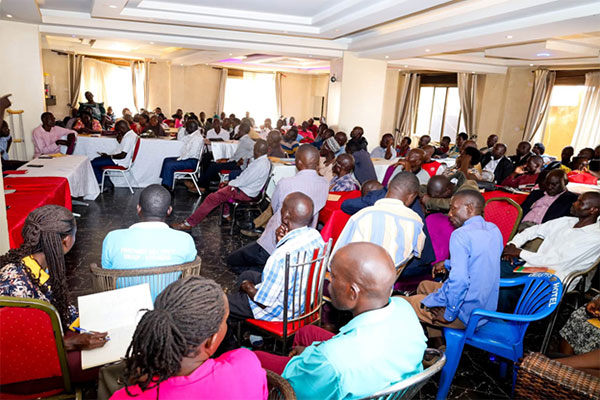
That digital ecosystem was reinforced by a powerful visual identity. The red beret, first popularised during the People Power movement, became the most recognisable symbol of NUP’s political culture.
Worn by students, grassroots mobilisers, MPs, party officials and supporters both within Uganda and in diaspora communities from London to Boston and Toronto, the beret evolved beyond a party symbol to become an expression of political belonging and generational identity.
The party’s adaptation has also been reflected in its prison visits. Rubongoya has led these efforts, frequently visiting prisons with other party officials, coordinating legal assistance and keeping the plight of detained supporters in the public eye.
On June 29, after visiting Jinja Main and Jinja Remand prisons, Rubongoya posted on X that he had checked on three NUP supporters who had been detained since the previous year following their arrest during the campaign trail in Bwizibwera, Mbarara.
It was a routine visit, but such acts have become a recurring feature of the party’s work, reflecting how legal defence and support for detained members have evolved from an emergency response into a permanent function of Uganda’s largest opposition party.
The future
Yusuf Serunkuma, a political scientist, argues that NUP has survived because it transitioned into a formal political party. He suggests that had it remained as People Power, it might have created room for renewal as a new political project with greater energy.
“Political parties don’t die sudden deaths; they just fizzle away into oblivion slowly, quietly,” Serunkuma says, arguing that NUP now faces the long-term challenge of avoiding the fate of once-dominant opposition parties such as the Democratic Party and Uganda People’s Congress.
For Serunkuma, NUP has effectively lived two political lives. The first was People Power, which he describes as a political project driven by mass mobilisation and popular energy.
The second began when it transformed into a political party, inheriting not only the advantages of institutional organisation but also the limitations faced by opposition parties operating within Uganda’s political system.
“Uganda isn’t a democracy. There is strictly no space for political parties,” he argues. “But for some reason, political actors continue to find political parties the most durable forms of political organising.”
In six years, NUP has evolved from a protest movement into Uganda’s largest opposition party, weathering pressures that have tested its organisation, leadership and support base.
Whether history remembers it as a movement that merely endured or as one that fundamentally transformed Uganda’s politics will depend less on what it has survived than on what it builds next.