The Independent Uganda: You get the Truth we Pay the Price


COMMENT | OBED K KATUREEBE | While swearing in for his 7th term of office, President Yoweri Museveni promised Ugandans a tough crackdown on corruption, notably declaring the start of ‘Kisanja No More Sleep’. He blamed government officials, like Permanent Secretaries and Chief Administrative Officers (CAOs) for misusing public funds and urged citizens to actively police thieves themselves.
President Museveni was right; all Ugandans must wake up to confront this monster called corruption that is already eating up our nation. Ending corruption is not an easy task but should not make us throw in the towel and allow criminal gangsters to take over our country.
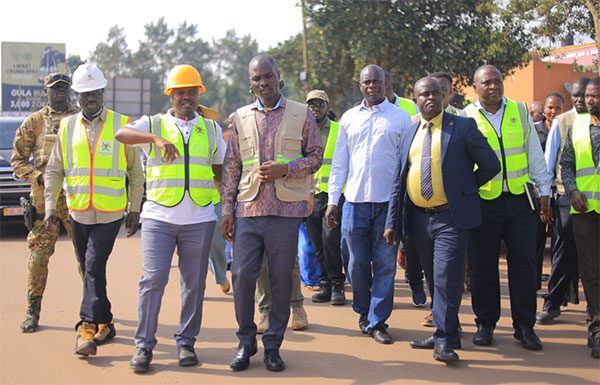
Listening to the Minister of Works and Transport Fred Byamukama detailing how a cartel in the Ministry of Works and Transport were colluding with contractors on the various roads to inflate the bills, one can’t help but pray for our motherland, Uganda! The minister revealed this while inspecting roadworks on the Mityana-Mubende Road. The UGX 395 billion rehabilitation of the Mityana–Mubende Highway has faced years of delays, with only 32 km tarmacked since the contract was signed in 2021. The 89-kilometre road has dragged on for such a long time.
Byamukama highlighted that ‘big people in government’ and officials solicit kickbacks and that this practice is significantly delaying major infrastructure projects. The minister revealed that the contractors are deliberately delaying project completion because they collude with government officials to create fictitious and non-existent challenges that result in renegotiating contract extensions with revised costs in billions of Ugandan shillings.
The widespread sentiment that corruption has become a curse in Uganda reflects deep public frustration with systemic graft, elite patronage and economic inequality. The normalization of the practice severely undermines trust in public institutions, diverts crucial resources away from public services and threatens socioeconomic transformation.
Taming grand corruption in developing nations requires a multi-pronged approach that combines robust legal frameworks, institutional independence, and international cooperation. This will require a bare-knuckle approach that will send a strong, chilling message to the rest of Ugandans, if Uganda is to reset her morals.
This is necessary because Ugandans have developed a thick skin when it comes to corruption. From inflating costs in whatever infrastructural project government is undertaking to openly selling jobs to those who wish to join government services. Things are so bad right now that whoever gets a big government job, the immediate thought that flies into their mind is that they must steal in grand style before their term of office ends! Serving the citizens is becoming an illusion.
Like the president has always said, ending corruption should be the easiest job if we attain a proper mindset change. All we need to do is to make corruption an extremely risky business for all Ugandans, both in government and the private sector. The punishment, for those convicted of graft, should be so punitive to scare all those responsible for handling public affairs.
So far, there are clear indicators that the corruption trend can be reversed. The strict and uncompromising way the anti-corruption agencies have handled the corruption mess in Parliament is pointing in the right direction.
Equally so, sweeping away the mess that had characterized the UPDF, leading to costly accidents. Helicopters were crashing day after day. Fuel procurements were inflated; fake terrorist threats were the order of the day. The ones in charge of intelligence gathering were gorging monies, through increased budget for security, under the guise of combating ‘terrorists’.
Indeed, things weren’t heading in the right direction. However, due to the ascendancy of Gen. Muhoozi Kainerugaba to the top leadership of the UPDF and his gloves off approach towards fighting corruption, sanity has finally prevailed at Mbuya Hill. Definitely, the culprits have been arrested and are undergoing trial in the Makindye Court Martial and he is building proper systems in the UPDF to deter misuse of public funds going forward.
Fighting corruption in Uganda remains a critical challenge, characterized by deep-rooted systemic issues like rent-seeking and state capture. This is going to be another protracted people’s war. The looters are entrenched in all domains of our society. They have formed their own cabals. Therefore, uprooting them should be systematic, like we are witnessing in Parliament and the UPDF.
While the government has declared anti-corruption a core priority, implementing effective reforms is hindered by weak institutional capacity. However, we can borrow best practices from countries that have significantly tamed corruption. A case in point is China.
China has not completely eradicated corruption, but it has drastically reduced it through a sweeping, relentless and highly centralized anti-corruption campaign launched in 2012 by President Xi Jinping. This effort combines top-down purges, the institutionalization of strict disciplinary rules and digital surveillance to monitor government officials.
In 2012, China introduced a code of conduct that bans lavish official banquets, luxury travel, the use of public funds for private gifts and extravagant meetings. This successfully changed the political culture by severely limiting the opportunities for officials and business executives to trade favors over expensive dinners or golf outings.
China also has supervisory laws and revisions to criminal procedures that enable the government to confiscate illegal gains, conduct ‘trials in absentia’ for fleeing suspects and permanently monitor government officials, prohibiting them from luxury lifestyles.
****
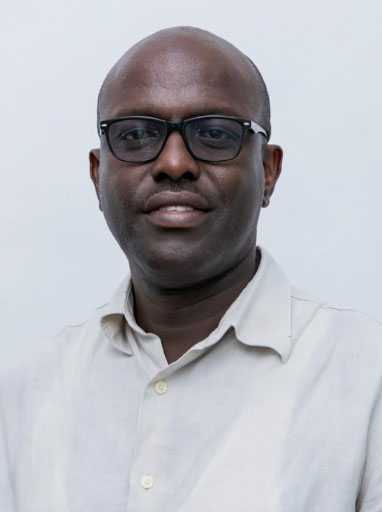
The writer works with Uganda Media Centre