The Independent Uganda: You get the Truth we Pay the Price


The issue of Iran’s nuclear programme, the main reason stated by the US for the conflict, is still to be negotiated over an extendable 60-day period
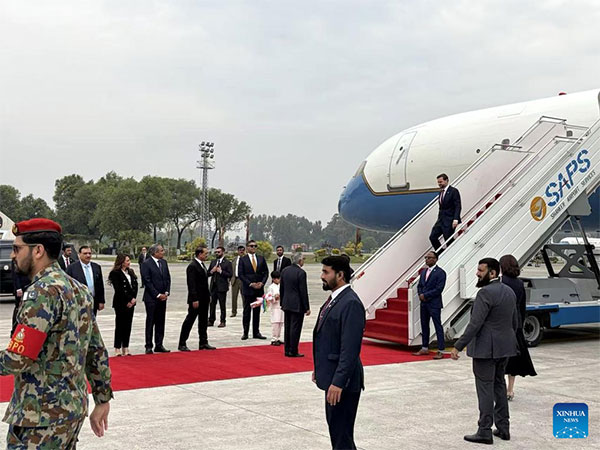
Geneva, Switzerland | AGENCIES | US and Iranian officials have arrived in Switzerland for direct talks after signing an initial agreement to end the war last week.
The deal includes a commitment to reach a final agreement within 60 days, as well as an end to hostilities on “all fronts” – including in Lebanon – and the reopening of the Strait of Hormuz.
But ongoing clashes between Israel and the Iran-backed Hezbollah in Lebanon prompted Iran to announce it had shut the vital shipping route on Saturday – though tracking data shows vessels have continued to pass through it.
Vice-President JD Vance said the US hoped for progress on “the nuclear issue” and Lebanon, while Tehran said it would be “demanding that the other side fulfil its commitments”.
Vance was joined at the Bürgenstock mountaintop resort by US President Donald Trump’s son-in-law Jared Kushner and special envoy Steve Witkoff.
For the Iranians, parliamentary speaker Mohammad Bagher Ghalibaf and Foreign Minister Abbas Araghchi arrived in Switzerland late on Saturday.
The delegations were joined by Pakistan’s Prime Minister Shehbaz Sharif and the head of the country’s armed forces, Field Marshal Asim Munir.
Pakistan has acted as a mediator throughout the war, and hosted a previous round of negotiations between the US and Iran.
The US and Iranian presidents signed the initial agreement earlier this week, aiming to end the war with immediate effect.
It also included a $300bn (£224bn) plan for Iran’s “reconstruction”, and the US terminating “all types of sanctions” on it.
But the issue of Iran’s nuclear programme, the main reason stated by the US for the conflict, is still to be negotiated over an extendable 60-day period.
Deadly clashes have meanwhile continued between Israel and Hezbollah, the Iran-backed militia, despite the deal and a ceasefire the two sides agreed on Friday.
Israel has insisted that its conflict with Hezbollah is separate from the war on Iran, which it mounted alongside the US on 28 February.
Lebanon was drawn into the war shortly afterwards, when Hezbollah launched rockets into Israel in retaliation for a strike that killed Iran’s supreme leader.
Israel responded by launching a bombing campaign across Lebanon and occupying around 5% of the country’s territory in the south – hoping to drive back Hezbollah fighters from its northern border – and has said it has no intention of withdrawing.
What’s in the US-Iran agreement?
A US-Iran agreement to extend the ceasefire between the two countries was signed on the sidelines of the G7 summit in France and is now in effect.
But what is in the agreement? The 14-point agreement, which is known as a Memorandum of Understanding, says that Iran will never have a nuclear weapon, and also commits a $300bn fund for the “reconstruction and economic development” of the country – although the US is not required to contribute. It comes four months after the conflict between the countries – and Israel – broke out.
The agreement has been described by the Trump administration as “performance-based”, with Iran benefitting only if it complies with its commitments.
While the text of the deal leaves many questions unanswered – and many key issues unsolved – here’s what we know about some of the key points.
Point 1: An end to conflict ‘on all fronts’
The first paragraph of the agreement notes that the US, Iran and allies will declare an “immediate and permanent” termination of military operations on “all fronts” – including Lebanon.
From the US perspective, Trump has been growing increasingly concerned that Israeli military operations against Hezbollah could upend the agreement with Iran.
Tehran, for its part, has repeatedly said it expected Lebanon to be covered by the truce.
Any continuation of Israeli military operations in Lebanon would constitute a “violation of the understanding” and “necessary measures will be taken”, a spokesperson for the Iranian Ministry of Foreign Affairs said.
The agreement notes that “from now on” neither side will initiate military operations or threaten each other, and ensure “the territorial integrity and sovereignty” of Lebanon.
The final agreement will lead to the permanent “termination” of the conflict, the document says. It is unclear how Israel will react to this point.
Point 2: Respect for ‘internal affairs’
The text of the document – read verbatim to reporters in a call with US officials – notes that the US and Iran will “respect each other’s sovereignty and territorial integrity” and refrain from interfering in each side’s internal affairs.
This will likely be received negatively by Iranian dissident groups. Earlier this year, Trump promised Iranian protesters that “help is on the way” during anti-government demonstrations that swept across Iranian cities.
Point 3: An extendable 60-day timeline
According to the third point in the document, the US and Iran will commit to negotiating and achieving a final deal in a “maximum” of 60 days, although that timeline could be extended with mutual consent.
That 60-day countdown has now begun after the leaders of of the two countries officially signed the MoU.
Trump signed the Iran document at a post-G7 dinner at the Palace of Versailles in France. It has also been signed by Iranian President Masoud Pezeshkian, according to the White House.
Point 4: US to end blockade
Once the MoU is signed, the US will begin removing its naval blockade and “any disturbances or impediments” that have been placed on Iranian ports, the fourth point says.
The blockade will end fully within 30 days, according to the agreement and the Iranian Ministry of Foreign Affairs. During this time, the number of vessels the US allows through Iranian ports will be in proportion to the traffic being restored by Iran in the Strait of Hormuz.
Within 30 days of a final deal being signed, the US has committed to removing American forces from the “proximity of Iran”.
In practice, this means that the US military will return to the posture and assets it had in place before hostilities began on 28 February.
Point 5: Strait of Hormuz
Part of the agreement notes that upon the signing of the MoU, Iran will “make arrangements using its best efforts” to allow safe passage of commercial vessels through the Strait of Hormuz – with no charge.
This has been a significant objective of the US since the war began and the Strait of Hormuz was shut, sending global oil prices spiking.
The document notes that traffic will start flowing “immediately”, taking into account the need to remove technical and military “obstacles” and conduct de-mining operations.
The officials in a briefing earlier repeatedly sought to make clear that vessels would not be charged for transit through the Strait of Hormuz.
In the longer-term, the document notes that Iran will work with Oman and other Gulf states to set up a “broader” agreement on how to manage the Strait of Hormuz.
The US believes that Iran will assert its rights “aggressively”, but that the Gulf states would “never” accept a future in which there is a tolling system in place, the official said.
Point 6: Money for Iran reconstruction
The sixth point of the MoU says the US and regional partners will develop a “definitive, mutually agreed plan” worth at least $300bn (£224bn) for reconstruction and economic development in Iran.
The final mechanism will be agreed within 60 days of the final deal, and all licences, waivers and permissions will be granted by the US.
However, this does not mean the US will be financially involved.
One official noted that the US is not required to pay “a cent of money” to Iran, or contribute to the fund.
As a hypothetical example, the official said that if Iran “behaves”, Emirati authorities could build a power plant in Iran, with US blessing.
Trump and other officials have gone to great lengths to make clear to the US public that it will not be paying Iran directly, which the administration says stands in stark contrast to the 2015 nuclear agreement between Iran and the Obama administration.
Point 7: Sanctions to end
The US will terminate all economic sanctions against Iran, including those included in UN Security Council resolutions and those implemented unilaterally by the US.
The timeline, however, is unclear.
The document notes that the schedule will be agreed upon as part of the final deal, but that both sides acknowledge their intentions to “immediately” address the issue in subsequent negotiations.
Iran has been hard-hit by sanctions, and a US campaign – Operation Economic Fury – has sought to cut Tehran off from the global financial system.
Point 8: No nuclear weapons
Iran has agreed to not procure or develop a nuclear weapon, and both sides have agreed to deal with the enriched uranium Tehran already has.
The method to manage the material is unclear. The document notes that the mechanism “will be mutually agreed upon” in subsequent talks, but that, at a minimum, it will be “downblended” in place under the supervision of the International Atomic Energy Agency, or IAEA.
A senior US official described this as a “minimum standard” and a “major win” for the US.
Trump has said that preventing Iran from having a nuclear weapon was “99%” of what he wanted by launching Operation Epic Fury earlier this year.
Because the US has described the deal as performance-based, the sanctions relief specified in point 7 is tied to Iran complying with point 8.
Points 9 & 10: A ‘status quo’
The following two parts of the agreement specify that the US and Iran agree to a “status quo” of its nuclear programme in the meantime, until the enriched uranium can be dealt with.
In practice, this means that the US will not impose new sanctions. In the meantime, it will issue waivers for the export of oil, petroleum products and other associated services, such as banking transactions and transportation.
Point 11: Frozen funds
This point has been a significant impediment to negotiations.
Iran had long insisted that its frozen assets be released, offering the country another economic lifeline.
The eleventh point of the document notes that the US “undertakes to make fully available frozen or restricted funds” once the MoU is signed and that procedures will be agreed upon during negotiations.
A US official told reporters that some assets will be released while post-MoU talks continue to reward Iran when it complies with aspects of the agreement, such as beginning to deal with its highly enriched uranium.
****
Source: BBC