The Independent Uganda: You get the Truth we Pay the Price


Kampala, Uganda | URN | The Uganda People’s Congress (UPC) has asked President Yoweri Museveni not to sign the newly passed Sovereignty Protection Bill, 2026, warning that the proposed law could isolate Uganda internationally and worsen the country’s economic challenges.
Parliament passed the controversial bill on Tuesday, May 5, 2026. The legislation seeks to shield Uganda from what the government describes as foreign interference in the country’s internal affairs. However, critics argue that some of its provisions are broad and unclear, raising fears about how the law could be enforced.
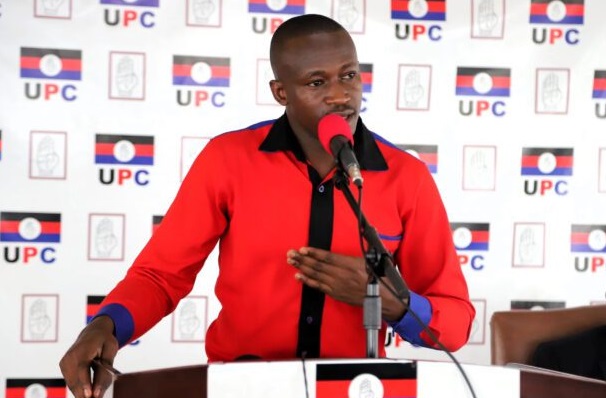
In a statement released on Thursday, UPC Head of Media and Communications Muzeyi Faizo said the bill risks undermining investor confidence and damaging Uganda’s relationship with the international community at a time when the economy is already under pressure.
The party noted that many Ugandans are struggling with high living costs, unemployment, and rising debt burdens, warning that the law could further discourage foreign investment and international cooperation. According to the UPC, the bill could also criminalise legitimate engagement with foreign partners, limit academic and civil society exchanges, and create uncertainty within Uganda’s financial and business sectors.
The UPC also raised constitutional concerns, arguing that the bill conflicts with principles of legal certainty, proportionality, and freedoms of association and expression guaranteed under the Constitution. The party warned that vague wording in the law could lead to selective enforcement and possible abuse of state power.
Citing Article 91(3)(b) of the Constitution, the UPC reminded President Museveni that he has the authority to return the bill to Parliament for reconsideration. The party pointed to previous occasions where the President declined to immediately assent to controversial legislation, including the Anti-Homosexuality Act (2023), the Minimum Wages Bill (2019), and the NSSF Amendment Bill (2021).
The UPC is instead calling for broader national consultations involving political parties, civil society organisations, legal experts, Parliament, and the business community before the bill becomes law.
“Uganda must never confuse isolation with independence,” the party said, adding that genuine sovereignty should be built on strong institutions, constitutional legitimacy, and public trust rather than restrictive legislation.
The UPC’s appeal comes as President Museveni publicly praised NRM Members of Parliament for passing the bill. In a message posted on X, formerly Twitter, Museveni defended the legislation, saying Uganda has a right to handle its affairs without external interference.
The President argued that foreign interference in Uganda’s internal affairs has historically been harmful. He cited the 1971 coup that brought Idi Amin to power, claiming that Israel and Britain supported the overthrow of then-President Milton Obote because of his opposition to their policies on Rhodesia, present-day Zimbabwe.
Museveni also acknowledged past political differences with Obote but said they later found common ground on issues such as East African integration and the liberation of Africa.
Opposition political parties and civil society groups have strongly criticised the bill since its introduction in Parliament. Earlier this week, Forum for Democratic Change (FDC) President Patrick Amuriat Oboi warned that his party would challenge the law in the Constitutional Court if it is assented to.
Several other organisations and individuals have also threatened legal action, arguing that the bill could undermine constitutional freedoms and democratic governance.
The Sovereignty Protection Bill now awaits President Museveni’s signature to become law.