The Independent Uganda: You get the Truth we Pay the Price


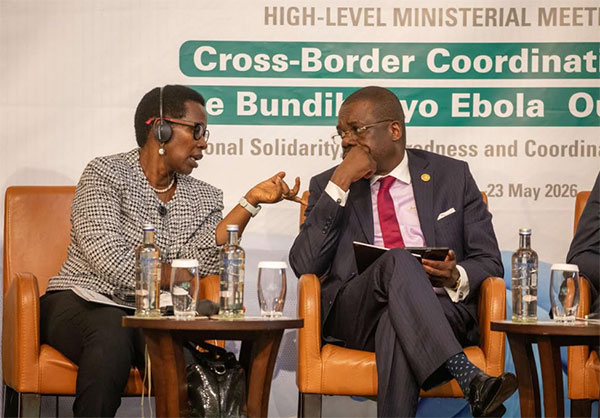
COMMENT | CAROLYNE MUYAMA | After news of a Bundibugyo Ebola virus outbreak in East-Central Africa, international media began portraying the region with exaggerated and harmful stereotypes. Over the weekend, international and some local media outlets published screaming headlines quoting CDC Africa numbers for Ebola, lumping Uganda with DRC.
The headline was “Congo, Uganda report 263 confirmed Ebola cases, Africa CDC”. This may suggest that the two countries share the figure roughly equally.
The question is, why is CDC Africa choosing to lump the two cases together and not report the incidents in the two countries separately?
Journalists covering the story should understand that precise geographic and contextual details can influence whether the public responds appropriately or faces serious economic consequences.
The Ministry of Health reports that Uganda has had 9 cases of Ebola Virus Disease, of which one died, and that all 9 cases are linked to travel from DRC. These figures have been openly shared by the Ministry of Health and remain on its social media platforms, with the Permanent Secretary of the Ministry available to address any questions.
Generalized headlines grouping the Ebola cases of neighboring countries have unintentionally caused a false panic about Uganda’s health security, leading to real impacts on the nation’s tourism, business, and travel industries.
It is understandable that, since the virus originated near international trade routes, global health organizations need to monitor adjacent regions. However, aggregating these numbers into a single regional threat completely misrepresents Uganda’s localized reality, which has been successfully contained.
While the Democratic Republic of the Congo faces an active local epidemic with 282 confirmed cases, 42 deaths, and over 200 suspected cases, Uganda’s situation is markedly different.
All businesses are open, and children are back in school. Borders are open for trade, except for restrictions at the Uganda-DRC border. Measures are in place to prevent and contain any reported cases.
The Ministry of Health and other stakeholders are working around the clock to ensure that Ugandans are safe and that measures are in place to keep the virus at bay.
When an individual travelled from Bunia in the neighbouring country to Kampala to seek medical care, the health team in Uganda swung into action as soon as the case was reported and has kept the number of cases at a single index. Through rapid isolation and contact tracing, there is zero uncontrolled community transmission.
Despite micro-scale data from Uganda, the psychological impact of regional bundling has triggered stringent international policy shifts. The U.S. Centers for Disease Control and Prevention issued a Level 1 Travel Health Notice for Uganda, recommending that travellers follow standard precautions, which is the lowest alert level. Conversely, the neighboring country was issued a restrictive Level 3 Travel Health Notice, urging travellers to reconsider nonessential travel.
In Uganda, a country with booming tourism, national parks, and busy business centers, this reporting has caused considerable collateral economic damage. Foreign tour operators, misinterpreting the routing and entry restrictions as a blanket travel ban, have cancelled park bookings prematurely.
Meanwhile, there are reports that supply chains and international partners have shown reluctance, mistaking a localized imported medical incident for a nationwide crisis.
The international community’s panic overlooks an important historical fact that Uganda is arguably the world’s most experienced and efficient nation in breaking Ebola transmission chains.
The country’s public health infrastructure has been strengthened by decades of fighting viral haemorrhagic fevers, including the historic 2000 Gulu outbreak, the 2007 discovery of the Bundibugyo strain currently active, and the highly praised containment of the 2022 Sudan ebolavirus outbreak. When the index case arrived in Kampala, Uganda, it did not need to develop a new response strategy; instead, it relied on a proven, world-class epidemiologic method.
The rapid response is precisely why the outbreak never spread into Ugandan communities. Uganda is not a passive victim of an outbreak; it is an active, aggressive executioner of disease containment.
The borders are open, national parks are secure, and financial systems are completely stable. Public health alerts are necessary tools for global safety, but when international institutions and media houses aggregate small, imported, contained cases with large-scale regional epidemics, they do profound harm to innocent economies.
Uganda’s numbers speak for themselves, and it is time for the global narrative to reflect the precision the Ministry of Health demonstrates on the ground every day.
****
 Carolyne Muyama works with the Uganda Media Centre