The Independent Uganda: You get the Truth we Pay the Price


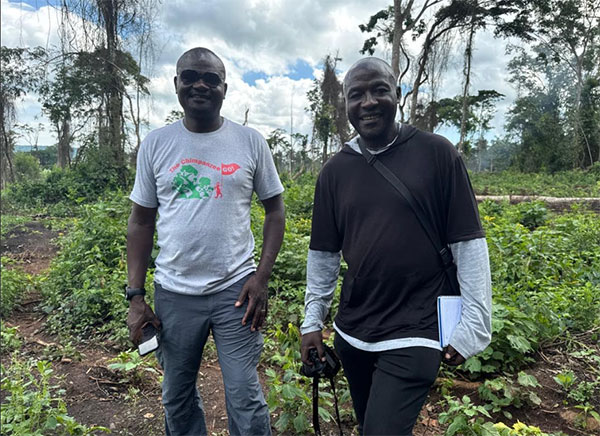
SPECIAL FEATURE | Long before Bugoma Forest became a national political issue, Gerald Tenywa was writing about it. Through years of encroachment, contested land titles, illegal logging and institutional hesitation, the veteran journalist refused to abandon the story. Today, as the government moves to convert the tropical forest into a national park, his decades-long persistence stands as a rare example of journalism shaping environmental policy, reports Ronald Musoke.
On the morning of May 9, 2026, Gerald Tenywa stood among government officials, conservationists, soldiers, local leaders and journalists gathered in Kikuube District for a ceremony that, for him, carried the emotional weight of an ending, a vindication and a beginning, all at once.
Inside the main hall of Kikuube District headquarters, Prime Minister Robinah Nabbanja prepared to formally transfer the management of Bugoma Central Forest Reserve from the Ministry of Water and Environment to the Ministry of Tourism, Wildlife and Antiquities through the Uganda Wildlife Authority (UWA), the national agency that is mandated with protecting the country’s wildlife resources.
The government, acting on a Feb.23, 2026 directive from President Yoweri Museveni, had announced plans to upgrade the tropical rainforest into a national park in an effort to halt years of destruction, encroachment and political conflict. For many people present, it was a significant policy announcement concerning one of Uganda’s most embattled forests. For Gerald Tenywa, however, the moment carried a far more intimate significance.
For more than two decades, he had returned repeatedly to Bugoma, walking through its forest blocks, interviewing communities, tracking policy disputes, investigating land conflicts, documenting illegal logging and warning about the gradual destruction of one of Uganda’s most ecologically important forests. Long before Bugoma became a national political issue, Tenywa had already spent years writing about it, often with little certainty that anybody powerful was truly listening.
Now, standing there as Prime Minister Nabbanja addressed the gathering, he was listening to the Ugandan state publicly acknowledge the very crisis he had spent years documenting. “They left a small curtain of trees,” Nabbanja said after touring parts of the forest, a few hours earlier. “It’s a curtain on the main road. Inside, there is no forest.”
The Prime Minister ordered encroachers and illegal timber harvesters to leave immediately. President Museveni’s directive upgrading Bugoma’s protection status was reiterated publicly. UWA officials promised deployments of rangers, aerial surveillance and drones to stop further destruction.
As officials spoke about protecting Bugoma for future generations, Tenywa listened quietly, absorbing the improbable reality of the moment. The story he had pursued for so long, sometimes at personal risk, often against institutional hesitation, and frequently in the face of political resistance, had finally reached the centre of national attention. It was difficult not to think back to the beginning.
The forest that entered his imagination
Long before he became one of Uganda’s most respected environmental journalists, Gerald Tenywa was a forestry student at Makerere University, travelling through western Uganda with lecturers and researchers, discovering landscapes that would later shape his life’s work.
The forests fascinated him long before he ever wrote about them professionally. Budongo, Kibale, Murchison Falls, Queen Elizabeth National Park and other ecosystems introduced him to the immense ecological richness of western Uganda and the Albertine Rift Valley. He was drawn not only to the science of forests but also to their atmosphere: the towering canopies, the silence beneath old trees, and the complexity of ecosystems that seemed at once fragile and eternal.
It was during one of those student excursions in the mid-1990s that he first heard the name Bugoma. His group had travelled through Budongo and later crossed toward Kibale. Along the way, lecturers pointed toward another forest nearby and explained that it was equally significant, though smaller. That forest was Bugoma Central Forest Reserve.
It was already evening, nearly dark. Tenywa remembers straining to see the forest as the vehicle moved through fading light. “We could not appreciate it that much,” he says today. “It was late in the evening.”
Yet something about the name and the landscape lingered in his imagination. At university, Tenywa was already writing occasional articles for newspapers. Much earlier than that, he had begun contributing stories while still a pupil and continued doing so throughout his studies. During this period, one journalist in particular left a lasting impression on him: the late Ndyakira Amooti, one of Uganda’s pioneering environmental reporters.
Ndyakira specialised in stories about forest destruction, wetland encroachment, wildlife trafficking and environmental abuse by politically connected actors. Tenywa admired both his courage and his seriousness. Sometimes, as a student, Tenywa would tip him off about environmental issues or suggest angles for stories. Amooti would listen patiently and then ask the same question again and again. “Why don’t you write the stories yourself? ”
At first, Tenywa hesitated. Environmental journalism seemed too specialised, too difficult and perhaps too risky. But after Ndyakira’s death in 1999, several colleagues and mentors encouraged him to continue along the same path. They believed he possessed a rare advantage; he understood both the science and the terrain. In 2001, he made the decision that would define his career. He joined New Vision as a freelance journalist and began focusing seriously on environmental reporting.
Learning the craft
The timing proved decisive. Uganda’s forestry sector itself was undergoing major transformation. The old Forestry Department was evolving into the National Forestry Authority (NFA), while debates about conservation, forest management and land governance were becoming increasingly political.
Tenywa entered environmental journalism at a moment when Uganda’s natural ecosystems were coming under growing pressure from population expansion, commercial agriculture, charcoal burning and politically connected land interests.
At New Vision, he found editors who believed in rigorous reporting and gave him room to grow. He still speaks warmly about newsroom figures such as William Pike, the newspaper’s founding managing director; David Sseppuuya, the former deputy editor in chief; Barbara Kaija, the Vision Group Editor-in -Chief; Felix Osike, John Baptist Waswa, Hellen Mukiibi, Stephen Asiimwe, Prof. Goretti Linda Nassanga and others, who pushed him to sharpen his writing and think carefully about structure, intros and headlines.
Sometimes he would draft several versions of the same introduction before settling on the strongest one. Editors and colleagues in the newsroom would debate headlines, question transitions and challenge him to improve the reporting.
“It was a culture of excellence,” he recalls. At the same time, he immersed himself in the field. He often travelled with wildlife officials into national parks, built networks within forestry institutions and cultivated sources among scientists, conservationists and local communities. He learned not only how ecosystems function but also how environmental politics operates behind closed doors.
By the end of 2001, the National Environment Management Authority (NEMA) had recognised him for his consistent reporting on environmental issues. The award citation praised his ability to explain technical subjects clearly while engaging directly with the institutions managing Uganda’s natural resources.
Over the years, he would become associated with some of Uganda’s most consequential environmental campaigns. He reported extensively on the Save Mabira campaign in 2007 when the government proposed allocating part of Mabira Forest in central-southern Uganda to the Mehta Group for sugarcane growing, a decision that sparked national outrage and one of the country’s most visible conservation movements. He also spent years documenting the decline of Lake Victoria, writing repeatedly about pollution, environmental degradation and the pressures threatening Africa’s largest freshwater lake.
Yet despite the many environmental battles he covered throughout his career, Tenywa says the Bugoma story came to occupy a special place in his professional life. Partly, it was because of the sheer persistence the story demanded. But it was also because of what eventually happened; the fact that the issue rose all the way to Cabinet and prompted direct intervention from President Museveni himself.
For a journalist who has spent much of his life writing stories whose impact is often difficult to measure, the Bugoma policy reversal has stood out as one of the clearest moments when years of environmental reporting have converged with national decision-making. Still, although he has reported widely on wildlife, wetlands, forestry and extractive industries, one landscape has kept pulling him back repeatedly.
Entering Bugoma
Tenywa’s first major reporting assignment in Bugoma came in 2002 after New Vision tasked him with investigating forest degradation in mid-western Uganda. The newspaper’s top manager, William Pike, was deeply interested in the condition of Uganda’s forests and initially considered arranging an aerial survey using a helicopter. Forestry officials, however, advised against it. Destruction beneath dense canopies could not properly be understood from the air. “If you are flying up there,” one forestry official told them, “You will not see much.”
He travelled into the forest on foot instead. He spent days moving through Bugoma and surrounding communities, absorbing both the beauty of the landscape and the early warning signs of degradation. He remembers hearing birds calling through the forest and cicadas singing in the trees. Back then, certain sections of Bugoma still felt pristine and immense. One area especially stayed with him: Muhangaizima, a forest block that was ecologically rich and breathtakingly beautiful. Years later, large parts of that same area would be cleared for sugarcane.
At the time, however, the destruction still appeared manageable. Tenywa’s reporting triggered immediate official interest. Ministers toured the affected areas. Forestry officials responded seriously. Government agencies still seemed capable of reacting before environmental damage became irreversible. For a young journalist, the experience was encouraging. It suggested that journalism could still force institutions to act. But over time, the politics surrounding Bugoma grew darker and more complicated.
The battle for Bugoma
To understand the intensity of the struggle over Bugoma, one must understand what the forest represents. Bugoma spans roughly 40,000 hectares along the northern edge of the Albertine Rift Valley, forming part of a wider ecological system connected to the Congo Basin rainforest. Conservationists consider it one of Uganda’s most biodiverse tropical forests, home to around 500 chimpanzees, hundreds of bird species, Uganda mangabeys, bush elephants and vital wildlife corridors linking ecosystems across western Uganda and into the Democratic Republic of Congo.
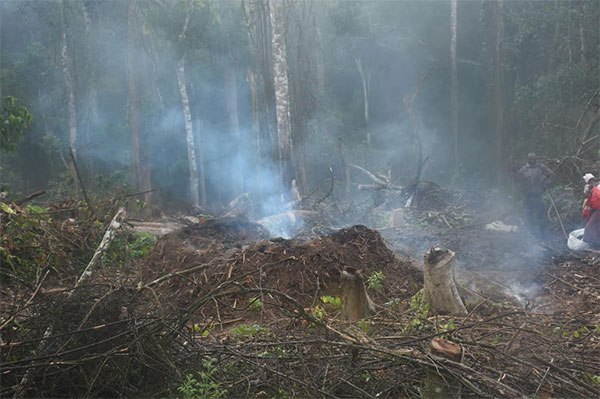
The forest also plays an important role in rainfall formation, climate regulation and water protection for surrounding communities. Yet, because Bugoma occupies such fertile and strategically valuable land, it has long attracted commercial and political interest.
The conflict intensified dramatically in 2016 when approximately 5,700 hectares linked to Bugoma were titled to the Bunyoro-Kitara Kingdom as ancestral land before being transferred to the new sugar barons, Hoima Sugar Limited, only days later. Conservation groups erupted in protest. The National Forestry Authority challenged the allocation in court. Civil society organisations warned that Bugoma’s destruction would trigger ecological disaster. But commercial interests kept advancing into the forest.
Mechanical graders cleared land for sugarcane. Chainsaws appeared deeper inside forest blocks. Charcoal burning expanded. Competing maps and contested boundaries created confusion over where protected land actually began and ended.
Throughout this period, Tenywa kept returning to the story. He investigated the legal battles, followed the court cases, interviewed conservationists and examined the increasingly complicated politics surrounding Bugoma. He also understood something many people missed; environmental destruction often advances gradually, hidden behind bureaucracy, paperwork and seemingly technical disputes over boundaries and land titles. By the time the public fully notices what is happening, much of the damage has already occurred.
In 2020, he produced a sweeping nine-part series examining Bugoma’s ecological importance, tourism potential, legal disputes and conservation challenges. His reporting explored not only the forest’s biodiversity but also the implications of losing such a critical ecosystem. At the same time, civil society organisations and conservation campaigns intensified their own efforts.
Research showed that Bugoma possessed enormous tourism potential through chimpanzee trekking, forest walks and biodiversity conservation. Conservationists warned that the forest formed part of a critical chimpanzee corridor within the wider Albertine Rift ecosystem. Yet despite years of warnings, destruction continued.
The loneliness of environmental journalism
Environmental reporting demands an unusual kind of patience. Unlike political scandals or breaking news, environmental destruction often unfolds slowly, almost invisibly. Forests disappear tree by tree. Wetlands are encroached upon gradually. Wildlife populations decline quietly over years. This makes sustained environmental journalism emotionally exhausting. The reporter must keep paying attention long after public attention has faded. Tenywa understands this nuance.
Over the years, he has strengthened his expertise through postgraduate studies in environmental journalism and communication, training in land governance and fellowships linked to extractive industries and conservation reporting. He has also been mentoring younger journalists through organisations such as the Media Challenge Initiative and the African Centre for Media Excellence (ACME), encouraging them to approach environmental reporting with seriousness and depth. Yet one frustration has persisted throughout his career: uncertainty about impact. “I write these stories to cause change,” he once reflected during an ACME Talks podcast. “But in many cases, it’s very tricky to get the feedback.”
Still, he has continued to report because he believes environmental journalism serves as a form of public memory. Somebody has to keep documenting what is happening before forests disappear quietly beneath political noise and commercial pressure. And nowhere has this responsibility felt heavier than in Bugoma.
Into the forest at night
By late 2025, reports reaching Tenywa suggested that destruction inside Bugoma had accelerated dramatically. Sources described mounting encroachment, worsening charcoal burning and growing frustration among officials who felt politically constrained and under-resourced. Chimpanzee habitats were shrinking rapidly. Illegal logging had spread deeper into the reserve.
Tenywa decided he needed to see the situation personally. This time, however, the assignment felt more dangerous than previous reporting trips. Too many powerful interests were involved. Too many people wanted scrutiny avoided. So, he travelled discreetly.
He checked into a lodge near the forest and entered Bugoma at night with guides in order to avoid detection by encroachers and local networks monitoring outsiders. “The idea was to sleep there,” he recalls, “Then, hopefully, find the encroachers.” And they did.
Inside the darkness of the forest, they listened to machines operating before dawn. Generators hummed somewhere deeper inside the reserve. Chainsaws echoed through areas that had once been dense tropical forest. At around 5am in the morning, the sounds suddenly stopped.
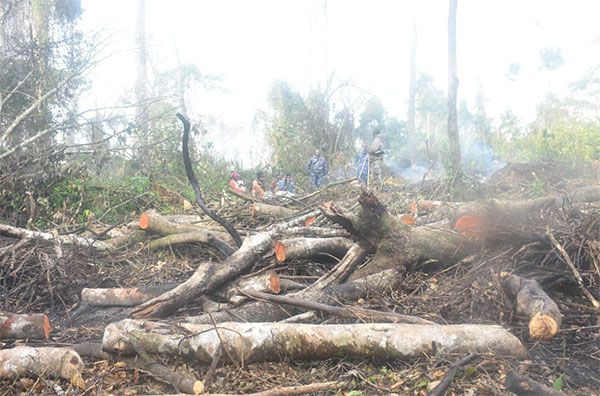
As daylight slowly filtered through the remaining canopy, Tenywa walked through scenes that stunned even him after decades of environmental reporting. Freshly cut trees lay across the forest floor. Charcoal kilns smouldered. Entire sections of habitat had been stripped bare. “I was touched,” he says quietly. “I had never seen this kind of thing happen. Massive destruction.”
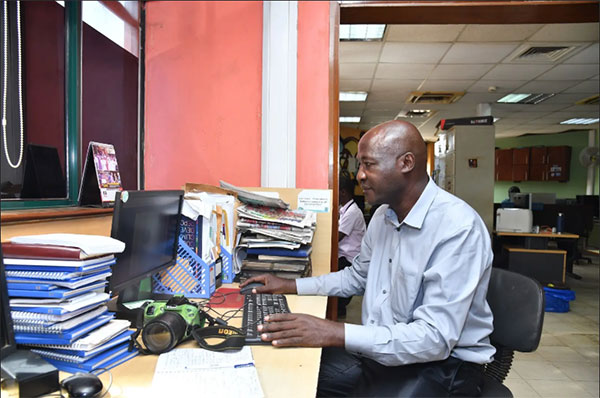
He spent days interviewing local communities, district officials, forestry staff and conservation actors before returning to Kampala determined to publish the findings. But publication itself became another struggle.
For months, the stories stalled amid newsroom anxieties and political sensitivities surrounding Bugoma as the country headed into the 2026 election. Eventually, the stories ran. One graphically documented destruction inside Bugoma itself. Another examined the impact on chimpanzees. A third explored what Tenywa increasingly believed was the only realistic long-term solution: upgrading Bugoma into a national park. Then something remarkable happened. The stories began circulating inside government. Cabinet discussions intensified. Officials reportedly debated some of the same issues Tenywa had raised. Conservation concerns gained urgency at the highest levels of government.
By February 2026, President Museveni had directed that UWA take over Bugoma and upgrade it into a national park. Encroachers were ordered out without compensation. Security agencies were instructed to investigate illegal activities within the forest. For the first time in years, conservationists sensed that Bugoma might actually survive.
The long reward of persistence
However, even now, Tenywa remains cautious. He knows too much about Bugoma’s politics to believe the struggle is over. Too many economic interests remain invested in the forest; too much land has already been cleared, and too many unresolved questions persist about boundaries, compensation and political compromise.
And yet, standing in Kikuube on May 9 as the government formally handed Bugoma over to UWA, he allowed himself a rare moment of quiet satisfaction. Not triumph, not self-congratulation, but simply the recognition that years of persistence had mattered.
No single journalist saves a forest. Conservation victories emerge through the work of activists, scientists, lawyers, local communities, campaigners and policy makers. But journalism plays a crucial role in sustaining attention long enough for action to become possible. That may ultimately be Tenywa’s greatest achievement. Not that he wrote one dramatic investigation; not that he produced one sensational headline, but that he stayed with the story.
He kept returning to Bugoma long after public attention faded. He kept documenting destruction others preferred ignored. He kept listening to scientists, foresters and communities while political winds shifted around him. In an era increasingly dominated by short attention spans and rapid news cycles, his work represents something rarer and older: journalism as long-term witness.
Today, the future of Bugoma remains uncertain. The forest has already suffered devastating losses, and the battle over its protection is far from finished. But if Bugoma survives; if future generations still inherit chimpanzee corridors stretching through the Albertine Rift toward the Congo Basin, if rain still falls over surrounding communities because enough forest remains standing, and if Uganda ultimately preserves one of its most important ecosystems, then part of that history will belong to a journalist who refused to let the story disappear. For more than twenty years, Gerald Tenywa kept Bugoma alive in Uganda’s public conscience. Sometimes that is how conservation begins; with somebody who simply refuses to stop paying attention.