 The Independent Uganda: You get the Truth we Pay the Price


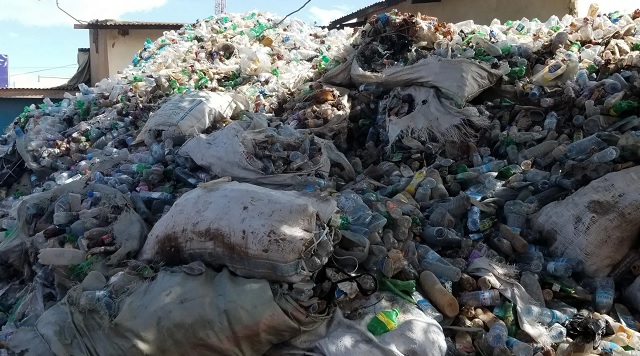
COMMENT | DICKENS AMANYA | All over much of West Nile’s rapidly growing urban centers, poor waste management is quietly evolving into a climate justice crisis. The sight of open dumpsites, burning garbage, polluted river streams, and untreated waste is not only degrading the environment but also worsening the public health situation and ultimately accelerating climate change in one of Uganda’s most vulnerable regions.
In spite of its far-reaching impact on the environment and human wellbeing, proper waste management continues to receive limited policy attention and inadequate financing. The Constitution of the Republic of Uganda, 1995 (as amended), under National Objective XXVII (i), obliges the State to promote sustainable development and ensure that land, air, and water resources are managed in a balanced and sustainable manner for the present and future generations. This constitutional obligation is reinforced by several international and national frameworks, including the Kyoto Protocol, the Bali Action Plan, the Paris Agreement, Uganda’s National Climate Change Policy (2015), the National Environment Act (2019), the National Climate Change Act (2021), and the National Environment (Waste Management) Regulations (2020).
It is a travesty that the reality in West Nile is painted with a worrying picture. The National State of the Environment Report of 2024 indicates that West Nile recorded temperature increases of 0.68°C per decade between 1950 and 2023. The same report highlights how wetlands have continued to suffer from pollution caused by industrial discharge, rainwater run-offs, and untreated urban wastewater, all of which degrade water quality and threaten aquatic ecosystems.
Incidentally, the report does not provide comprehensive statistics on municipal solid waste generation in highly populated urban centres like Arua City and Adjumani District, whose populations continue to increase rapidly and exponentially. This information gap is itself a reflection of the region’s longstanding neglect in planning for waste management and infrastructure development.
Of more concern is the fact that the entire West Nile sub-region lacks a legally established and environmentally compliant landfill. Local governments therefore continue to rely on dilapidated dumpsites and fast-filling in areas such as Adjumani Town Council, Koboko Municipality, Nebbi Municipality, Arua City, and Paidha Town Council in Zombo District.
The implications of this poorly managed waste are severe. Poorly regulated dumping and the open burning of waste release greenhouse gases such as methane and carbon dioxide into the atmosphere, which in an incremental way influences global warming. High temperatures in the low-lying areas of West Nile further accelerate waste decomposition and increase greenhouse gas emissions. Non-biodegradable wastes, medical waste, and chemical-based beauty products are also increasingly polluting water sources and contributing to antimicrobial resistance and other public health threats.
Unfortunately, the burden of this environmental degradation is disproportionately carried by vulnerable communities. West Nile remains one of Uganda’s poorest sub-regions, with a significant proportion of the population depending directly on agriculture, which is largely supported by wetlands, streams, and rivers. At the same time, the region hosts more than half of Uganda’s refugee population, placing additional pressure on the already fragile environmental systems.
This means that although waste generation is concentrated in urban centers, consequences of its impacts are often felt most heavily in rural refugee settlements and host communities that rely directly on natural resources for food production and domestic water use. That unfortunate inequality directly contradicts the principles of environmental and climate justice, which seek to address the disproportionate environmental burdens shouldered by the marginalized and low-income communities.
The pollution of major water bodies in the region further demonstrates the urgency of the problem. In Adjumani District, the decaying Unna dumpsite continues to pollute River Asisi, a tributary of the River Nile. Similarly, River Nyagak, which passes through areas adjacent to the polluted Paidha Town Council in Zombo District, eventually drains into the River Nile through Madi-Okollo District. These are not isolated environmental concerns. They are threats to regional ecosystems, livelihoods and public health.
Section 96 of the National Environment Act (2019) requires waste to be managed in accordance with the principles of the circular economy and the waste management hierarchy. In a situation of being in an improper infrastructure setting, having reliable data, financing, and enforcement mechanisms; the legal provisions in place remain difficult to implement effectively in West Nile.
Addressing this crisis must begin with a comprehensive assessment of waste generation and disposal patterns in the region’s rapidly urbanizing areas. Incidentally, reliable data that is essential for local governments to plan appropriate infrastructure, determine investment needs, identify suitable technologies, and strengthen policy interventions remains a rarity.
Most importantly, waste management, given its deleterious effects, ought to become a national development and climate priority rather than an afterthought.
The newly sworn-in leaders and the 12th Parliament have an opportunity to change this trajectory. This is possible only if there’s increased financing to local governments, investment in sustainable landfill infrastructure, stronger enforcement of environmental regulations, and support for modern waste management systems.
****
 The writer is a research officer at the Advocates Coalition for Development and Environment (ACODE), taking lead in ACODE’s Climate Justice interventions in West Nile under the PACER Program. Email:damanya@acode-u.org or dickensamanya@gmail.com


Thanks
A timely and important piece. Waste management is often treated as a sanitation issue, yet it is equally a climate, public health, and development issue. Without reliable data, proper infrastructure, and adequate financing, local governments will continue to respond to symptoms rather than the root causes. West Nile’s rapid urbanization makes this an urgent national priority, not just a regional one. Thank you for highlighting the climate justice dimension that is too often overlooked.