The Independent Uganda: You get the Truth we Pay the Price



Kampala, Uganda | THE INDEPENDENT | Uganda is stepping up efforts to bridge the gap between education and industry, with government urging manufacturers to play a greater role in training learners to meet the changing demands of the labour market.
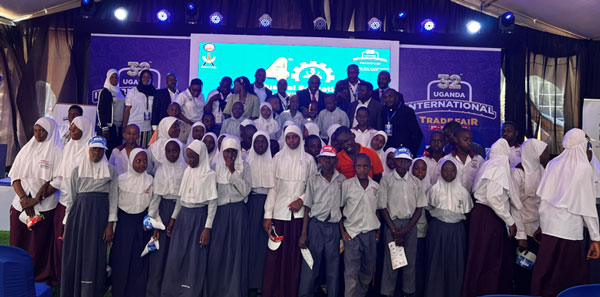
The push was highlighted at the launch of the Education Pavilion at the 32nd Uganda International Trade Fair at the Uganda Manufacturers Association (UMA) showgrounds in Lugogo, Kampala, where education officials and industry leaders called for stronger collaboration to equip young people with relevant technical and entrepreneurial skills.
Onesmus Oyesigye, the executive director of the Uganda Vocational and Technical Assessment Board (UVTAB), who represented the Minister of Education and Sports, said a strong manufacturing sector could drive economic growth, but its success depended on the availability of a skilled workforce.
He said education must be aligned with industry, innovation and entrepreneurship if Uganda is to compete effectively in a rapidly changing global economy.
“Government firmly believes that a strong manufacturing sector can drive growth across the economy. Education is central to this effort because it develops the skilled human resource needed to strengthen industry and support Uganda’s social development,” Oyesigye said.
He said the Education Pavilion would provide a platform for educators and industrialists to engage on how training can respond to the practical skills required by employers.
Oyesigye said government was working with UMA members to strengthen partnerships between technical and vocational education and training (TVET) institutions and industry, enabling learners to gain skills that match workplace requirements.
He called on manufacturers to take up students for practical training, saying exposure to real working environments would help learners develop competencies needed in the job market.
The government’s approach, he said, includes reforms aimed at placing employers at the centre of skills development, from identifying training needs to shaping curricula and assessing learners.
Oyesigye cited the TVET Act, 2025, as part of the reforms intended to strengthen industry participation in vocational training and ensure that what learners are taught reflects the needs of the economy.
He said Uganda must prepare a workforce capable of responding to digital transformation, green technologies and increasingly competitive value chains.
The country’s industrialisation ambitions, he added, require more skilled professionals who can support value addition in agriculture, manufacturing, energy, health and technology.
For his part, Mansul Ssenyondo, managing director of Mayende Engineering Works and a board member of UMA, said the Education Pavilion at this year’s International Trade Fair was intended to expose young people to the realities of modern industrial production and encourage them to consider careers in manufacturing.
Ssenyondo said giving students an opportunity to see industrial processes first-hand could help change perceptions about manufacturing and inspire them to pursue careers in the sector.
He said exposure to automation and modern technologies would help young people appreciate the opportunities available in industry and develop a mindset geared towards innovation and production.
The pavilion is expected to serve as a link between the education sector and manufacturers, allowing learners to better understand how classroom knowledge translates into practical applications in the workplace.
As Uganda seeks to expand its manufacturing base and create employment for its growing youth population, closer cooperation between training institutions and employers is increasingly important.
The success of the initiative, however, will depend on sustained industry participation, including opportunities for apprenticeships, workplace training and the development of curricula that keep pace with technological change.
By bringing educators and manufacturers closer together, government hopes to ensure that young Ugandans leave training institutions with not only academic qualifications, but also the practical skills and innovative thinking needed to contribute to industrial growth and national development.