 The Independent Uganda: You get the Truth we Pay the Price


Kampala, Uganda | THE INDEPENDENT | Uganda has launched a national innovation challenge aimed at accelerating its journey toward a $500 billion economy, signalling a shift from policy ambition to practical, market-driven solutions.
The National Science Week 2026 Innovation Challenge, led by the Science, Technology and Innovation Secretariat in the Office of the President, was unveiled during a hackathon held on April 27 at Kabira Country Club. The initiative is designed to tap into the country’s growing pool of innovators, entrepreneurs, and researchers to develop scalable solutions that address real economic challenges.
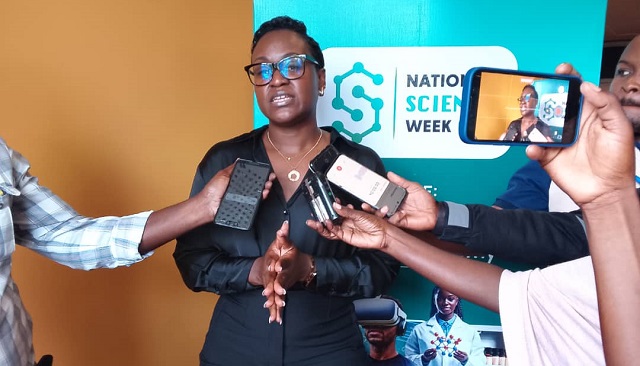
At the event, participants began narrowing down their project focus areas, marking a key step in moving from ideas to execution. Cathy Muhumuza, Superintendent for Support Services and lead for National Science Week, stressed the need for clarity and practical outcomes.
“By the end of today, we should know what each team has chosen to work on,” Muhumuza said.
She emphasised that innovation must go beyond ideas and translate into usable products that can drive economic value. “We have many innovations in Uganda but do not translate into products of the market. This does not benefit our nation. We need products which people are able to use,” she said.
Muhumuza added that the hackathon is designed to push innovators toward building solutions that are viable and fundable. “The purpose for this Hackathon is for you to give us a product which government can buy or which your market segment can find value and buy. We want innovations that can be funded. Whatever you start should go to the last mile,” she said.
She further underscored the importance of sustainability and accountability in innovation financing. “Every product starts with an idea which then gives an idea to those that want to support it. The grant is returnable. This is for accountability purposes. And the enterprise has to be sustainable,” she noted.
The challenge places strong emphasis on execution, requiring participants to develop working prototypes or minimum viable products that demonstrate potential for scalability, job creation, and economic impact. Teams are also expected to present concept notes and pitch their ideas before a national panel of judges. Out of 250 applications received, only 10 teams were selected to compete.
Three winning teams will receive up to Shs 300 million in funding, alongside mentorship and partnership opportunities to support the commercialisation of their innovations. Organisers say this model is intended to bridge the gap between innovation and market-ready solutions.
National Science Week brings together students, innovators, and industry players, offering a platform to explore science and technology as drivers of development while strengthening skills in critical thinking, collaboration, and creativity.
Among the participants is Benjamin Ojede, whose team is developing an electric vehicle concept in response to rising fuel prices and the increasing adoption of cleaner transport solutions.
“Our expectation is to pitch and win the funding of our innovation and step-it up,” Ojede told reporters at the hackathon.
The challenge is open to teams of two to five members, including developers, entrepreneurs, researchers, and students from various sectors. It will run through early May, culminating in final presentations and the selection of winning projects.
Officials say the initiative reflects a broader national strategy to position science, technology, and innovation at the centre of economic transformation. By prioritising practical, scalable solutions with commercial potential, Uganda is seeking to unlock new pathways for industrial growth, productivity, and job creation as it works toward its long-term economic ambitions.



wow this is great