The Independent Uganda: You get the Truth we Pay the Price


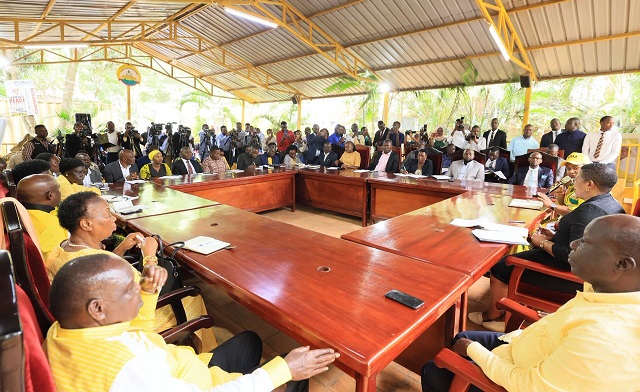
Kampala, Uganda | URN | Speaker of Parliament Anita Annet Among is ushering several independent Members of Parliament-elect into a structured cooperation framework with the ruling National Resistance Movement (NRM).
The calculated consolidation of political influence ahead of the 12th Parliament, which convenes in May 2026, was confirmed following a high-level meeting at the NRM Secretariat on Kyadondo Road in Nakasero, Kampala on Monday, just weeks after the January 15 general elections.
In the incoming 529-member House, the NRM already commands a dominant position with about 359 seats.
Of the approximately 69 independent MPs-elect, at least 62 have expressed interest in formal cooperation through a planned memorandum of understanding. The shift underscores a familiar post-election trend in which NRM-leaning independents formalise working relationships with the ruling party.
Among, who also serves as the NRM’s Second National Vice Chairperson (Female), reassured the legislators that their constitutional status remains intact. “As Members of Parliament, legally and politically, you are independent. You cannot cross the floor,” she said. “But I want to assure you that the same benefits that NRM members receive will also be extended to you once you sign the memorandum of understanding.”
She described herself as the “Dean of Independents,” coordinating their engagement on national priorities, and revealed that the group will be formally unveiled during an induction retreat at the National Leadership Institute (NALI) in Kyankwanzi on April 7.
NRM National Treasurer Amb. Barbara Nekesa framed the arrangement as a unifying effort. “What the Speaker is doing is removing barriers between the NRM and independent MPs. We welcome you home,” she said.
NRM Director of Legal Services Counsel Enoch Barata emphasised that the process is voluntary. “You are not crossing, but intend to work with the NRM during your term. Participation remains open only to those willing,” he noted.
Independent MPs have historically played a pivotal role in Uganda’s legislature. Many emerge from hotly contested NRM primaries but retain strong grassroots support, often aligning with government positions on budgets and national development priorities.
Moses Baka, a political commentator argues the current move formalises an existing reality rather than creating a new alliance.”The trend dates back to the reintroduction of multiparty politics in 2005 under President Yoweri Museveni, where political cohesion has often been prioritised to sustain policy continuity.”
The arrangement operates within the framework of the 1995 Constitution. Article 72(4) guarantees the right to stand as an independent candidate, while Article 29(1)(e) protects freedom of association. Article 83, which governs tenure of office, does not trigger loss of a parliamentary seat for cooperation short of formal party membership or crossing the floor.
Leader of Oppostion, Joel Ssenyonyi, however, cautioned that such alignments must remain transparent and voluntary to safeguard parliamentary independence. Independents, he noted, derive their mandate directly from voters rather than party structures.
Within the NRM, senior figures including Secretary General Richard Todwong and Electoral Commission Chairperson Tanga Odoi have backed the initiative as essential for legislative stability and efficient service delivery.
The pact could ease legislative gridlock and strengthen coordination between Parliament and the executive. However, opposition ranks and civil society warn that the absorption of independents risks entrenching dominant-party politics, weakening oversight, and blurring the distinction between party and state.
Comparable post-election arrangements in countries such as Kenya and Tanzania have similarly helped ruling parties maintain firm legislative control.
****
URN